Hardtop pavilion planning
A rattling gazebo roof: record when, where and under what conditions
Link roof sounds to location, timing and conditions before attempting any adjustment.
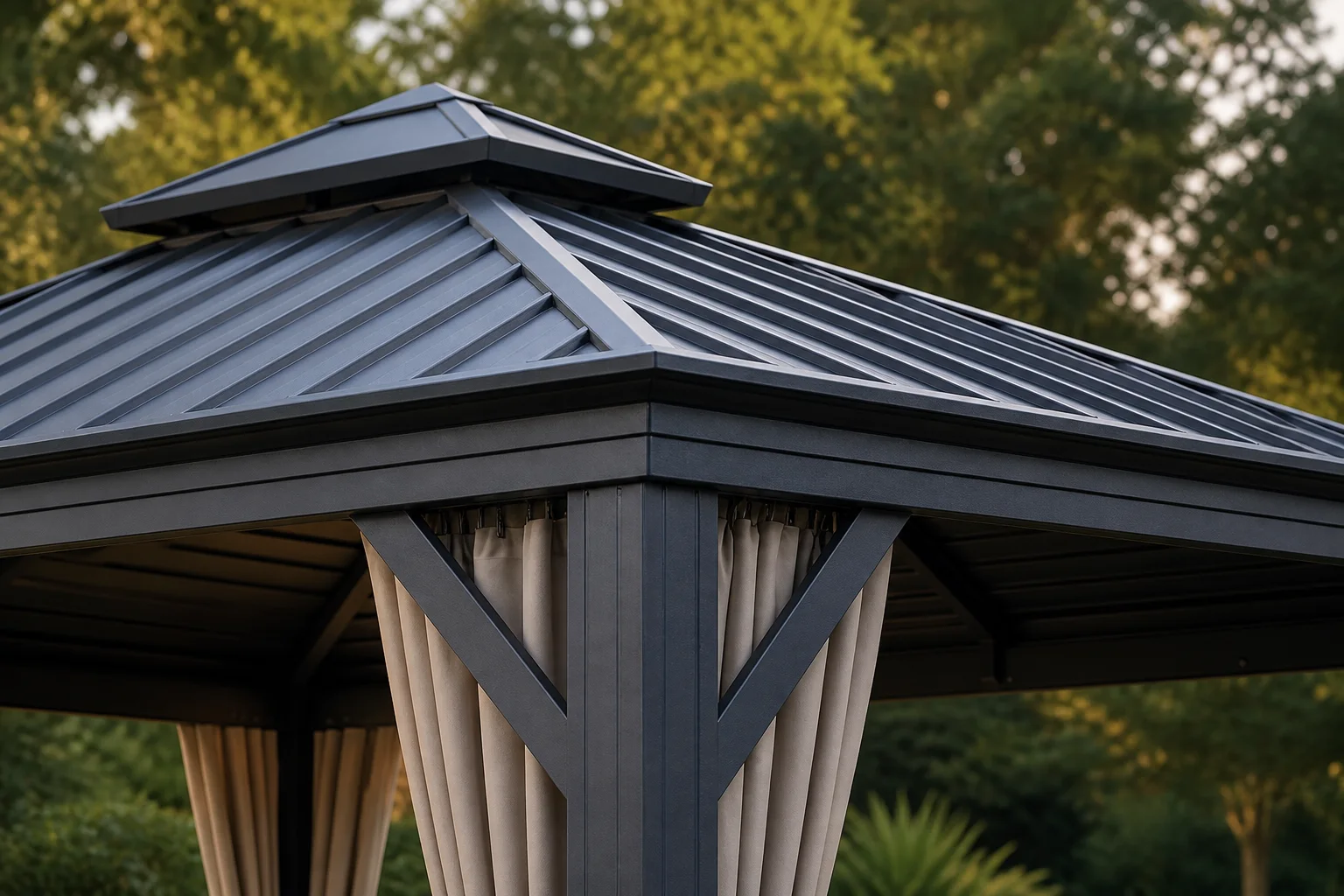
Describe when the sound occurs
When a gazebo roof makes an unfamiliar sound, record when it occurs, duration and the apparent area before calling it looseness or normal thermal movement. Wind, rain, accessory use and surrounding conditions may require review. An audio clip alone does not diagnose the cause. Identify the recording position and pavilion orientation, adding a locating view. Do not shake, strike or climb the roof to provoke the sound. Clear context helps the supplier define a more targeted next check.
Separate repeated patterns from isolated observations
A short log can identify date, weather, use state, apparent location and accessory movement. State an observed association, such as one wind direction, without treating it as proven causation. Note changes after nearby equipment or furniture changes where relevant. There is no need to monitor all day or share unrelated private activity. Retain concise examples and identify unobserved conditions. Any visible component change should be reported separately for the responsible team to assess.
Consider more than one sound in the same recording
Imagine wind noise containing a brief metallic sound, apparently near the ridge, recorded from outside. Add the recording position, timing and visible condition before asking for wholesale tightening. If the supplier identifies an accessory or connection for inspection, appropriate personnel should follow its instructions. Different sounds in one clip may require separate consideration. The record reduces guesswork without asking users to perform audio diagnosis, and a quiet interval alone does not establish resolution.
Check the response against the original pattern
Retain inspected locations, findings, actions and any requested observation. Keep explanations within their stated conditions rather than treating every sound as normal. Recheck comparable circumstances and mark weather not yet encountered as pending. Avoid improvised pads, tape or fasteners to suppress sound.
A venue should distinguish guest descriptions from staff observations, with sources and timing. Both can help, but a reported impression should not become an established component fault through retelling. A useful closure explains what was checked and what remains.
- Record position, direction, time and operating state.
- Separate observed associations from confirmed causes.
- Recheck relevant conditions and retain the assessment scope.
Is tightening every screw the most direct response to roof noise?
Do not do so without assessment. Record the circumstances and obtain a defined inspection response. Sound does not prove a loose fastener, and indiscriminate tightening may alter the assembly. Verify the response against the original conditions.
More questions, practical answers →