Hardtop pavilion planning
Waviness in a metal gazebo roof: separate reflection, oil canning and distortion
Record viewing conditions and panel condition before deciding how to assess visible waviness.
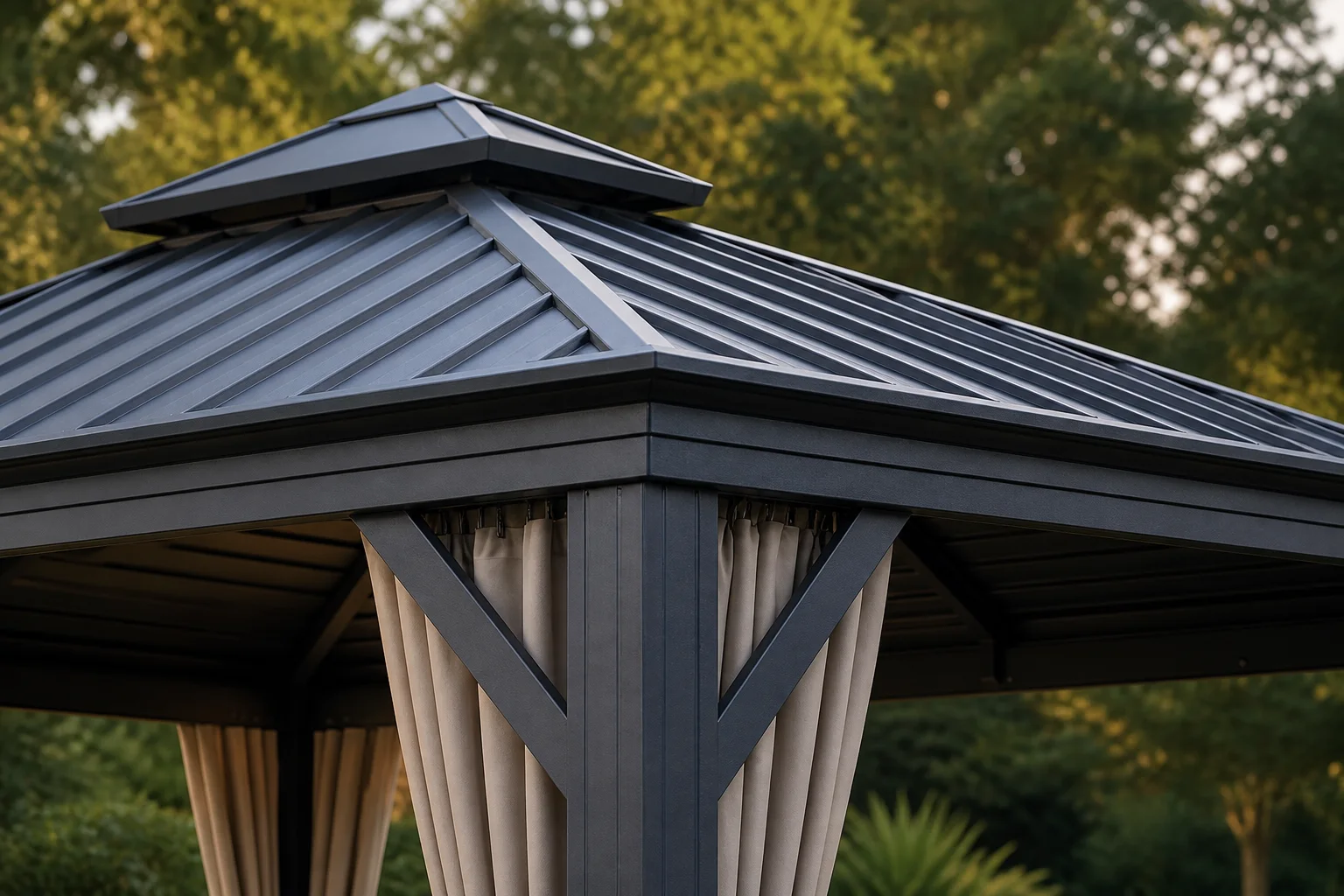
Describe the observation before naming its cause
When a metal gazebo roof looks wavy, describe whether you see changing reflection lines, broad undulation or a distinct local crease. Metal-envelope guidance discusses the phenomenon often called oil canning, but that term does not automatically classify a particular condition as acceptable or defective. Record the component, timing and viewing direction for assessment against the actual product and agreed criteria. Neither one strongly reflective photograph nor a technical label should settle the question. A precise observation helps establish the appropriate review before anyone assigns a cause.
Build a consistent photographic record
Include the complete panel, a local detail and the same area from another direction. Note lighting and distance, and use a viewpoint comparable to the approved sample where possible. Avoid filters or contrast enhancement. Link a pre-installation observation to receiving records; if it was first noticed later, do not invent when it began. Any closer examination of creases, connections or associated concerns should use suitable personnel and access. The record supports comparison without asking the owner to diagnose structural condition from a video.
Compare one panel under different viewing conditions
Imagine a roof appearing smooth in the morning but noticeably wavy from an upstairs room later. Record the same location at both times and identify any change in viewpoint. Ask the supplier about applicable appearance criteria and whether further inspection is needed. A distinct crease at one corner should be raised separately as a local condition rather than combined with broad reflections. The discussion should concern identified panels and evidence, not end with blanket statements that all metal behaves that way or every visible wave requires full replacement.
Tie the response to agreed appearance criteria
Agree how samples and appearance assessment relate to the order, especially where upper floors overlook the roof. If a concern arises, request the assessment basis, any need for site review and the proposed response scope. Do not press, hammer or reinforce panels independently to remove the effect. Retain the reasoning behind an accepted condition or the identified replacement scope.
Other panels can provide comparison only when their dimensions, finish and viewing conditions are identified. The objective is an explained decision, not merely a technical name attached to the appearance.
- Separate reflections, broad waviness and local creases.
- Record the same location in overall and detail views.
- Obtain an explained response against the actual appearance criteria.
Can inspection stop when a supplier calls the appearance oil canning?
The term alone does not settle the assessment. Ask how it relates to the identified panel, appearance criteria and observations, including separate creases or connection concerns. Avoid reshaping the panel or drawing a blanket conclusion.
More questions, practical answers →