Large pergola projects
Library Reading Pergolas: Books, Trolleys and Reader Routes
Coordinate reading seats, book trolleys and wet-weather collection routes in a library pergola.
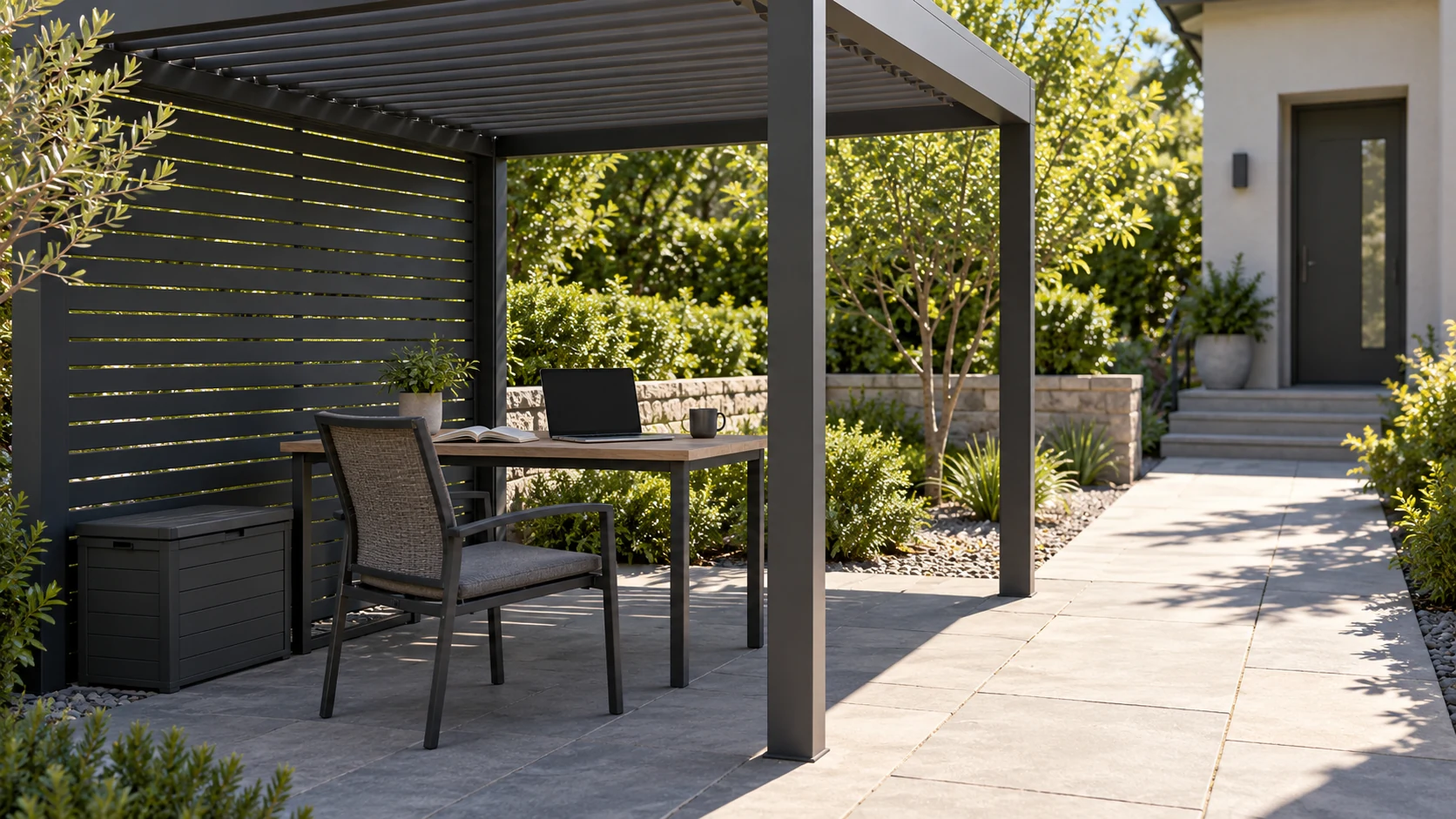
Start with how books reach the reading area
A library reading pergola should support both seated readers and staff moving books. The door used by trolleys, their parking position and the return route influence tables and circulation. Adding a few tables to a rendering can overlook door operation, turning and the space used when readers stand. TTH200/220 may be considered for a larger area, but seating numbers need site and applicable-requirement review. Observe use at different times, distinguishing individual reading, group conversation and accompanied children, then develop a layout that works with the library's book-handling process.
Give trolleys a place and readers a route
Position trolleys near the service route without making them obstacles at the entrance or exit. Trial pulled-out chairs, bags, companions and wheelchair positions rather than checking only neatly stored furniture. Review accessibility under applicable local rules; ADA standards are relevant only to covered US projects, and a pergola label does not establish compliance. Observe light and reflections at actual reading times before orienting tables. Temporary book displays or signs also require a fresh route check, including whether staff can continue collecting and returning books during ordinary use.
- Mark trolley doors and turning points.
- Test circulation with chairs pulled out.
- Assign places for temporary displays and returned books.
Trial book collection when weather changes
Imagine a weekend reading session ending as the weather changes. Staff need to return display books and activity materials indoors, but a trolley blocks the most useful route as visitors leave. Trial empty and loaded trolley movement and identify temporary storage. A roof cannot guarantee protection from side-driven rain or damp ground conditions; the library should define collection-care requirements. This is an operating scenario, not a weather-performance promise. Where closure is required, follow the agreed arrangements for people and then manage books and equipment without improvised crowding during collection.
Define care responsibilities and use limits
Provide trolley dimensions, furniture, route photographs and activity plans for review of surfaces, foundations and drainage. If lighting or charging is needed, confirm suitable outdoor provision and management duties rather than defaulting to extension leads. UK HSE venue guidance can inform activity and route checks without replacing permanent-structure design or local approval. Define responsibility for book collection, cleaning, furniture movement and fault reporting, then observe whether real use departs from the original arrangement. Explaining which materials may be taken outside supports daily management more effectively than an unsupported all-weather reading-room claim.
Can a book trolley be parked at the reading pergola entrance?
Confirm it through the actual layout. A convenient entrance position may obstruct readers, wheelchair users and companions, especially with chairs occupied. Assign parking and test loaded movement, including collection when weather changes. The roof does not replace book-care or closure procedures.
More questions, practical answers →