Large pergola projects
A large pergola with low-vision family members: test contrast
Test recognition of glass, level changes, furniture edges and controls with the family member who will use the pergola.
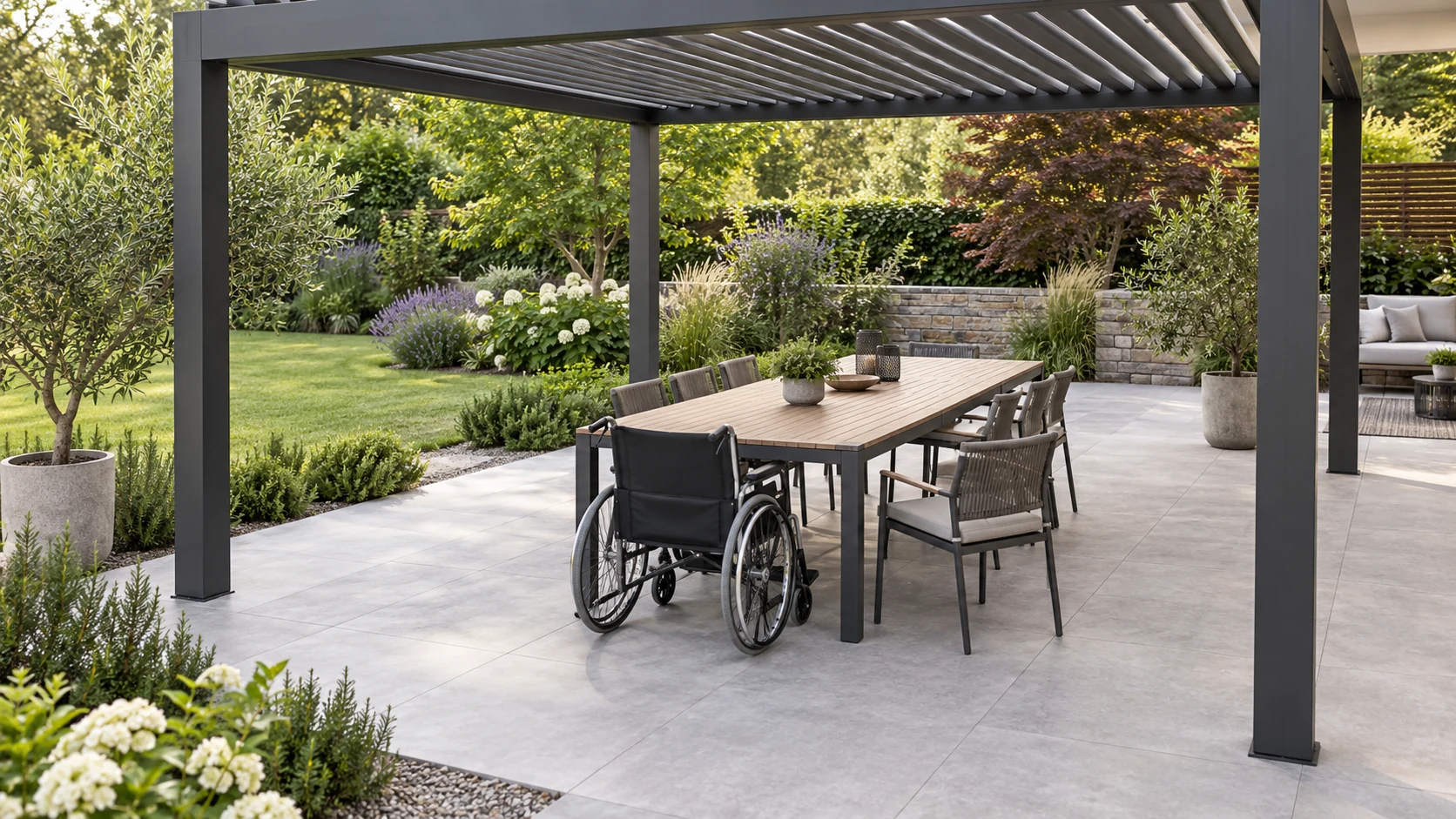
Identify what is difficult to recognise
A coordinated grey floor, matching posts and clear sides may look elegant in photographs while making some boundaries harder for a low-vision family member to recognise. Ask which tasks are difficult: finding the entrance, identifying a step, seeing tableware or locating a switch. RNIB home-adaptation guidance offers useful ideas about recognition and contrast, but no single colour scheme suits everyone. Avoid changing everything to busy patterns without discussion. Start from the person’s feedback and obtain appropriate individual advice where needed, then address specific tasks rather than applying a decorative formula.
Observe daylight, dusk and artificial lighting
A step can look different at midday, dusk and after lights are switched on. Review common routes with the user in appropriate, familiar support conditions, noting where recognition becomes uncertain. Do not create an unsafe obstacle trial. If clear panels need recognition measures, confirm suitable treatment with the equipment supplier so it does not obstruct necessary views or moving parts. Lighting assessment involves more than increased brightness: check visible glare sources and reflections that interfere with seeing objects. Have the relevant professionals confirm actual products and installation methods.
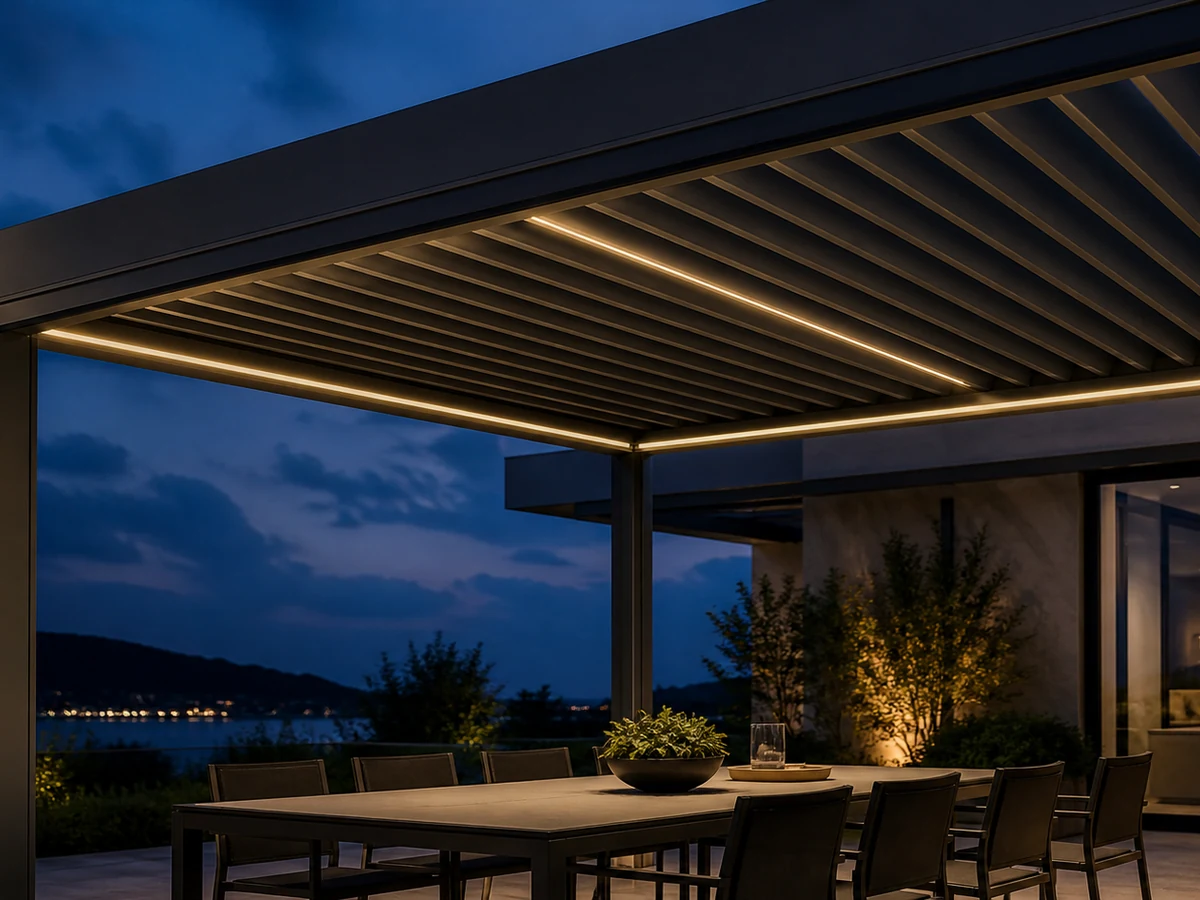
Suppose extra lighting makes the tabletop harder to see
Imagine extra lighting added near a glossy dining table for reading, only to create a strong reflection from the regular seat. Record the relationship between the source, surface and eye position, then consider appropriate changes instead of adding still more lights. If the person recognises a particular tableware or label colour more easily, trial it on a small scale before extending it. A useful personal adjustment is not a medical treatment claim or evidence of the same result for someone else. Assess what the user sees, not simply how bright the pergola looks from the doorway.
Keep useful arrangements consistent
Document the arrangements that help, including regular objects, control information and passages, so other family members understand why they should not move them casually. Explain changes before gatherings and preserve familiar routes rather than stacking boxes at entrances. Use instructions the person can understand, adding suitable confirmed alternatives where needed instead of relying on colour alone. Specific recognition tasks give suppliers clearer requirements than a broad age-friendly request. Continue collecting feedback and reassess when seasonal light or equipment changes affect the environment the family member uses each day.
- Ask about specific recognition difficulties.
- Check reflections and boundaries in changing light.
- Keep familiar positions and explain layout changes.
Will brighter lights solve low-vision use of a pergola?
Not necessarily. Assess glare, reflections, contrast and object positions with the person, seeking suitable individual advice when needed. Lighting is one part of the arrangement, alongside recognisable labels, consistent layouts and understandable controls.
More questions, practical answers →