Commercial projects
Phasing pergola installation while a hotel remains open
Coordinate guest routes, work-zone separation and daily handover conditions for a hotel pergola retrofit.
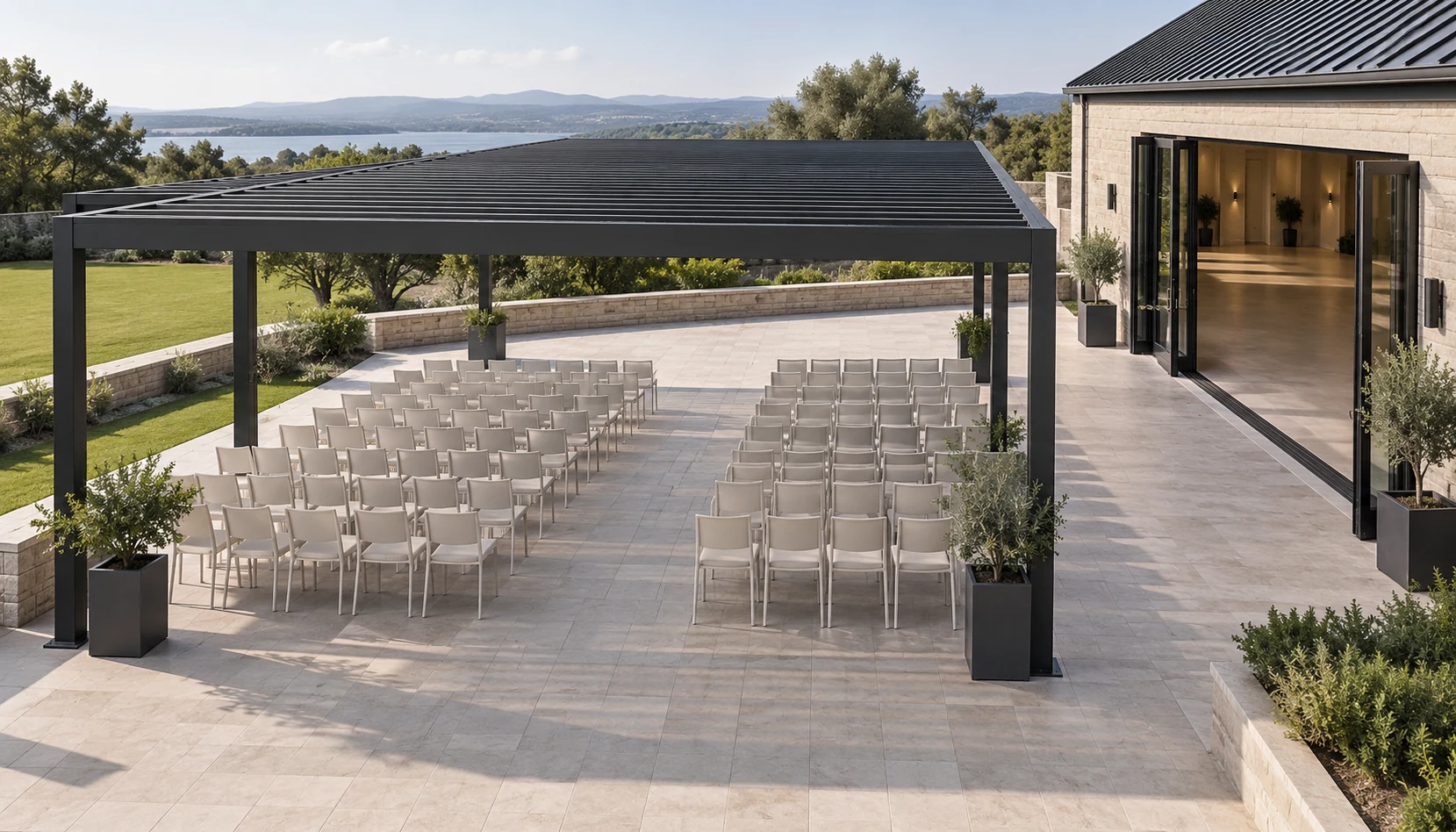
Map guest and construction routes separately
During an occupied hotel retrofit, long components, tools and workers may need to pass through spaces still used by guests. Draw guest routes and construction transport routes together, identifying crossings at lobbies, emergency exits, breakfast access and lift areas. A note to take care is not a plan: specify permitted time windows, separation arrangements, supervision and alternative routes. Site management and the contractor must determine the actual safety measures, with occupancy plans included in the work programme. Only then can the team judge whether the proposed zones can operate independently.
Divide phases by complete functionality
Organise phases around areas that can be separated, drained and accepted as complete working zones, rather than dividing the number of posts evenly. Adjacent modules that share beams, wiring or drainage may prevent the first zone opening while the second is built. For example, a finished dining surface is not a handed-over area if delivery equipment must still travel across it. List temporary supports, unfinished interfaces and weather protection as phase conditions. Structural, electrical and operating teams should jointly decide whether a phase can be used; a complete appearance alone does not justify guest access.
Plan interruptions around hotel operations
Provide the contractor with quiet periods, conference bookings, weddings and permitted power interruptions. In return, obtain a list of activities likely to create noise, dust or temporary route closures. Agree how guests and departments will be notified and who receives escalations when the plan changes. A universal installation duration is inappropriate because foundations, transport, weather and approvals affect the sequence. Use completion conditions as well as calendar dates: reconcile materials before lifting operations and complete the relevant electrical checks before powered function testing.
Make the end of each shift a handover
At the end of a shift, hotel staff need to know which areas remain closed, which equipment must not be operated and whether temporary protection suits expected overnight conditions. Record photographs and the responsible person instead of relying on informal chat replies. Before reopening, review lighting, discharge points, leftover tools and signage removal. Track guest-experience issues separately from structural acceptance so each can be resolved by the appropriate team.
- Mark the work boundary, guest entrance and emergency contact for each phase.
- Define reopening conditions; completion photographs do not replace acceptance.
- Communicate changes to reception, food service, security and engineering.
Prepare an alternative if reopening slips
Decide before construction where booked dining moves, how guest access is redirected and who tells the reservations team if a phase fails handover. Operations should approve the alternative in advance rather than improvising when guests arrive. Treat reopening milestones as conditional, so an advertised date does not pressure the team into skipping site checks or functional commissioning.
Can hotel guests use adjacent areas during pergola installation?
First establish whether transport, temporary supports, drainage, electrical work and separation boundaries are genuinely independent, then have site management and the contractor assess use. A finished appearance does not make a neighbouring area ready to open. Set written reopening conditions and hand over closed zones and disabled equipment at every shift end.
More questions, practical answers →