Home planning
Barbecue placement by a pergola: start with the appliance instructions
Plan cooking, dining, circulation and smoke around the specific barbecue instructions rather than treating an aluminum roof as blanket permission.
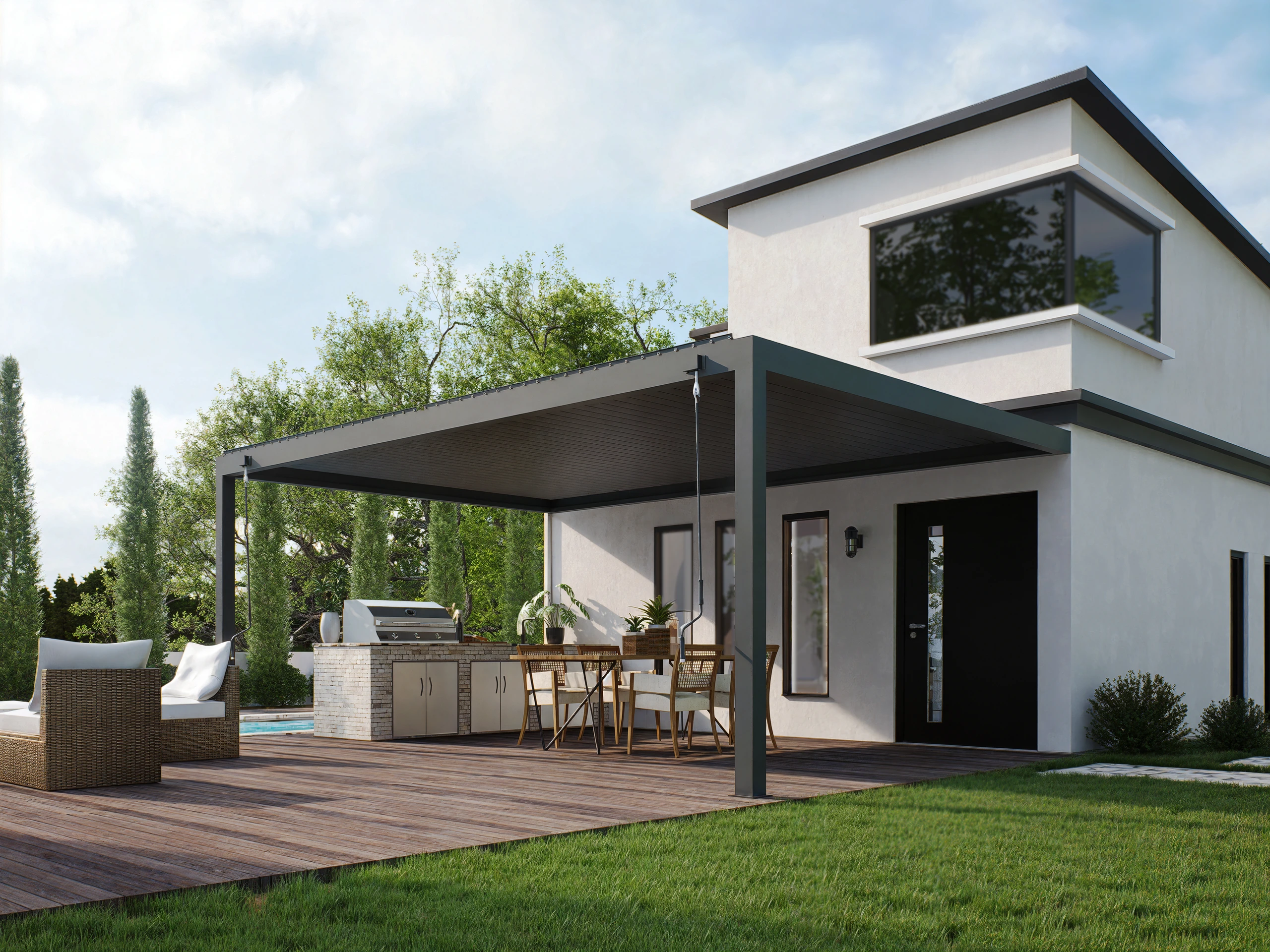
Identify the appliance before placing it
The first document for an outdoor cooking area should be the selected appliance model and manual, not a rendering with a grill beneath the pergola. Different fuels, constructions and uses may carry different restrictions; experience with another grill does not establish suitability. Weber's official outdoor-use guidance, for example, restricts enclosed areas and overhead combustible construction. That illustrates why appliance requirements matter; it does not replace the complete instructions for your model. If those instructions prohibit an arrangement, relocate cooking rather than assuming an aluminum frame makes it acceptable.
Discuss cooking position and dining cover separately
Wanting cover while dining does not require the heat source to sit beneath the same roof. First find a cooking location that meets the appliance requirements, then arrange serving movement, preparation surfaces and seats. Consider smoke entering doors or windows, lingering near enclosures or affecting neighboring homes. Wind changes, so one smoke-free occasion is not a year-round guarantee. Obtain appropriate professional review where extraction or specialist provision is needed. A fan or an informally opened side must not substitute for the environmental conditions required by the equipment instructions.
Check circulation with a hypothetical family meal
Imagine one person cooking, another serving and children moving from the living room to the lawn. Placing the grill beside that regular route may create conflict despite a compact-looking plan. Rehearse with an unused, cool appliance or a footprint marker, distinguishing the cooking area, hot-dish landing place and through route. This hypothetical exercise identifies circulation conflicts, not safe clearances. Final placement must follow the manual, site review and applicable local requirements. A lifestyle layout discussion cannot replace the safety review for the actual appliance.
Keep instructions and responsibilities accessible
Once placement is confirmed, retain the manual, installation record and service contacts, and make sure the actual cook understands permitted conditions and limits. Recheck the arrangement when screens, cabinets or decorations are added: an unchanged grill position does not mean the surroundings are unchanged. Follow the appliance instructions for cleaning, cooling, fuel handling and stopping use. If conditions are unclear, do not use that position for cooking until the supplier and relevant professionals clarify them. Preparation and dining can still be planned beside the pergola without prematurely committing the heat-source location.
Make the cooking boundary clear so guests do not casually leave cups, napkins or belongings around the appliance. Brief the household on the arrangement before a gathering rather than relying on guesses. Recheck equipment requirements after any temporary relocation; a larger guest list does not relax them.
- Obtain the complete manual for the actual model and review its environment requirements.
- Draw cooking, hot-dish landing and household circulation separately.
- Recheck surroundings whenever screens or cabinetry are added.
Can a gas or charcoal grill simply be placed under an aluminum pergola?
The roof material alone does not establish permission. Check the actual grill's requirements for overhead structures, nearby objects and ventilation, then review the site and applicable rules. Change any prohibited arrangement. Confirm the heat source separately from seating and do not borrow another model's clearances.
More questions, practical answers →