Commercial projects
Planning wet-foot and service routes around a hotel pool pergola
Coordinate seating with drying, towels, cleaning and service routes around a hotel pool pergola.
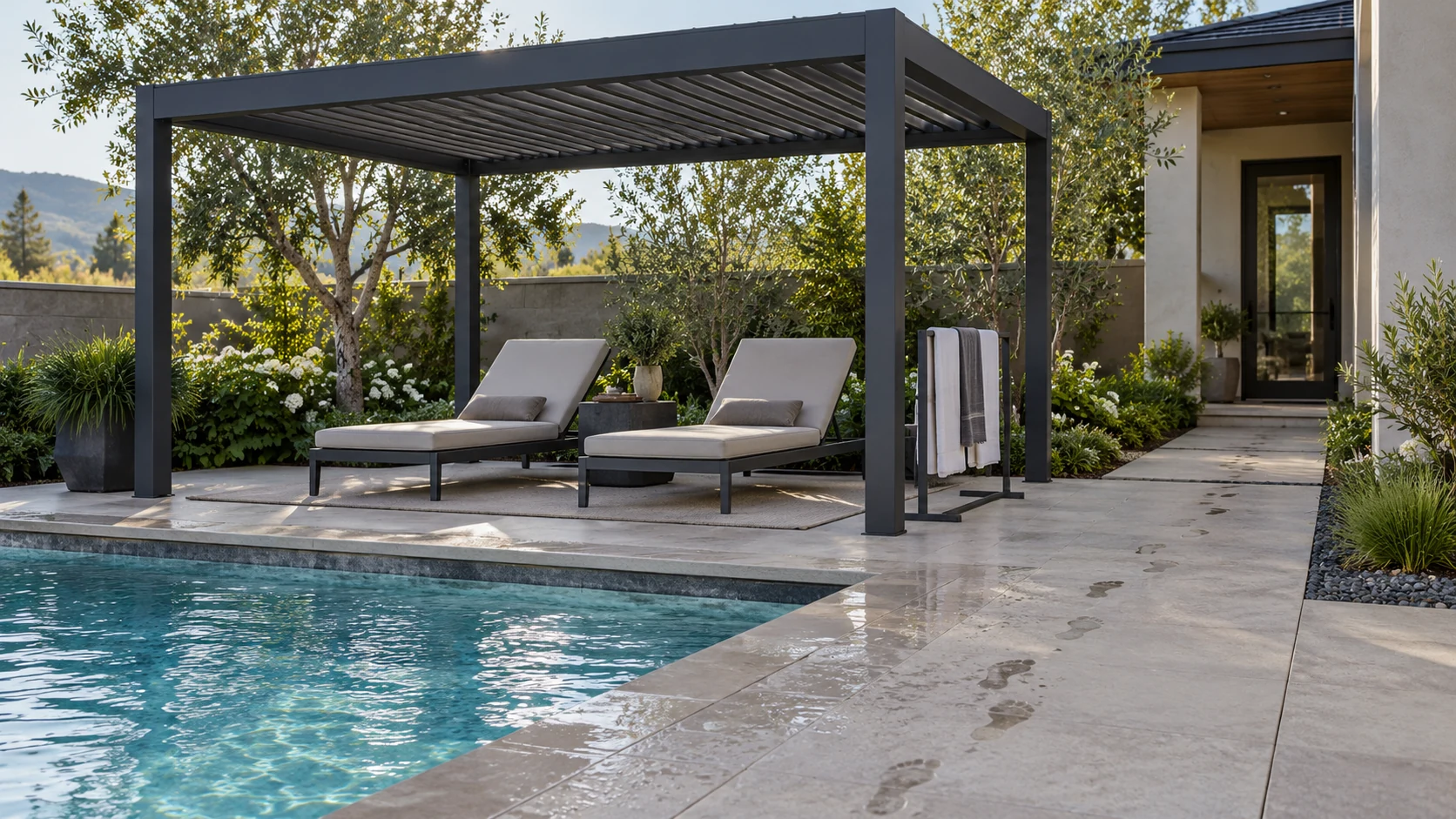
Observe the first journey out of the pool
A poolside pergola may accommodate loungers, drinks service or waiting parents, each with different demands on the surrounding floor. Observe where guests put on shoes, collect towels and leave bags after exiting the water. If towels are across a serving route, wet-foot traffic repeatedly crosses tray-carrying staff. A larger roof may not help; relocating towels or turning seating could address the issue directly. Observe busy periods and differences between children’s and adults’ movements rather than relying on quiet-site photographs.
Separate roof discharge from pool splash
Water may come from pool splash, swimmers, cleaning or roof discharge, and these sources can combine. Mark outlets and low areas and check whether water reaches an unavoidable guest route. The pergola changes only part of the rainwater path; it does not replace drainage design for the pool area. Record the conditions and extent of ponding for the site designer and maintenance team rather than adding pipes or blocking existing drains to accommodate posts.
Plan the change between cleaning and service
If loungers are being washed while drinks service continues nearby, define separation, equipment storage and reopening conditions in advance. Avoid routing hoses through serving paths or treating movable warning signs as a permanent solution. Choose furniture that can be moved for cleaning without hiding drainage inspection points. Cleaning near screens or glazing must follow the actual material and equipment instructions; pool-floor chemicals and washing practices should not automatically be used on aluminium, motors or fabrics.
Preserve staff observation lines
High-backed seating, dense planters and enclosed sides may create privacy while obscuring areas staff need to observe. Mark observation positions, entries and controls, then review whether new elements create blind spots. Pool-specific safety requirements belong to the responsible professionals; a pergola supplier’s rendering cannot replace that review. After dark, also check reflections and shadows, particularly whether lighting makes wet surfaces harder to recognise. Discuss privacy and visibility together during design.
Confirm the layout through an operating checklist
At handover, include pool operations, housekeeping, food service and engineering rather than asking procurement to approve appearance alone. Assign findings to responsible people and review again before peak season. Redraw routes when seasonal loungers are added or towel arrangements change so reserved operating space is not gradually occupied.
- Mark wet-foot, service, cleaning and roof-discharge paths separately.
- Check access to outlets, controls and observation points after moving loungers.
- Keep the agreed layout and wet-weather reopening conditions.
Will a poolside pergola solve wet-floor problems around the pool?
It should not be treated as a complete solution. Splash, wet feet, cleaning and roof discharge can all affect the floor. Review routes, floor conditions and drainage together with the responsible site professionals. Towel stations and furniture also need coordination; extra shade alone is insufficient.
More questions, practical answers →