Commercial projects
Planning heater zones for a hospitality pergola
Establish equipment suitability, mounting interfaces and occupied zones before comparing power and operating costs.
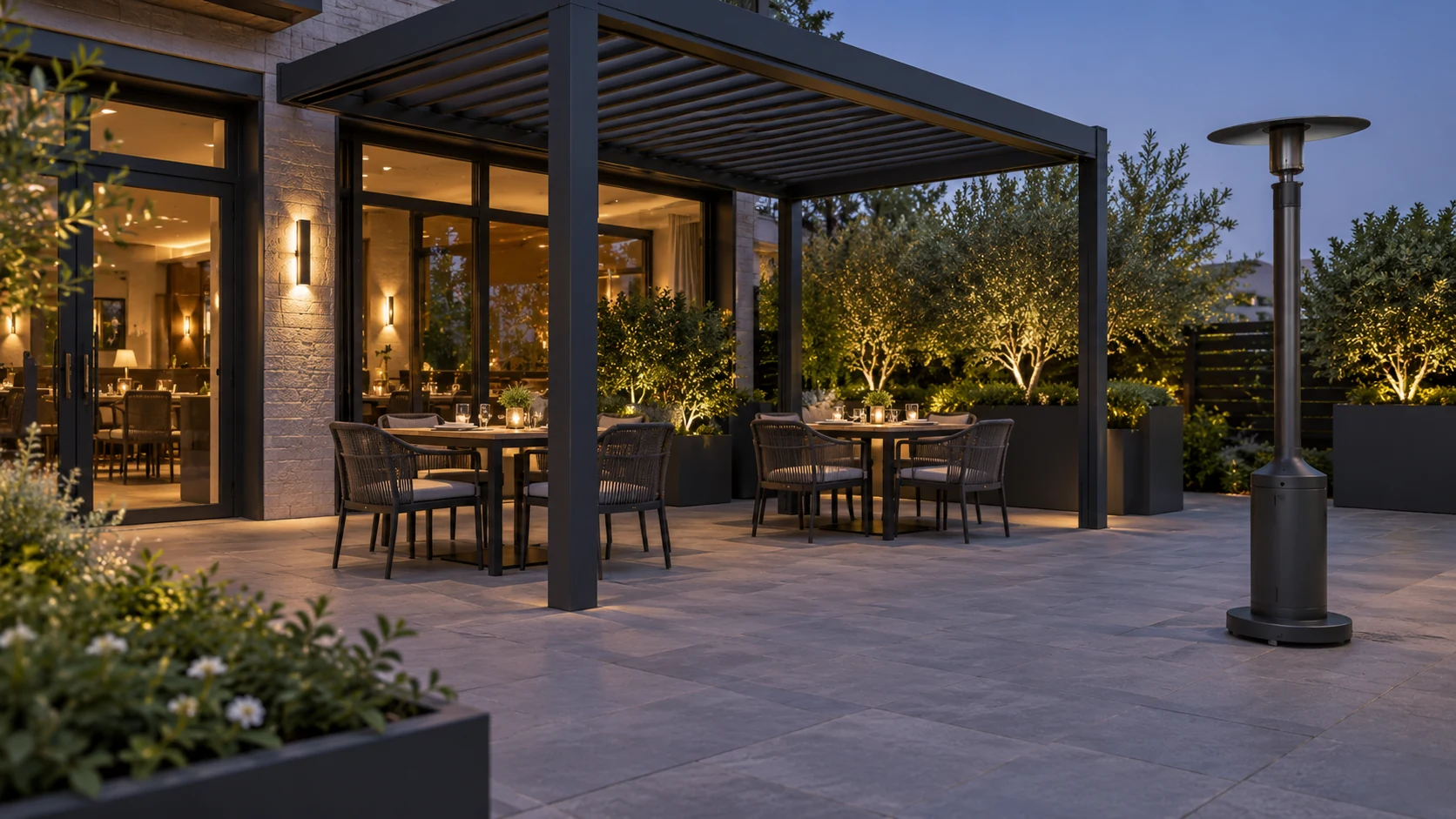
Check equipment against the space first
Do not buy the highest-power heater based on roof area and then search for a mounting position. First compare the heater’s environment, orientation, clearance, mounting and supply requirements with the actual roof, enclosures and furniture. Requirements differ between products, and an aluminium frame does not authorise arbitrary heat-source attachment. Have relevant professionals review the exact model and position, including moving louvers, screens and doors rather than only their static appearance.
Define the occupied zones
Suppose only the wall-side seats are used at lunch, with outer seating opening in the evening. A single control may keep empty areas running. Discuss the operating layout with the heater’s supported control options, including zones, permissions and shutdown. Enclosures do not guarantee a chosen temperature, and rated power cannot be converted directly into a number of comfortable outdoor diners. Wind, position, clothing and use affect experience; trial properly installed equipment in representative conditions before final selection.
Review interactions with other equipment
Lighting, speakers, signs, screen housings and plants may compete for the same beam, while a heater can change maintenance access. Put all accessories on one equipment plan to coordinate fixing interfaces, movement and professionally designed wiring. Do not assume earlier accessories must remain in place while the heater fits around them. Reassess any structural or enclosure changes. Clearances and electrical protection depend on actual instructions and local requirements; this article gives no universal installation figures.
Compare operating costs by use scenario
Start budgeting with the selected equipment’s rated power, actual zone operating periods and local electricity prices. Compare busy evenings, quieter periods and closed outer seating, noting how controls affect runtime. If equipment is adjustable, do not assume a setting name equals a fixed consumption percentage without confirmation. This organises an energy budget; it does not promise savings or payback. Make changing energy-price assumptions visible rather than burying them in a precise-looking monthly total.
Give staff clear operating instructions
Demonstrate normal start and stop, fault reporting and closing checks, identifying settings restricted to authorised staff. Follow equipment cleaning and care instructions; do not add seasonal decoration or drying fabrics near a heat source without review. Recheck the installation assumptions after changing furniture, enclosure or the area served.
- Provide the heater model, installation documents and full accessory plan.
- Base zones and operating responsibilities on actual seating use.
- State power, time, price and unverified assumptions in energy estimates.
Does a higher-power pergola heater always make diners more comfortable?
Power alone is insufficient. Check suitability, mounting, clearances and supply, then trial the arrangement against wind, seating positions and actual use periods. Zone-based control may better match occupancy. Installation and protection must follow the selected equipment instructions and relevant local professional design.
More questions, practical answers →