Hardtop pavilion planning
Damaged upper gazebo mesh: obtain a practical replacement plan
Identify upper mesh, attachments and access conditions before obtaining parts and a replacement plan.
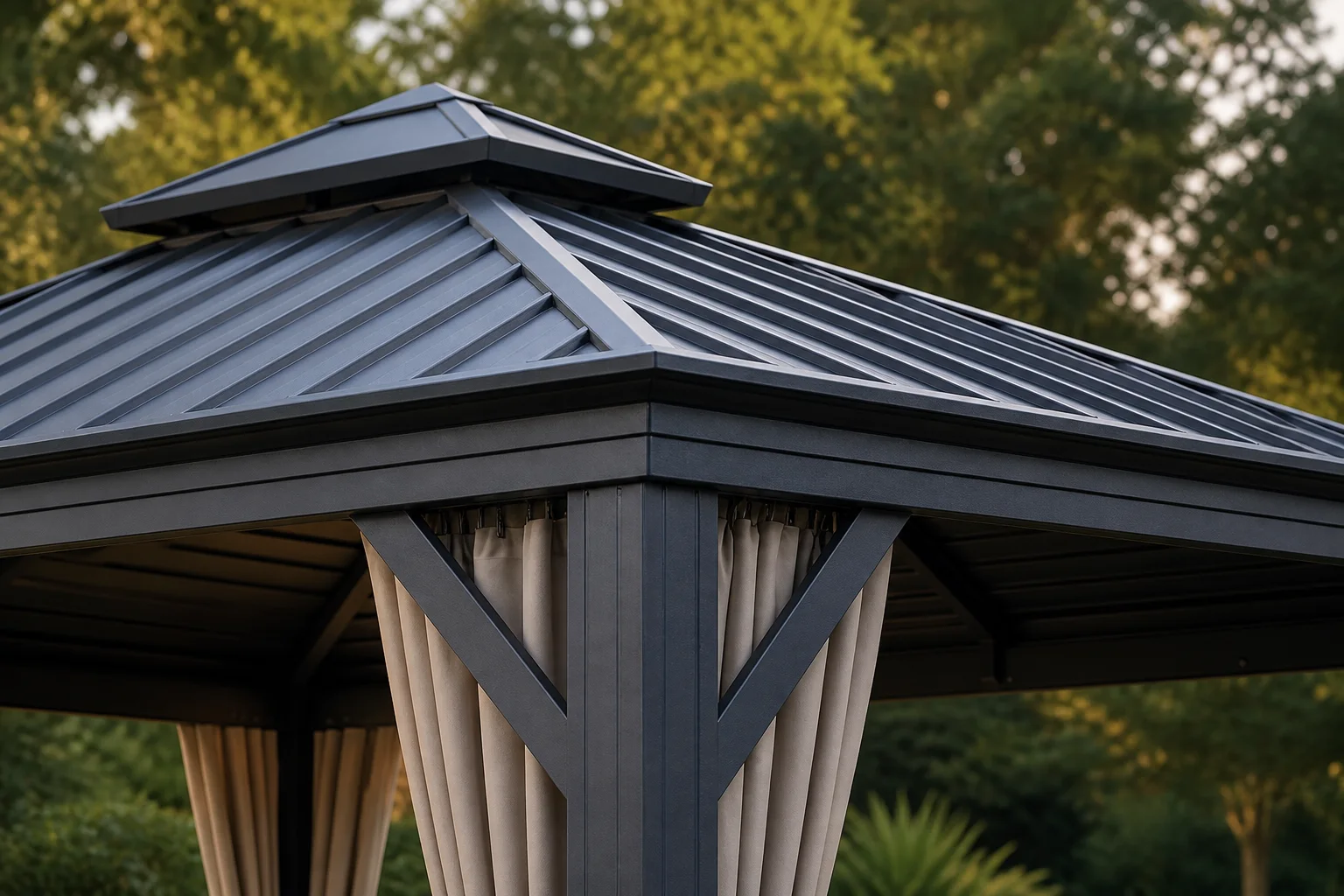
Identify the actual mesh component
Identify the opening, product version and installed configuration before ordering damaged upper mesh. It may differ from side insect screens, so appearance or colour is not enough. Provide safely obtainable overall and detail photographs with visible markings and connection context, then ask what further identification is needed. This guide supplies no climbing, roof-removal or temporary-patching instructions. Confirm access alongside part identity even for a small defect, so a delivered spare does not reveal that the installation method or associated components remain undefined.
Ask about parts and access together
Ask whether the replacement includes frame, attachments and accessories, and obtain a basis for reusing any original items. Confirm dimensions, orientation and boundaries against matching details; generic mesh rolls are not automatically equivalent to a complete part. Appropriate personnel should define access, execution and surrounding-site requirements. If records are incomplete, retain pending questions rather than filling gaps with another model video. Compare parts and service together, because an inexpensive mesh sheet may exclude essential items needed to complete the requested replacement.
Consider a correct part without an access plan
Suppose the part number is correct, but the arriving technician finds fixed furniture obstructing access. Sharing an overall view and use conditions with the order allows earlier planning. This does not authorize improvised removal of fixed facilities or pavilion components; it ensures the service team has adequate information. If the cause remains unknown, record that separately rather than declaring the issue resolved solely because new mesh was fitted. Users provide observations and context while the responsible team defines any further inspection.
Retain part and service records afterward
After replacement, check location, supplied fittings and site restoration against the agreed scope. Retain part identity and service instructions with the people managing the pavilion. Future reports can then identify time and position without repeating the entire identification process. Describe actual mesh configuration without promising complete insect exclusion.
If the original part is retained for assessment, assign custody and destination. It is a pending service item, not an unused new spare, and should be labelled so future staff do not confuse those states.
- Identify upper mesh, orientation and attachments.
- Confirm parts and practical service access together.
- Hand over replacement records and pending original parts.
Can damaged upper mesh simply be patched with generic netting?
Do not assume so. Identify the matching component and obtain suitable parts and an access plan. Similar dimensions do not establish attachment compatibility. Retain the observations and verify the replacement scope while keeping an unknown cause explicit.
More questions, practical answers →