Retractable awning choices
Children and pets on the patio: plan the awning operating area
Plan movement zones, visibility and adult operating responsibility in the everyday layout; clear ground or sensors do not remove the need to manage use.
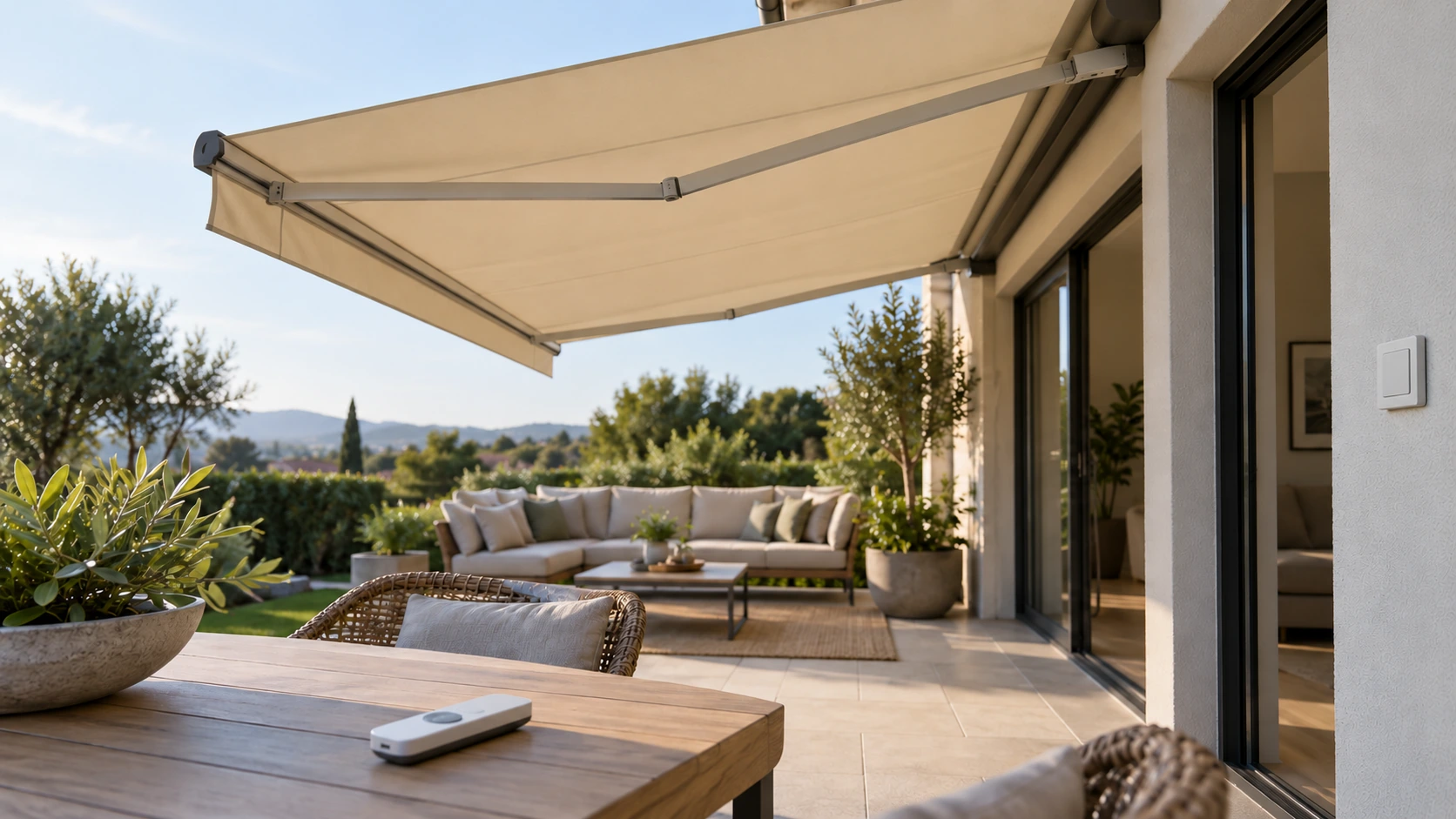
Overlay activity and equipment movement
When children and pets use a patio, consider overhead movement as well as clear ground. No front posts does not eliminate the need for an operating arrangement. Map toy storage, pet resting areas, doors and furniture and ask the installer to explain the selected equipment’s movement and instructions. Real habits, such as moving tall toys against the wall, reveal conditions renderings miss. Do not assume child-safety certification or complete obstacle detection without product evidence. The objective is to reduce occasions when someone operates equipment without understanding the space around it.
The operator needs an appropriate view
Choose a normal operating position under the instructions where the responsible adult can make the necessary observations. If a corner is hidden from an indoor button, discuss visibility and procedure instead of relying on an informal shout. Store remotes and locate controls with the household’s actual needs and product requirements in mind, avoiding casual play with equipment. Do not test claimed detection by placing children near moving parts or encourage pets to chase the front edge. Adult confirmation of suitable conditions should precede the explained operating steps.
Everyday rearrangement can change the conditions
A weekend play tent or relocated pet enclosure may change a previously checked movement zone. Restore temporary items to agreed positions before use; the household needs to understand the reason without maintaining a rulebook for every toy. Tell visiting families or short-term guests who operates the awning and when use is unsuitable. Contact, unusual sound or an abnormal stop calls for the instructed pause and support process rather than repeated cycling. Recording the event helps assessment and prevents another user from restarting without knowing what occurred.
Make handover a routine the household can follow
Include the regular adult users at handover and explain control storage, observation, stopping and support, not just opening and closing. Simple labels can help identify equipment but do not replace instructions or proper installation. Revisit the routine after automation additions, large furniture moves or changes of use. Compare actual documentation and household procedures rather than whether promotional photographs show children. A comfortable family patio coordinates shade, activity and supervision, while equipment functions carry only the responsibilities their documented capabilities and permitted use actually support.
- Plan toys, pet areas and equipment movement together.
- Assign observation and operation to a responsible adult.
- Review the routine after temporary layouts or automation changes.
Can children play with awning controls if sensors are fitted?
Do not treat controls as toys or sensors as complete child or obstacle protection. Follow the equipment instructions, assigning a responsible adult to observe and operate it. Review movement space after layout changes. Stop and seek support for abnormal behavior rather than using children to test protective functions.
More questions, practical answers →