Large pergola projects
Golf club cart return pergola pedestrian planning
Separate cart returns, golf-bag handling and waiting when locating a pergola beside a clubhouse.
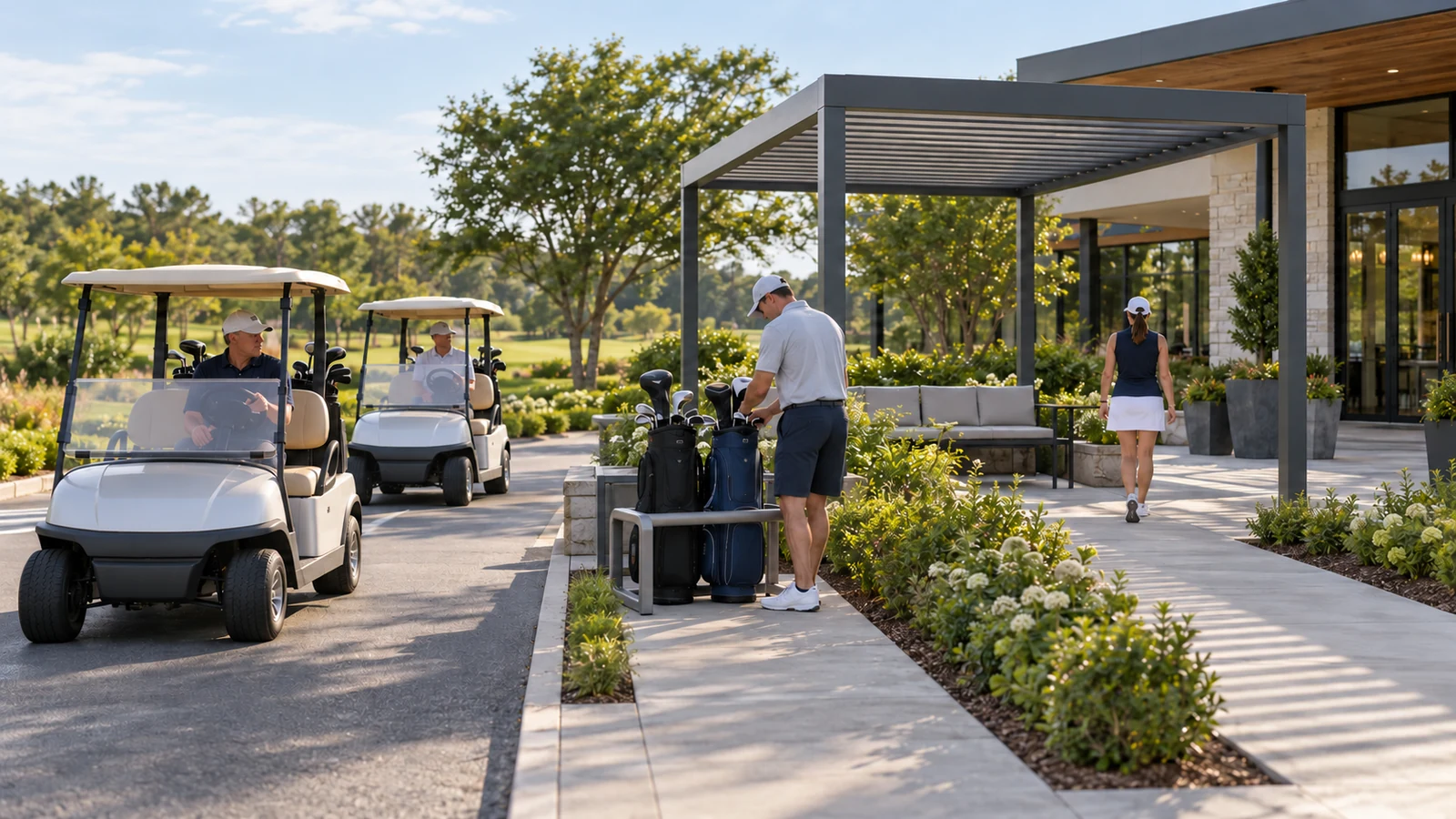
Choose the location around the full cart-return process
Map cart arrival, parking, bag collection and pedestrian departure before locating a pergola near the return area. People waiting for companions may remain while carts continue turning over, creating conflict if both activities concentrate at one opening. TTH200/220 can be considered for customer waiting subject to operational and professional review. UK HSE pedestrian-separation guidance offers assessment principles, with actual rules checked locally. Do not choose solely by proximity to carts or photographic appeal. Visitors should first understand where to wait and how to reach the clubhouse from the return area.
Include golf bags and people in the trial
Real bags, push trolleys and companions change the space beside seats. Trial people bending to organize equipment and walking with belongings. Waiting visitors should not need to repeatedly enter the return route to find companions, and posts are not unverified vehicle protection. Compare seating direction, information points and staff observation together. Nearby cart charging, cleaning or maintenance needs its own review and is not automatically covered by a rest-pergola arrangement. Assign temporary bag racks a position so busy operations do not gradually consume space originally retained for pedestrians.
- Map return, bag collection and waiting separately.
- Trial real golf bags and push trolleys.
- Keep entry clear of continuously turning-over positions.
Test several groups finishing together
Imagine several groups returning during the afternoon. Some players wait beneath the pergola after collecting bags, others remain beside carts, and staff continue receiving vehicles. An entrance facing the unloading point can concentrate these groups briefly. Compare seat direction, temporary bag storage or a reviewed access route with the operator. This scenario specifies no universal cart spacing and does not ask visitors to direct traffic. Its purpose is to distinguish waiting from turnover and fit the space to clubhouse procedures, rather than responding to every peak by adding seats.
Review changes in nearby operations
Provide return procedures, vehicle activity, furniture and engineering information for review of foundations, drainage and applicable conditions. Define opening, cleaning, left-bag and reporting duties, with alternatives when outdoor waiting is unsuitable. Reassess entry and visibility after adding cart queues, equipment or signs rather than treating the first plan as permanent. Do not infer impact resistance, wind performance or all-weather availability from aluminum construction. Judge the pergola through clear customer routes, workable procedures and management that responds to changes, not unverified performance figures detached from the actual return operation.
Should the pergola entrance be as close as possible to returned carts?
Not necessarily. Proximity can concentrate unloading, waiting and later returns in one place. Trial several groups with bags, trolleys and companions. Let the operating process guide entry and seating, reviewing protection separately rather than assuming columns separate vehicles from people.
More questions, practical answers →