Commercial projects
Estimating usable cafe seating on wet days
Assess weather exposure, service capacity and operating costs before counting covered cafe seats as extra sales.
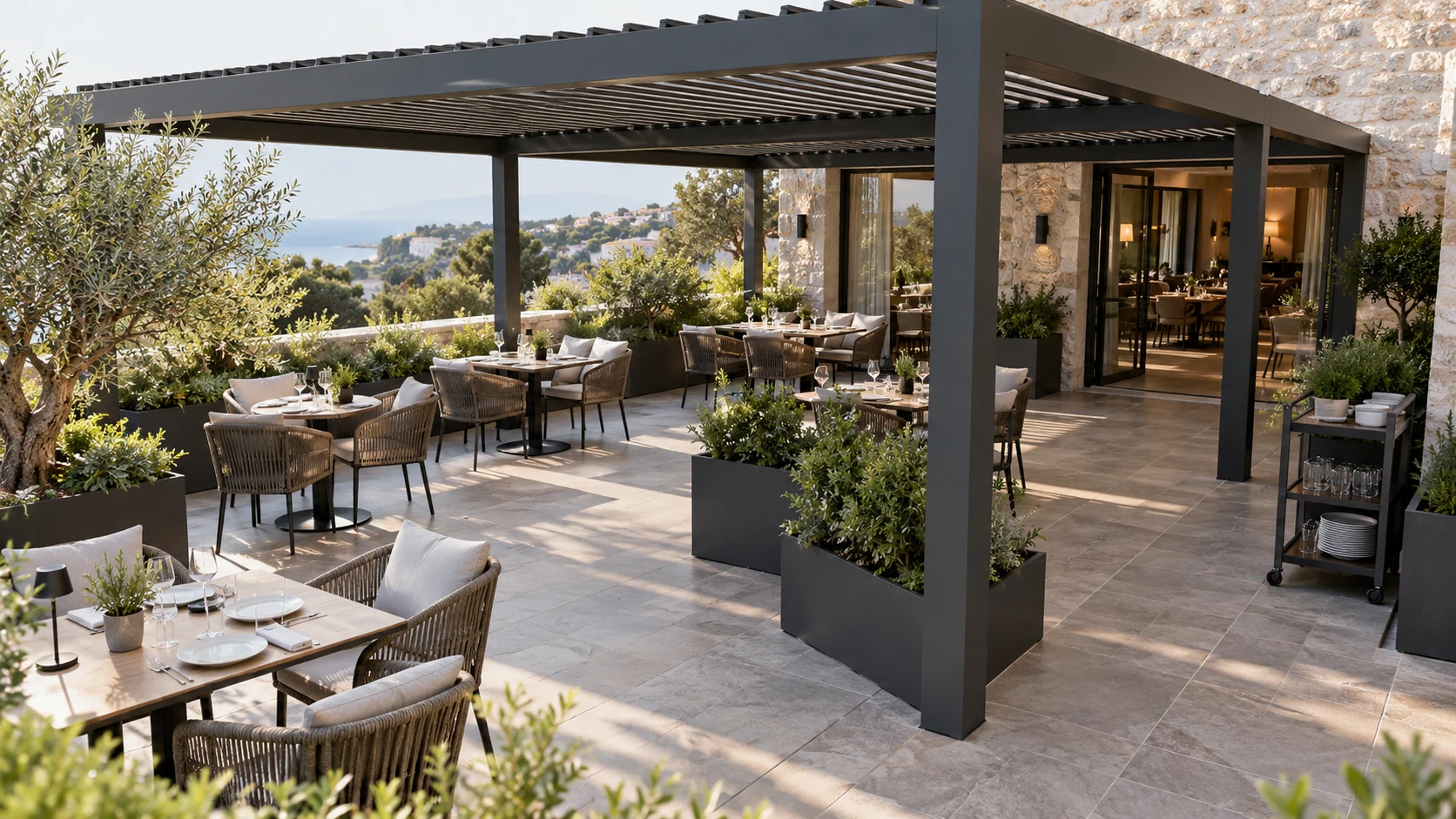
A table that fits is not always serviceable
A cafe may divide the proposed roof footprint by the area of each table and treat the result as additional seating. Serviceable seats also depend on side rain, wet floors, collection routes and staff oversight. Observe several rain events with different wind directions on the existing patio, marking exposed edges and places guests avoid. Without site observations, label the assumptions as unverified rather than counting every illustrated chair as revenue. The exercise can reveal whether the main constraint needs a roof, side protection or improvements to the floor and entrance.
Compare weather with actual demand
Group trading records into conditions staff can recognise, such as dry weather, brief showers and sustained wind-driven rain. Then check whether the cafe actually loses customers because seats are unavailable in those periods. If seats are already empty on dry days, more covered area may add no orders. If rain reduces footfall, a dry-day full-house assumption is equally misleading. Record takeaway share, waiting time and indoor vacancies to distinguish customers lost through a lack of comfortable seating from those who only wanted takeaway service. The purpose is to identify space-constrained demand, not to justify a purchase already chosen.
Use scenarios instead of a promised return
Consider a hypothetical cafe that retains some terrace seating on wet days but needs extra cleaning and supervision. Use its own typical orders, usable trading periods and conservative occupancy assumptions, allowing for additional labour, energy, maintenance and any relevant financing costs. Compare favourable, middle and adverse weather scenarios to see which assumption changes the outcome most. There is no universal payback period, and another cafe’s sales screenshot cannot replace this cafe’s records. If the case only works under the most optimistic assumptions, consider a smaller first phase while retaining the option to discuss expansion.
Choose measures that can be reviewed
Define the purchase around which tables need better weather protection, which access route needs improvement, and what operating and care information is required. A sales increase is not an acceptance condition a structural supplier can control. After opening, use the same recording categories and preferably the same responsible person. Note simultaneous changes to the menu, prices or opening hours; otherwise the cafe may attribute unrelated trading changes to the pergola.
- Mark exposed edge seating separately from reliably serviceable seats.
- Record additional operating costs and the least certain assumptions.
- Compare similar weather and trading periods on a scheduled review date.
Keep evidence that challenges the forecast
During a trial, retain occasions when the investment does not improve use. If covered seats remain empty while customers choose indoors, noise, temperature or collection arrangements may be responsible. Adding tables would not solve that problem. Briefly ask why customers choose their location and record the weather at the same time. This helps distinguish a configuration issue from an operating issue before expanding an untested investment.
Can covered pergola area be converted directly into additional cafe sales?
No. First establish which tables can actually be served in rain, whether the cafe loses demand through a lack of seating, and the additional labour, energy and maintenance costs. Model several weather scenarios using the cafe’s own records rather than treating a full-seating rendering or another venue’s return as a guarantee.
More questions, practical answers →