Compact pergola living
Corner sofa in a compact pergola: count usable seats
Check corner seating, table reach and rear cleaning access before fitting a corner sofa into a compact pergola.
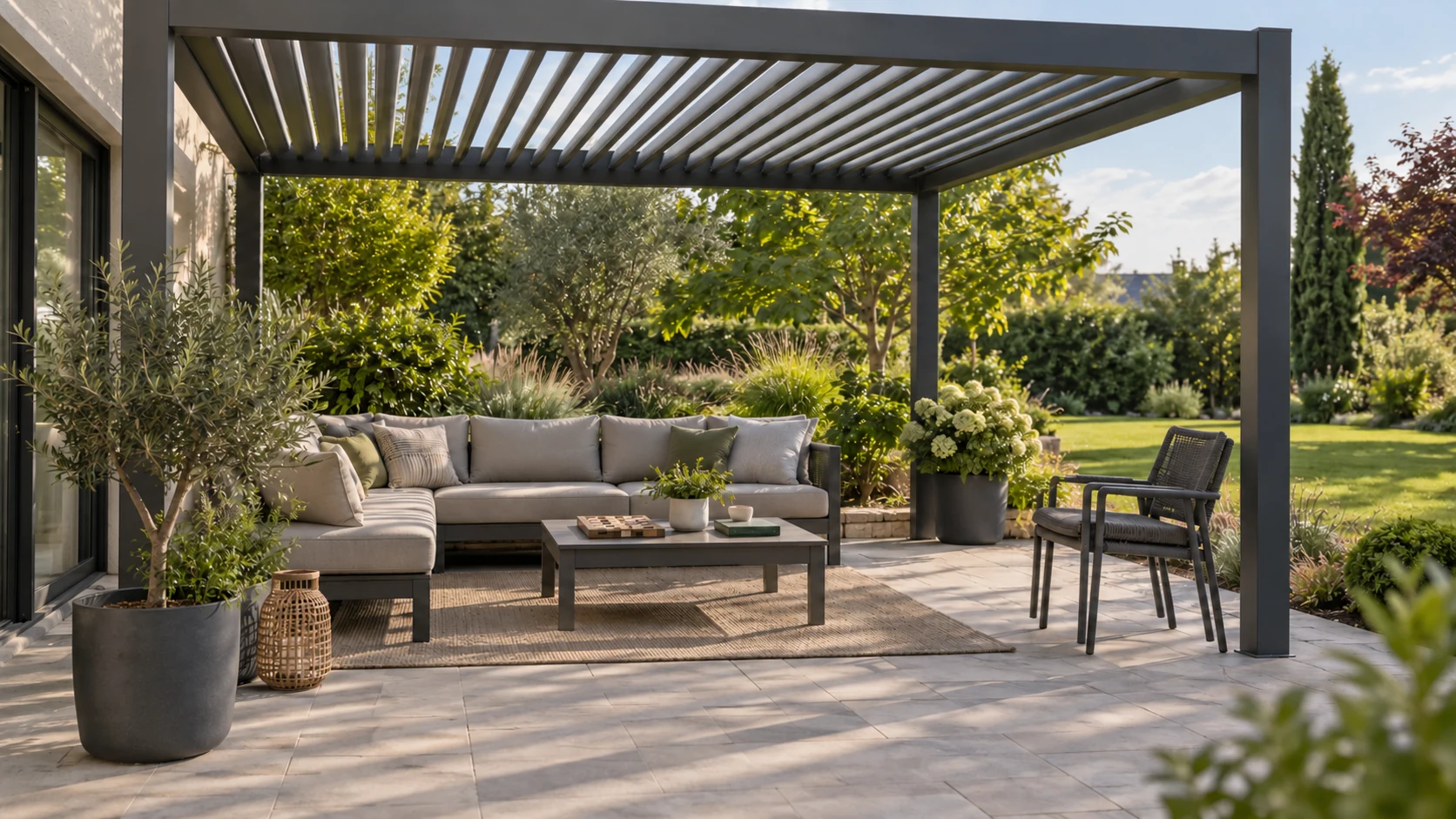
Do not convert sofa length directly into capacity
A corner sofa follows two pergola edges and can appear highly efficient. Yet cushions meeting at the corner bring occupants close together, and knees or feet may compete for the same area. Module counts do not equal places the household willingly uses. Seat people in their normal conversational posture and decide whether the corner works as a real seat or temporary cushion space. Do not inflate capacity by requiring awkward posture. Record everyday comfort separately from occasional close seating instead of presenting both as the same capacity.
Make the coffee table reachable and passable
A large coffee table can complete the composition while trapping people inside the sofa arrangement. Too far away, drinks require repeated reaching; too close, legs and passage are constrained. Have occupants of every position place a cup, retrieve a book and leave, rather than testing only the central seat. Side tables are worth comparing but occupy space of their own. Use empty lidded cups for the rehearsal, establish the movement envelope and only then decide how many surfaces the arrangement needs and where they belong.
Test the corner during a three-person conversation
Imagine three family members wanting a corner sofa facing the garden. Three consecutive cushions may produce awkward conversation, with one person continually turning. Moving the corner or comparing a separate chair with some modules may better suit their habits. This hypothetical example does not reject corner sofas; it questions whether enclosure itself establishes comfort. View the arrangement from the house and garden, and observe whether seated people interfere with passersby. One attractive photographic angle should not settle a layout used from several directions throughout the day.
Retain a way to clean behind the sofa
Check whether modules separate and move as instructed, and how leaves, dropped objects and the floor behind them will be reached. If the sofa sits near a side feature, preserve its operating and service access. Verify cushions, connectors and outdoor conditions from the furniture instructions rather than assuming cover removes storage needs. Photograph and number modules, including their temporary positions during cleaning. The final layout should identify real usable seats, a drink surface for each occupant and routes out, not merely an attractive corner outline.
Pass a tray to the innermost seat without lifting drinks over someone or leaning against a neighbor before counting it as a regular place.
- Check neighboring legs in the corner with natural posture.
- Have every occupant place a cup and leave.
- Confirm module movement and rear cleaning access.
Does a six-seat corner sofa comfortably seat six under a small pergola?
The label alone is insufficient. Corner legroom, table reach, arms and exit routes affect use. Test regular occupants together, distinguish everyday comfort from occasional close seating and preserve cleaning and service access.
More questions, practical answers →