Hardtop pavilion planning
A birdwatching rest pavilion: plan viewing angles and quiet arrival
Arrange seated views, quiet arrival and independently supported observation equipment.
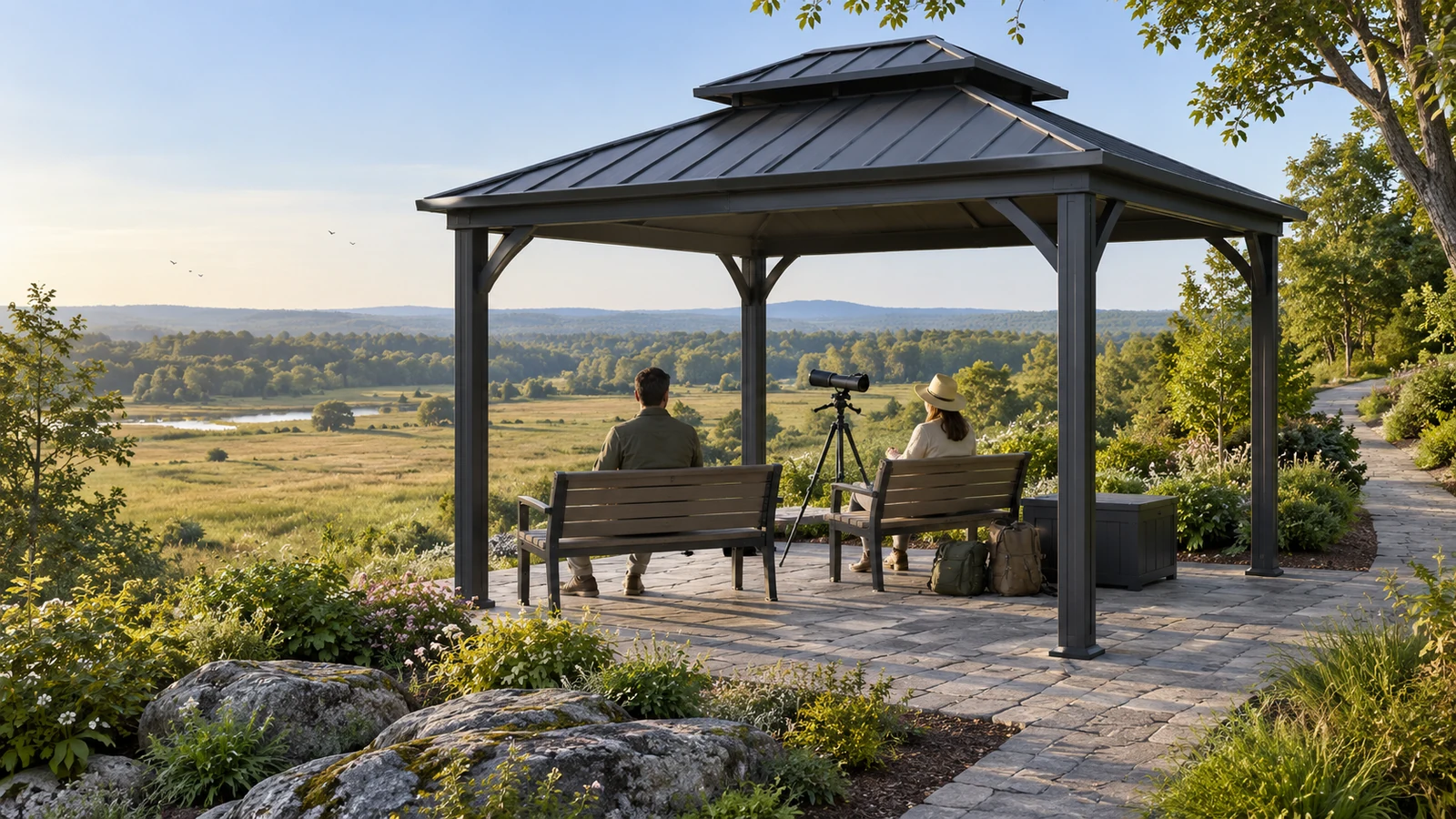
Choose the actual viewing directions
Start with intended viewing directions, seated height and site-management requirements rather than selecting an attractive roof first. Columns, gathered curtains and planting can affect the view and need checking from the proposed seats. An ordinary open pavilion does not automatically provide the functions of a specialist wildlife hide. Follow applicable site guidance for the activity without altering surroundings simply to improve a photograph. Procurement can confirm openings and use arrangements, but structural appearance alone cannot promise wildlife-observation results or specialist concealment.
Plan equipment and arrival separately
Use observation equipment with suitable independent support, without assuming rails or columns accept clamps. Map deployed equipment, changes between sitting and standing, and arriving visitors so people need not repeatedly cross viewing positions. Assign bags and unused equipment away from openings. Put operating information where visitors can understand it before entering the seated area. Lighting or other accessories should reflect the actual activity and site requirements, not an unassessed decorative addition. The arrangement should serve both current observers and people joining later.
Test arrival while observation is underway
Imagine two observers are seated when another group arrives with equipment and looks for space. Rehearse outside an active observation session to check the entrance, bags and equipment adjustments. Adjust arrival guidance or seat orientation where useful. No artificial disturbance or animal interaction is needed; the test concerns human movement. Reassess seasonal or activity changes instead of turning one successful visit into a permanent product claim. Contextual layout records help volunteers and new staff provide consistent directions without promising a particular viewing experience.
Keep the rest function clearly defined
Record observation and rest positions, equipment conditions and responsibility for guidance. Pavilion care and ecological management belong to their respective teams; routine cleaning does not authorize vegetation changes. Show actual facilities and contextual views without guaranteeing bird appearances. Help ordinary visitors understand shared use.
Recheck openings after maintenance, new seats or storage additions. Small height changes can alter a previously verified seated view, so retained instructions should describe the current arrangement rather than an outdated photograph.
- Check intended openings from seated positions.
- Provide independent equipment support and bag storage.
- Rehearse later arrivals and update guidance.
Can an ordinary hardtop pavilion be advertised as a professional birdwatching hide?
Confirm the actual functions rather than equating a roof and curtains with a specialist hide. Check seated views, arrival and equipment support, follow site requirements and describe only verified conditions without promising wildlife or concealment outcomes.
More questions, practical answers →