Hardtop pavilion planning
Where do open gazebo curtains go? Plan tiebacks and stacked fabric
Plan where open curtains will sit, including furniture, inspection points and everyday operation.
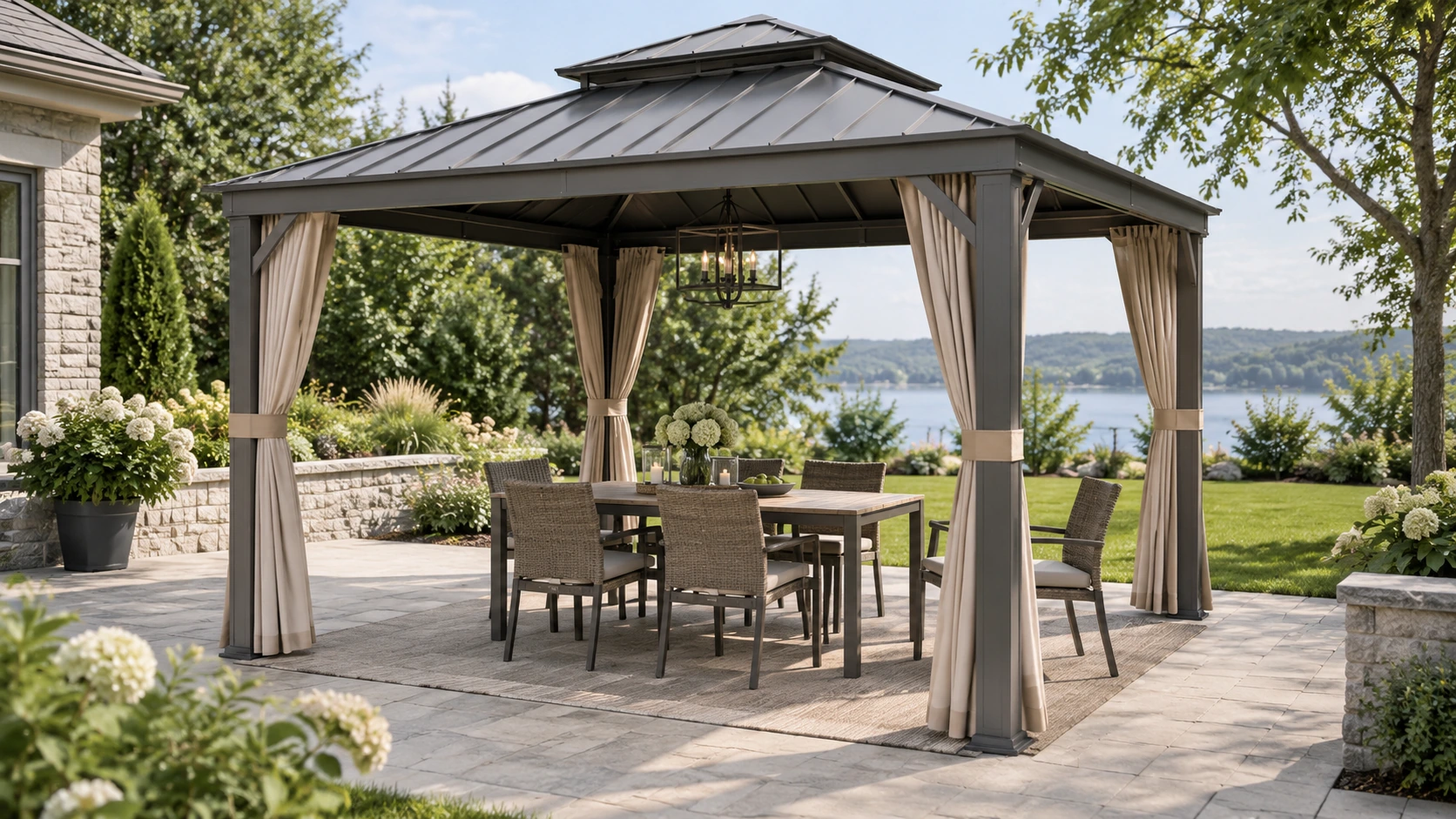
Treat parked fabric as a real object in the layout
Gazebo curtains do not disappear when opened. Fabric, ties and fittings parked beside a post still occupy space. Ask for a demonstration of the actual open state, including where each panel belongs and how it is secured under the accessory instructions. Add those areas to the furniture plan, especially beside chairs, cabinet doors and entrances. A neat closed photograph cannot answer this question, and panels should not be assumed to stack into any convenient corner. A suitable parked position lets users open the curtains without repeatedly moving furniture.
Check tiebacks against other uses of the post
Posts may also carry controls, lighting, connection covers or inspection areas. Have the supplier or installer review whether parked curtains conceal or interfere with those functions. Confirm the intended ties and attachment method rather than drilling posts or substituting improvised materials. For long periods of open use, ask about applicable weather and storage instructions. Tied fabric should not be assumed suitable for every condition. Distinguish everyday parking from seasonal removal so the owner has an understandable routine for both.
Test a conflict with a chair beside a post
Imagine a dining chair beside a curtain parking point. The layout works with curtains closed, but opening them places fabric against the chair back. Try a furniture adjustment and ask whether the panel arrangement supports another parked position instead of forcing fittings beyond stops. This scenario gives the open state its own boundary. Test chair movement, standing and tying with actual furniture; watching a curtain glide through an empty display pavilion does not represent those everyday interactions.
Record the intended open arrangement at handover
Have the regular user park the curtains once after installation and photograph each final position with its post, panel and tie. This helps restore the layout after cleaning or staffing changes. Resolve conflicts with inspection or equipment before recording the agreed state. Revisit it when furniture changes, even if the pavilion itself is unchanged.
A venue can document open, partly closed and end-of-service arrangements, while continuing to follow manufacturer instructions for weather response. Routine photographs do not replace requirements for unusual conditions.
- Mark the parked fabric area on the furniture plan.
- Check controls, service covers and equipment beside posts.
- Photograph the panel, tie and correct parking location.
Can all unused curtains be tied to the nearest post?
Only if the actual tracks and panels support that arrangement. Confirm parking, ties and stops, then check furniture, entrances and service access. Record the correct state and follow separate seasonal and weather instructions.
More questions, practical answers →