Retractable awning choices
Does lighter awning fabric always feel cooler? Separate the questions
Assess seated comfort, visible light and building energy separately; one color label or generic savings percentage cannot replace a site-specific comparison.
Specify the experience you want to improve
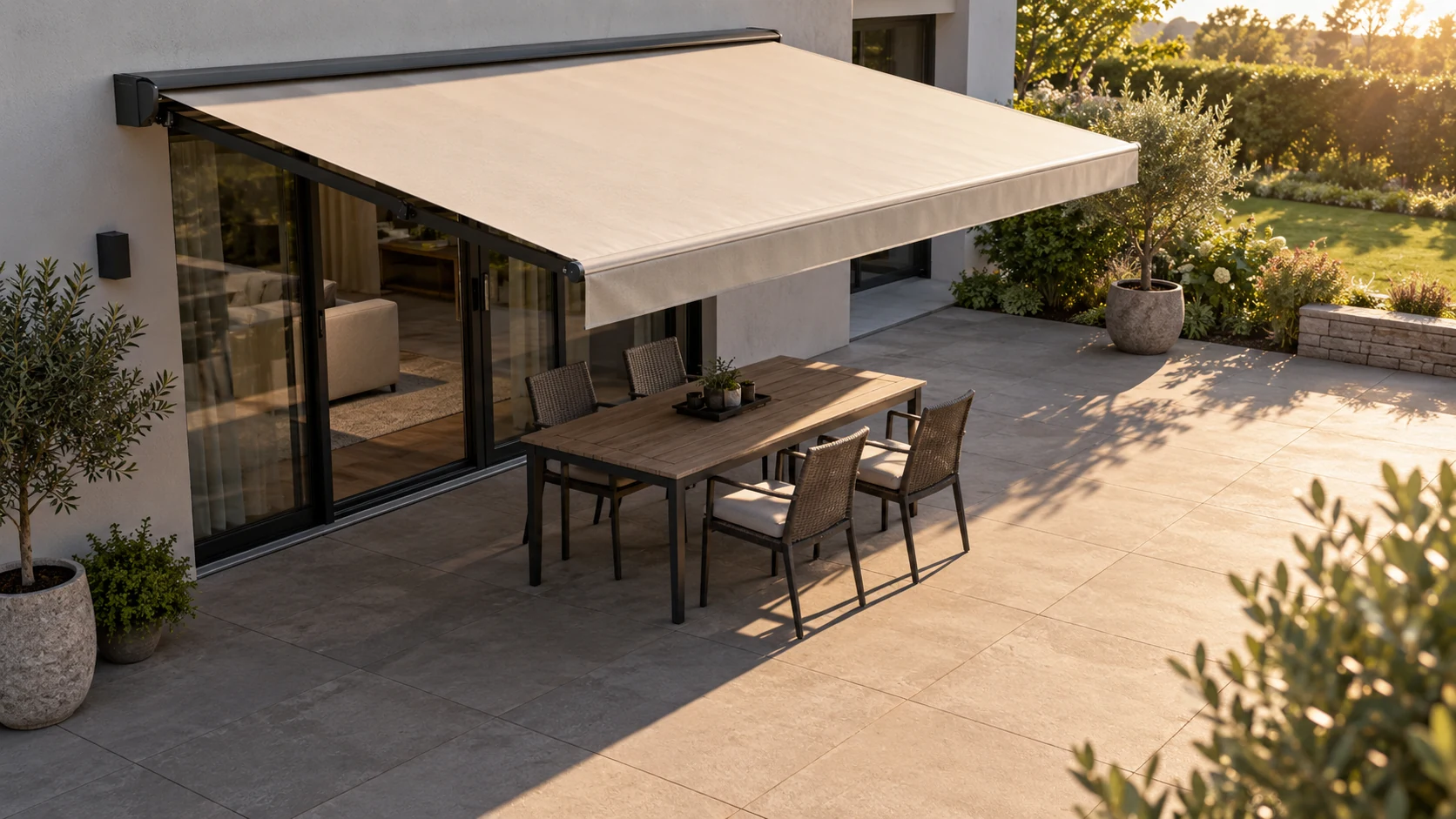
Before asking whether a pale awning is cooler, identify whether the goal is comfort below it, indoor glare reduction or air-conditioning use. These are related but different measures. Sun direction, coverage, surrounding glass, ground surfaces and ventilation also influence experience. Give the supplier normal seating positions and hours, then discuss actual fabric information and layout. A color alone should not be claimed to deliver a fixed temperature reduction or energy-saving percentage. Such figures require a defined method and applicable conditions rather than an assumption based on shade names.
Use data for the complete specified fabric
Request identifiers and available data for the complete candidate fabrics, clarifying the property and test being described. Reflection, light transmission, UV-related measures and human comfort should not be collapsed into one higher-is-better score. Do not transfer another brand’s results or those of differently treated fabric. Data involving a window or building arrangement needs relevance to your combination. Owners need not calculate room temperatures from isolated parameters, but can ask what the information supports and what it cannot promise. Leave unavailable evidence unknown instead of converting marketing language into numbers.
Compare practical experience under similar conditions
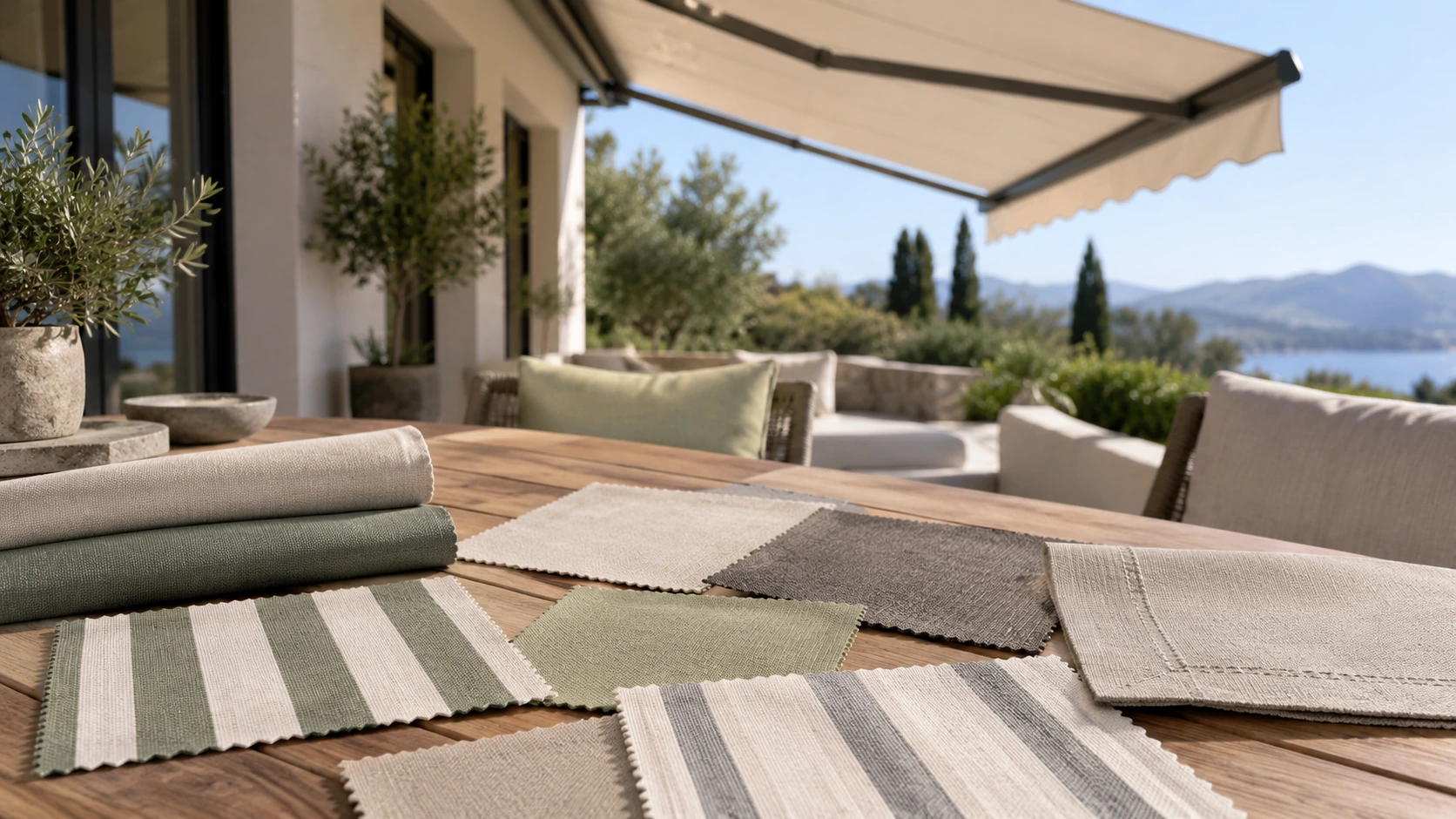
For a west-facing dinner patio, low sun may enter beneath the edge, so changing fabric color may not resolve seated glare. Check shadow and seating first, then compare sample brightness, tone and visual comfort under similar conditions. Feelings recorded in different weather or positions are not a controlled fabric comparison. A full-system trial can inform personal preference when its conditions are recorded, but it is not a universal performance test. This approach reveals layout issues that matter to experience instead of allowing color alone to dominate the purchase.
Energy assessment needs a separate scope
If indoor energy use is a purchasing objective, have appropriate specialists consider window orientation, glazing, building operation and local conditions with a defined comparison method. Outdoor comfort cannot simply be converted into reduced bills. Research cited in a proposal needs scope review; an older average is not a project guarantee. It is reasonable to conclude that the household prefers one visual experience while energy effects remain unmeasured. Transparent conclusions are more useful than a universal percentage. Color is one variable within the full operating environment, not a substitute for assessing it.
- Separate comfort, glare and energy objectives.
- Request specific fabric data and its applicable conditions.
- Check shadow and seating before comparing color experience.
Can pale awning fabric guarantee lower cooling bills than dark fabric?
Color alone cannot guarantee that. Energy use also depends on glazing, orientation, operation and site conditions, and outdoor comfort cannot be directly converted into bills. Review actual fabric data and use an appropriate building assessment. A preferred brightness or tone is valid preference evidence, not measured energy savings.
More questions, practical answers →