Retractable awning choices
Why awning fabric looks different when it is opened
Reflected surface color and the view through lit fabric are different conditions. Review both before choosing the material.
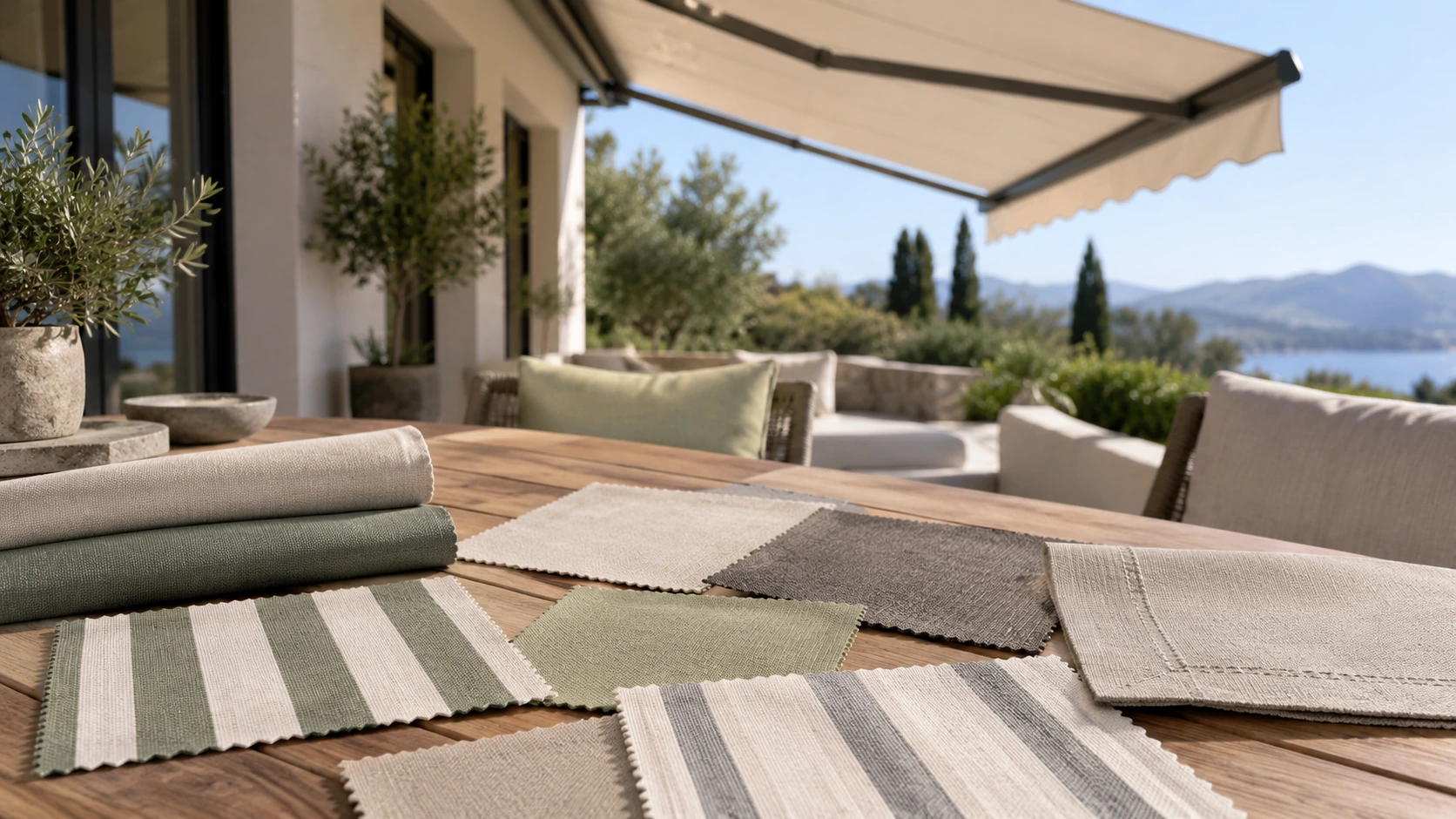
A screen image omits the viewing conditions
An attractive online color may look different when deployed without necessarily being the wrong fabric. Lighting, display settings, orientation and background brightness affect appearance. First compare the order and supplied identifiers, then review actual samples instead of relying on memory. Ask how promotional photographs were taken and whether samples or deployed references are available. This distinction does not excuse a real defect; it separates identity checks from viewing-condition differences. Any uncertainty about references, batches or supplied material still needs recording and resolution through the provider’s agreed process.
View both the surface and the light beneath it
Review a sample’s reflected surface beside the actual facade, then assess the illuminated underside through an appropriate sample demonstration. Both relate to use. The tone seen while seated beneath fabric may differ from a swatch laid flat in the hand, and nearby glass, walls and tables affect the overall impression. Compare candidates under similar conditions rather than placing one in shadow and another against bright light. Identify whether exterior appearance or the atmosphere underneath matters more so trade-offs between the two views are intentional rather than discovered after installation.
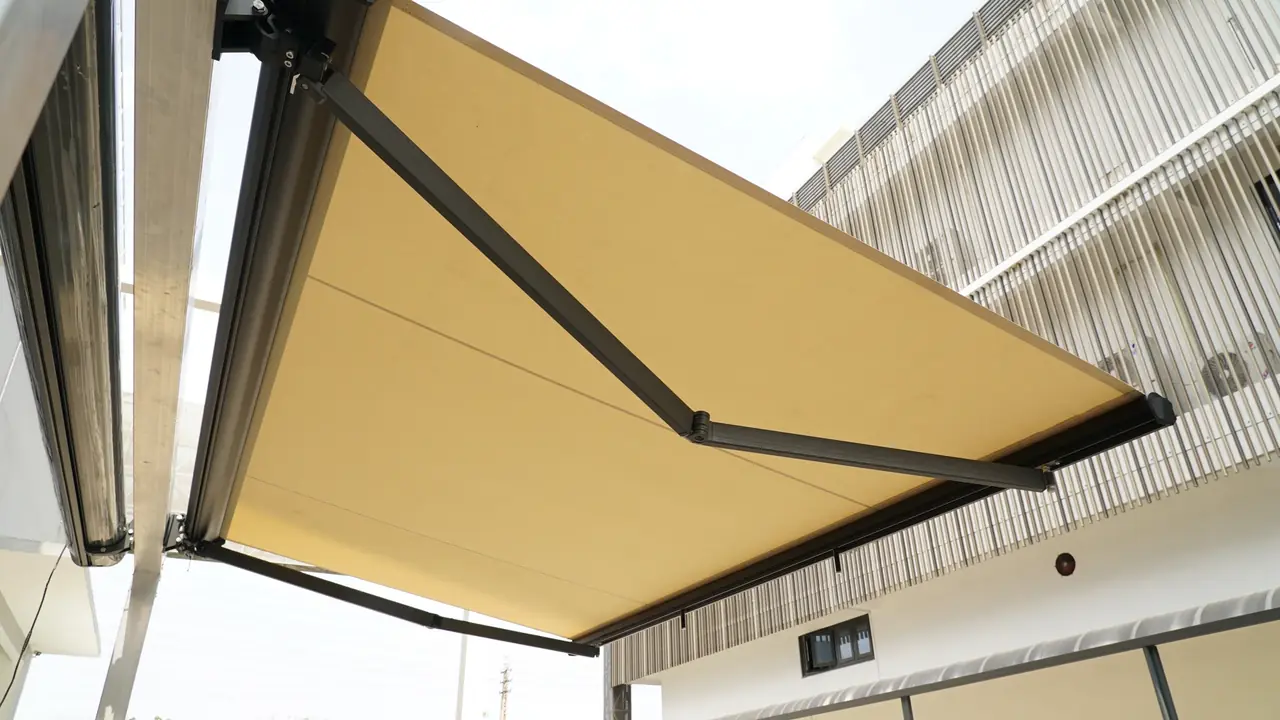
Compare during the times the patio is used
If the patio is mainly used for dinner but samples were viewed only at noon, evening direction and outdoor lighting may have been missed. Compare candidates during the principal use period and include the indoor view looking outward. Keep unavailable viewing conditions acknowledged rather than treating a rendering as an exact prediction. Small samples help narrow options, while the full deployed area can be much more visually prominent. No pale, dark or patterned option is universally best; the choice should correspond to real activities, surrounding materials and personal preferences.
Use clear records to reduce delivery disagreement
Retain the fabric reference, accepted sample and a short note of viewing conditions, including any unresolved seams or valance details. Recheck samples after a proposed substitution instead of accepting a verbal near-match. At delivery, verify identifiers and compare appearance under similar conditions, referring unexplained differences to the supplier rather than applying treatments to alter color. Matching a later replacement to aged material also needs specific confirmation. A sound selection process recognizes viewing differences while preserving a clear route for investigating a genuinely incorrect or unexpected delivery.
- Verify the fabric reference before comparing viewing conditions.
- Assess reflected color and the illuminated underside.
- Review during normal use hours and retain acceptance records.
Does a different deployed color always mean the wrong fabric was supplied?
Not necessarily. Verify order and material identifiers, then compare lighting, direction, transmitted light and surroundings using the accepted sample under similar conditions. Refer unexplained differences to the provider. Screen memory is not sufficient, and chemical treatment should not be used to change color before the issue is assessed.
More questions, practical answers →