Retractable awning choices
Acrylic or polyester awning fabric: compare the complete specification
Compare treatment, system suitability, seams and care alongside the fiber name; a shared material label does not establish identical performance.
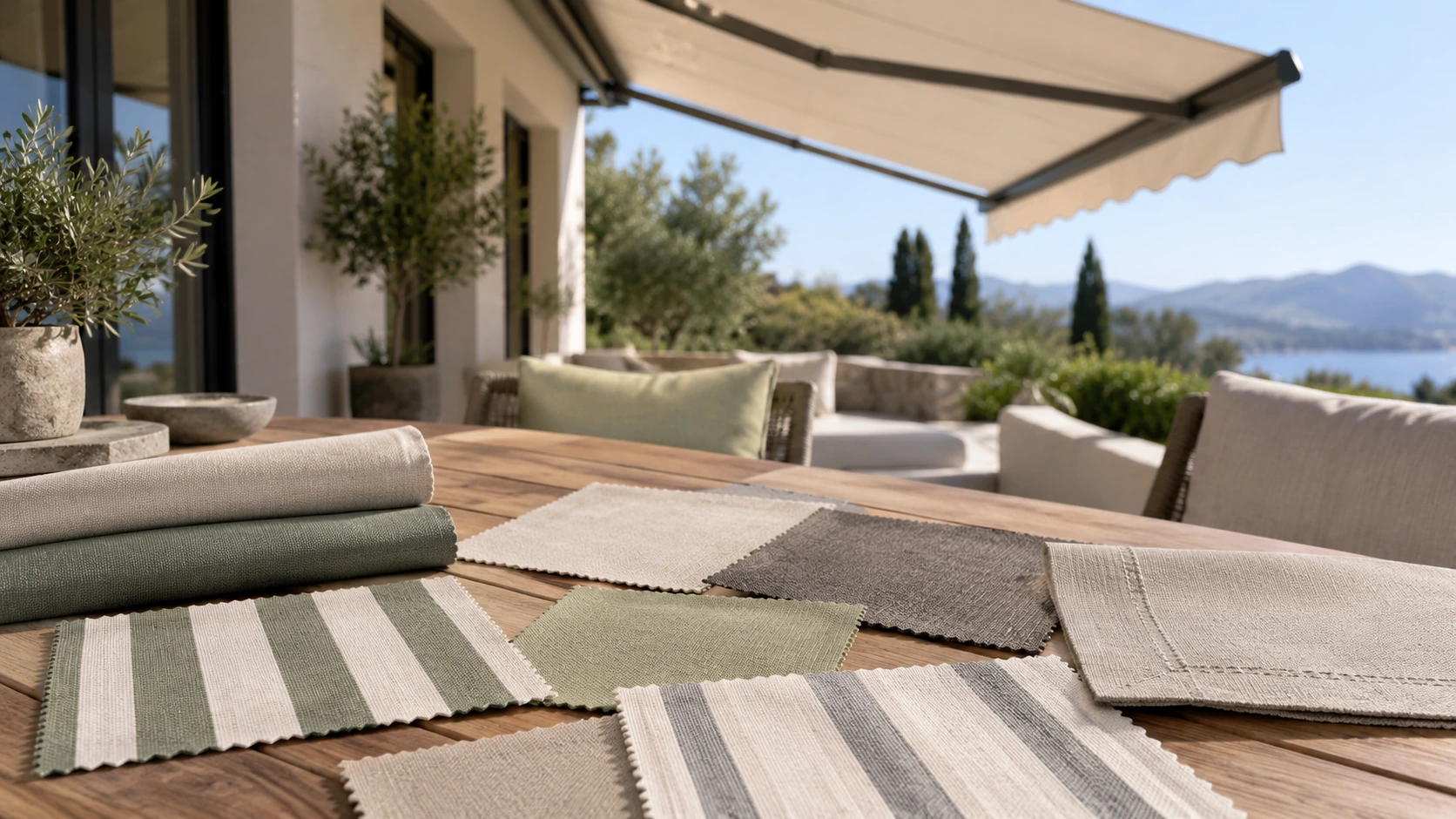
The fiber name is only a starting point
Acrylic and polyester are often presented as two simple choices, but fiber names alone do not establish suitability for a particular awning. Construction, coloration or treatments, application guidance and finished-fabric manufacturing also matter. Request an actual fabric identifier rather than accepting premium or standard as the entire specification. The same fiber label across brands does not permit performance claims to transfer. Start with identifiable candidates linked to their own documentation so the comparison concerns real supplied materials rather than broad impressions of material categories.
Confirm compatibility with the system and use
The selected fabric needs to suit the rolling arrangement, finished dimensions and manufacturer-permitted configuration. The system provider should confirm those relationships. A material used successfully in fixed shade elsewhere is not automatically suitable for this folding-arm system. Rain use, cleaning, tensioning and replacement requirements also come from the actual documentation rather than the fiber label. Assign responsibility for the combined equipment and fabric, avoiding a situation where each supplier accepts only its component and no one confirms the complete arrangement before customization.
Compare care and appearance alongside one another
A household worried about falling debris should compare approved cleaning, drying and service arrangements rather than argue which fiber sounds more durable. Another may prioritize stripes, transmitted light or seams and need larger samples and manufacturing details. State priorities so the supplier can provide relevant evidence. Pulling a swatch or pouring water on it once does not prove years of performance. Avoid unsupported claims of permanent color or zero maintenance. Useful differences come from checkable product information and the care routine the actual users are willing and able to follow.
Include replacement and future identification in the quote
Record the fabric source, model reference, color and finished scope, retaining applicable care instructions. Ask how future replacement identifies the original material, whether measurement is required and whether service includes removal and disposal. A matching fiber name does not establish a direct replacement. Reassess compatibility, samples and quotation changes when another fabric is proposed, rather than comparing price per area alone. Choose through care, appearance and complete service scope. Material names organize the discussion, while specific products, configurations and documents determine whether the resulting commitments are actually clear.
- Use actual fabric identifiers instead of generic material rankings.
- Assign responsibility for fabric-system suitability.
- Compare care, samples and future replacement scope.
Is acrylic awning fabric always better than polyester?
Fiber names alone do not establish a ranking. Compare the actual treatment, permitted configuration, samples, care and service, confirming suitability with the chosen equipment. Data from other brands or treatments cannot simply transfer. Put the fabric identifier in the order and reassess any substitution.
More questions, practical answers →