Retractable awning choices
Where does water from an awning edge go? Check the walking route
Review the front-edge water line with entrances, circulation and ground drainage; a shaded table does not establish a workable wet-weather route.
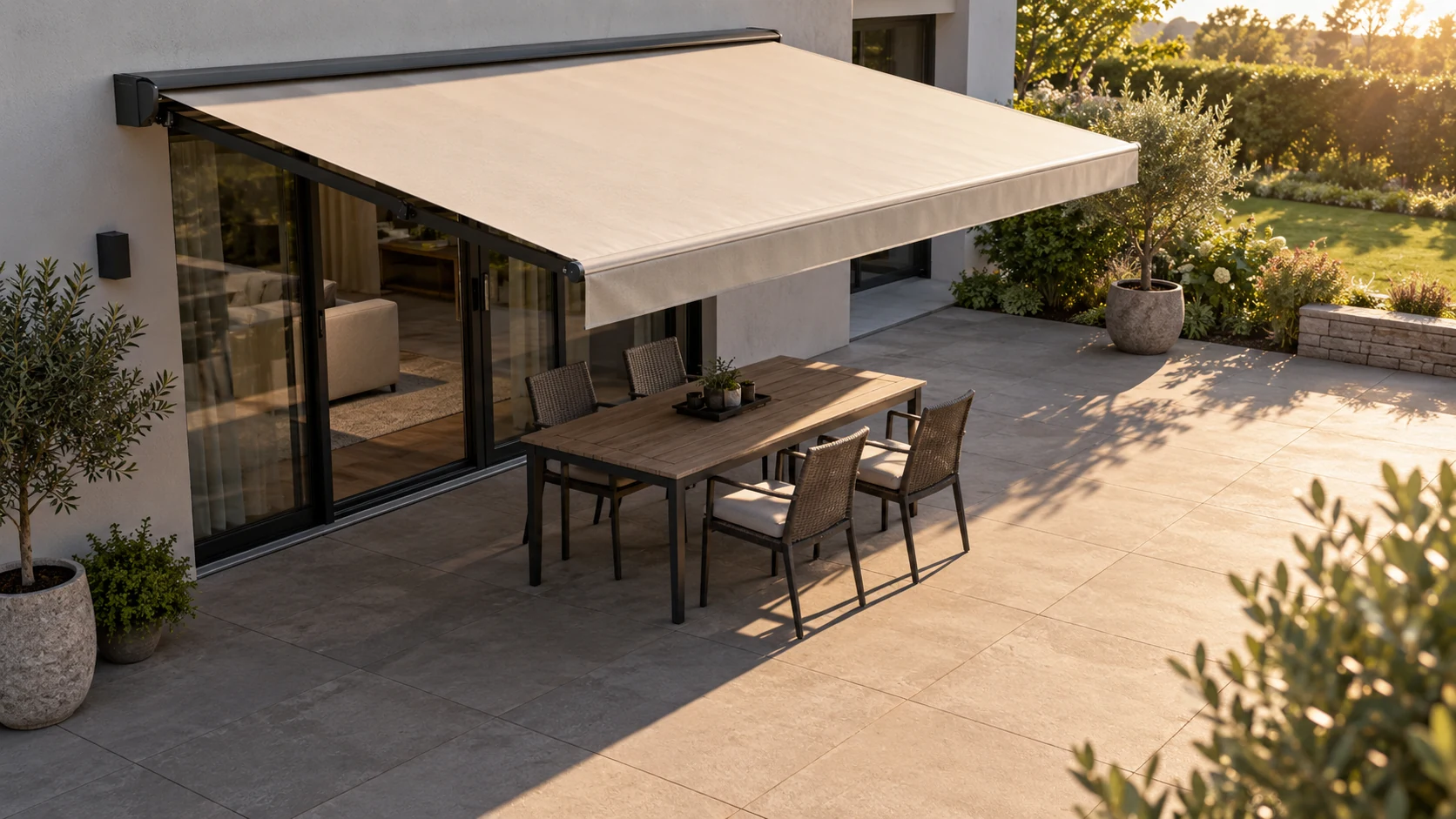
Confirm the product instructions for rain first
Before discussing the edge water line, establish the selected model’s instructions for rain, fabric condition and retraction. Not every shading product is intended as continuous rain shelter, and a dry table in a photograph does not prove a complete roof system. Once suitability is understood, examine where water may leave the fabric in permitted situations and what becomes exposed after retraction. Otherwise, protecting a table may leave the route from house to garden under dripping edges. Do not create an unsupported rain-use claim through improvised pitch changes or accessories.
Place the water line on the activity plan
Mark thresholds, regular walking routes, steps, planters, electrical equipment and existing drains on one plan. Ask the installer to identify relevant checks for the proposed arrangement. The front edge is not merely an architectural line; it may coincide with someone carrying items outside or moving around a table. Consider ground falls and drainage as well as water leaving fabric. Include the relevant people if runoff may affect shared or neighboring areas. This does not calculate universal flow or slip performance; it ensures that water, people and facilities are considered together.
Review after-rain and retracted conditions too
Imagine a dining table centered beneath shade while the storage path follows the front edge. Seated comfort may coexist with a dripping route when someone retrieves equipment after rain. Compare furniture and route adjustments before asking professionals whether the equipment arrangement or ground drainage needs revision. Do not hang improvised buckets, strips or unapproved drainage devices from moving edges. Include the retracted state, when water distribution changes. Commercial sites should also identify temporarily unavailable seats or routes clearly instead of expecting customers to navigate around an unresolved wet area.
Make the handover questions observable
Retain photographs relating the front edge to ground features, confirm that operating limits were explained and list issues still assigned to landscaping or drainage specialists. Do not mark behavior verified when it has not been observed under suitable conditions. Revisit the relationships after adding planters, mats, sockets or steps. If continuous sheltered circulation is the actual requirement, state that clearly and request a suitable proposal. A broad outdoor-living description should not conceal an unresolved practical question about where users walk and where water reaches the ground.
- Verify the equipment instructions for rain before planning use.
- Map the front edge, entrances, walking routes and drains together.
- Record unverified behavior and avoid improvised drainage attachments.
Does a dry table mean the awning drainage arrangement is satisfactory?
No. Review the permitted-use water line, entrances, walking routes and exposure after retraction. A dry table does not establish a suitable wet-weather circulation route. Coordinate the layout with the installer and relevant site specialists, recording unverified behavior and avoiding improvised devices on moving edges.
More questions, practical answers →