Retractable awning choices
When an awning will not fit the lift: check delivery access before ordering
Check the actual longest packed component against lifts, corners and unloading access, agreeing handling arrangements and failed-delivery responsibilities before ordering.
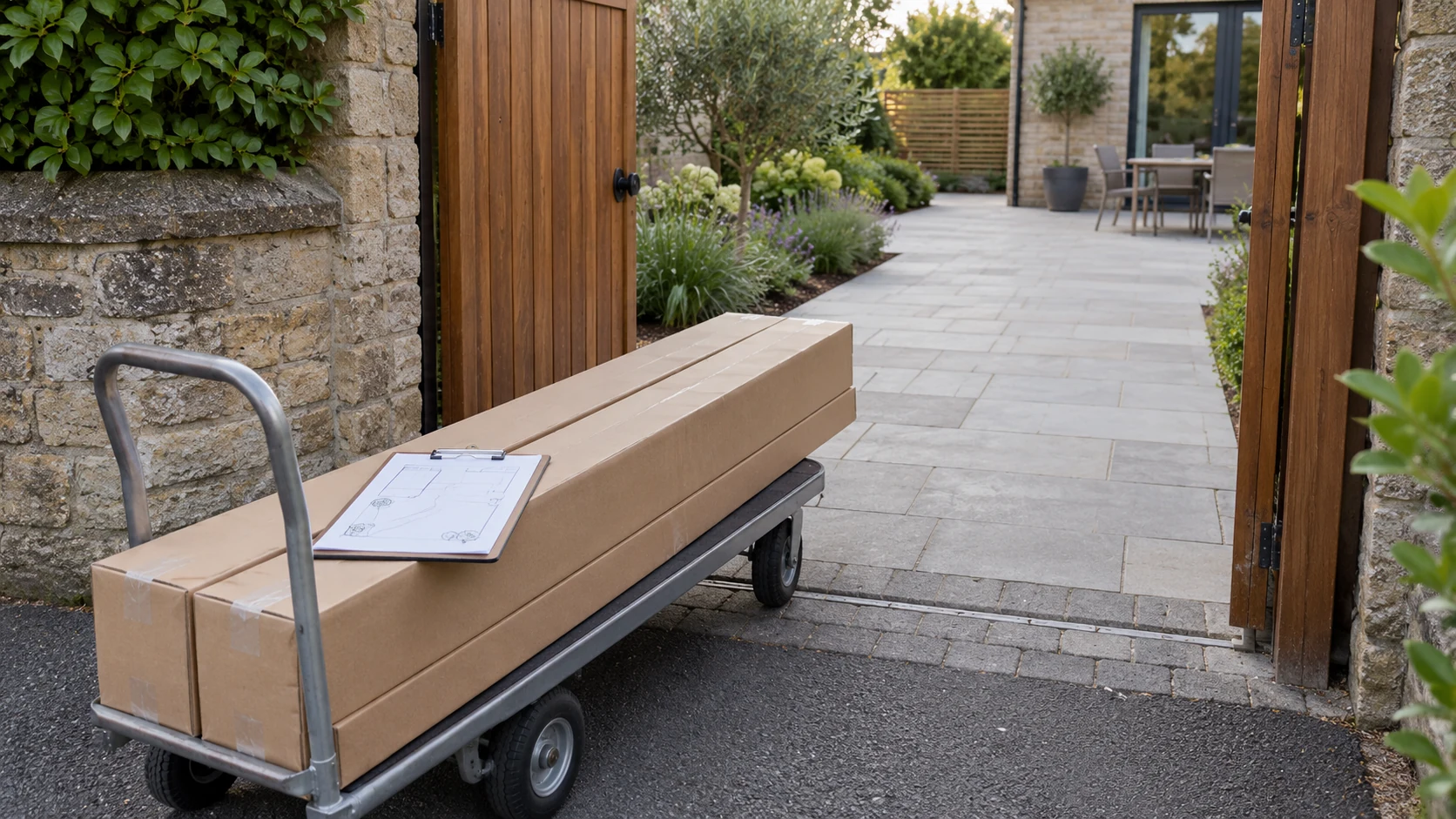
Product width is not the complete transport size
Fitting the facade does not mean a packaged awning can reach it. Request the longest package’s dimensions, cross-section, weight and permitted handling method. Ask whether divided delivery is available and who would complete assembly. Product width compared with lift-door width is not enough, and removing packaging may not solve turning constraints. Transport protection can be part of the delivery requirements. Use supplier-provided package information for access checks, leaving missing dimensions unresolved instead of guessing from a photograph how a long component will travel through the building.
Review every turn along the complete route
Trace the route from the vehicle to unloading, entrance, corridors, doors, lift or stairs and final installation position. Long components need assessment through turns, not isolated measurements of individual openings. Check property requirements for unloading times, shared-area protection and handling. Owners can provide photographs and plans, while the handling provider assesses feasibility. If the ordinary route is unsuitable, an appropriately capable provider must propose a defined alternative. Do not improvise passing equipment outside windows or unplanned lifting operations because the delivery vehicle has already arrived and people feel pressure to proceed.
Agree what happens if access is not available
Imagine delivery arriving while the lift is unavailable for maintenance. Agree storage, rebooking and repeat-delivery responsibilities beforehand. Distinguish curbside delivery, delivery to a floor and placement at the installation point instead of relying on an ambiguous door-to-door phrase. Define reassessment and cost approval if site conditions differ from the supplied information. Reconfirm appointments, contacts and route availability before arrival, including temporary obstructions from renovation work. A clear exception process reduces pressure and makes logistics quotations comparable because each provider is pricing the same practical destination and access assumptions.
Check package condition and the handover record
On receipt, check packaging, quantities and visible issues according to the supplier’s process, photographing the handover condition. Do not remove essential protection or force long components to fit for the sake of speed. Record damage or missing parts and clarify whether installation can proceed. Delivery completion and installation acceptance are separate records. The route information may help future replacement deliveries, but new package dimensions still need checking. A complete logistics plan assigns responsibility from protected transport through site handover, rather than merely confirming that a vehicle can reach the street address.
- Obtain actual long-package data and permitted handling methods.
- Check the entire route from unloading to installation.
- Define delivery destination, storage and repeat-delivery conditions.
If an awning fits the balcony, will it necessarily reach that floor?
No. Check the actual package and permitted handling method against the complete entrance, turning, lift or stair route and property arrangements. Installation width is not transport data. Agree the destination, handling provider, storage and repeat-delivery conditions before arrival rather than improvising unpacking or handling changes on site.
More questions, practical answers →