Large pergola projects
A winery tasting pergola: presentation, pouring and glass returns
Coordinate winery presentation, pouring and glass returns through seated and standing states.
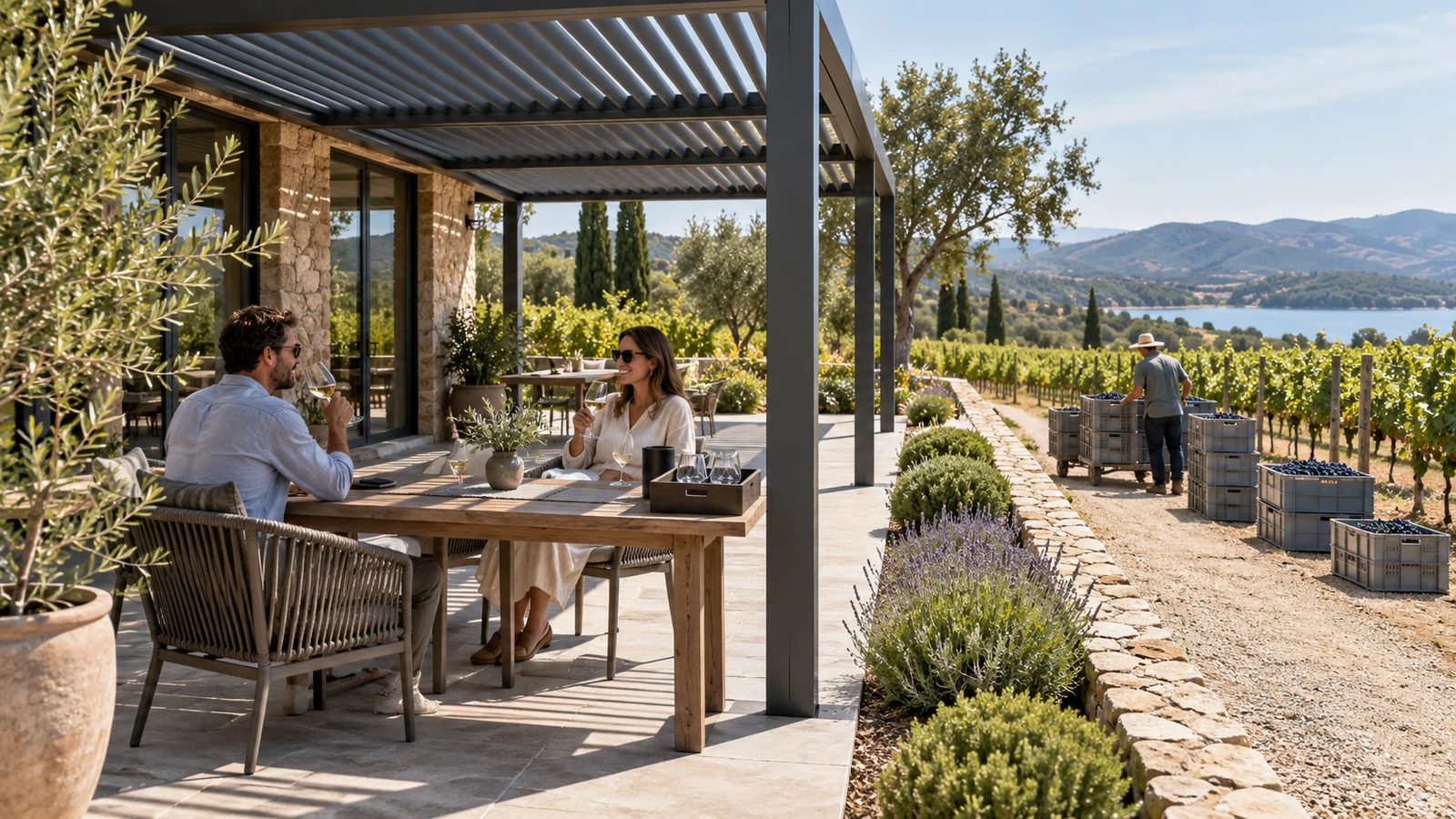
Define presentation and pouring together
Decide whether explanation occurs centrally or alongside circulating service, and whether guests sit or stand. Those choices affect staff approach, glass placement and views, so styling alone cannot define the layout. This article addresses pouring and glass returns rather than alcohol health, licensing or operating-rule advice. Map the presenter, service receiving points and glass-return destination together. A large pergola is a spatial option, while the tasting team still needs an activity-specific arrangement that explains how staff and guests exchange items throughout the session.
Give each glassware state a position
Identify unused, in-use and return glassware positions under the operating requirements rather than relying on appearance within one tray area. Check real service equipment and staff turning, since table fit does not establish a workable pouring movement. Consider crossings during explanations and repeated waiting for staff. Outdoor equipment and food-service facilities need separate confirmation; overhead cover is not complete readiness. When an outside team supplies glasses, assign receipt, counting and return so the spatial plan corresponds to a clear custody process between providers.
Test the transition into informal conversation
Suppose guests stand to converse after a presentation while staff continue service and collect some glasses. Rehearse with empty glasses and actual trays to see whether standing groups occupy former service points or leave returns without a receiver. Review transition guidance, furniture or sequence with the winery. The example prescribes neither event style nor universal attendance. It makes the stages share practical assumptions, rather than producing two individually attractive plans with no workable transition between formal explanation and informal conversation.
Include glass returns in completion
Close only when glasses, service equipment and temporary items reach their assigned receivers, with exceptions recorded. Rehearse changed glassware, layouts or formats and share updates with contractors. Follow product instructions and avoid improvised structural attachments. Distinguish event equipment from standard product supply.
If another use follows, assign separate confirmation for glass returns and furniture restoration. Guest departure alone does not establish that the next team can receive the area, so the handover needs both relevant completion states.
- Plan presentation, pouring and return positions together.
- Test seated-to-standing changes with empty glassware.
- Complete both glass and furniture handovers.
What can a tasting layout based only on presentation seats miss?
It may miss pouring access, spare glasses, returns and standing guests. Rehearse all phases with real furniture and empty service items. Apply operating requirements and close only after returns and area restoration are complete.
More questions, practical answers →