Large pergola projects
Warehouse staff break pergola forklift routes
Review warehouse doors, loading activity and forklift turns before positioning a staff break pergola.
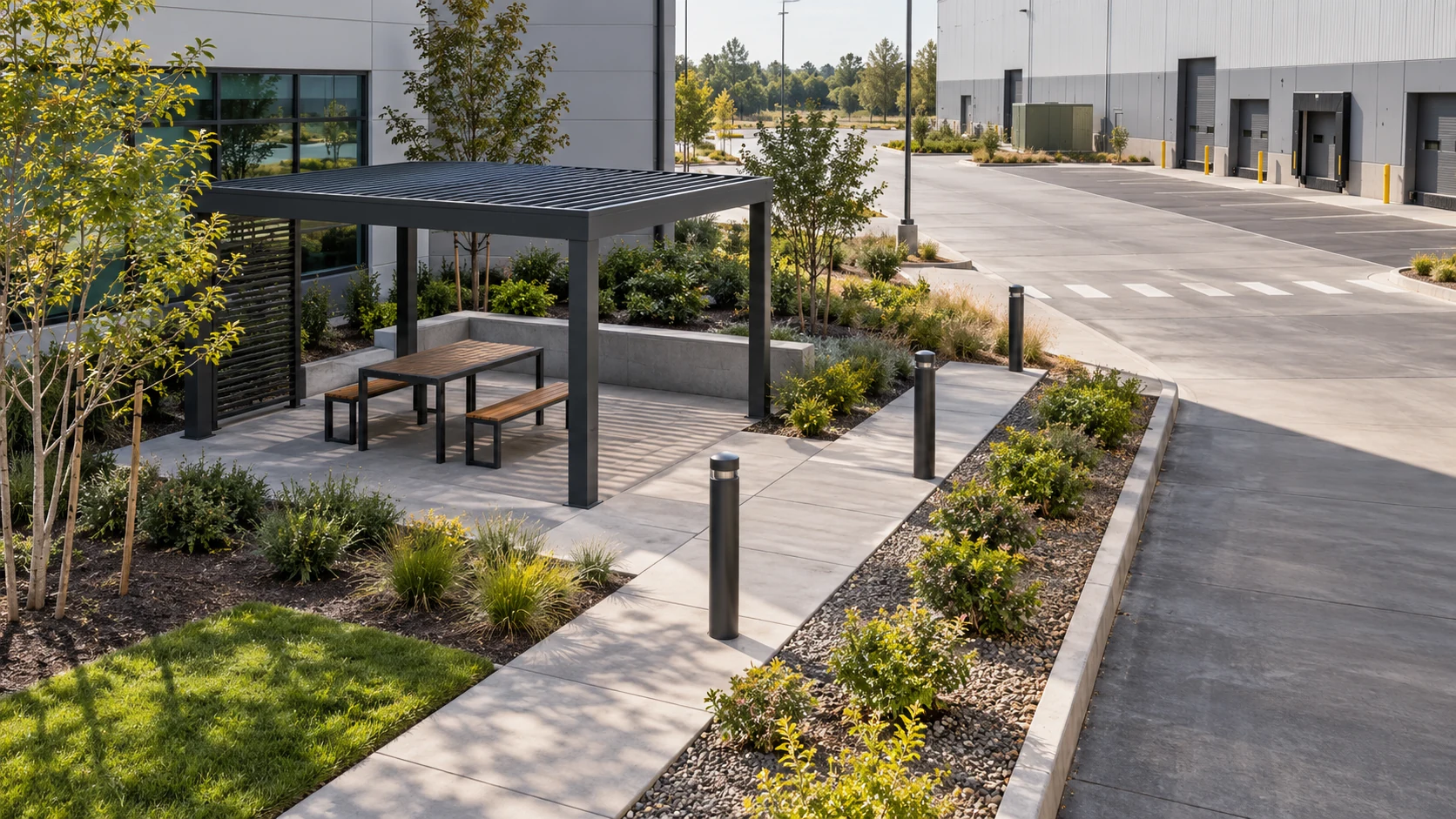
Map forklift activity before the break-area entrance
Map the doors, turns and loading activities used by forklifts before choosing the entrance to a warehouse break pergola. Empty ground close to workstations may be part of an active equipment route, even when goods are not permanently stored there. UK HSE pedestrian-separation guidance provides review principles, with local requirements and warehouse procedures assessed separately. TTH200/220 can be considered, but seating must fit the wider storage and handling operation. Observe routine work and busy receiving or dispatch periods rather than judging the site only after equipment has stopped.
Review visibility and stopping near the entrance
Posts, screens, benches and temporary pallets can change corner visibility, while people standing or leaving alter what drivers see. Review occupied furniture and nearby goods with the team responsible for transport, not just the empty setting. Connect the entrance to a confirmed pedestrian route rather than a convenient but unreviewed shortcut through operations. Shade components are not impact protection; assess any required separation or protective measures independently. Define cleaning, drinking-water and waste-collection paths so later servicing does not gradually consume the route originally retained for employees.
- Mark forklift doors, turns and loading activity.
- Review entrance visibility with the area occupied.
- Treat temporary goods placement as a layout change.
Retest after a storage-layout change
Imagine new storage racks shifting a forklift turn toward the break area. The former direct walk now overlaps equipment activity. The pergola has not changed, but the earlier assessment no longer applies without review. Compare entrance orientation, a professionally reviewed pedestrian route or relocation with warehouse management. This scenario gives no universal separation distance and does not ask employees to create traffic rules themselves. It shows why storage-layout changes should trigger another break-route review instead of treating the installation inspection as sufficient for every later operating arrangement.
Keep facility records aligned with warehouse changes
Provide traffic arrangements, underground services, goods-movement areas and furniture for professional review of foundations, drainage and other engineering conditions. Operating records should identify responsible staff, approved routes, cleaning and reporting, reviewed alongside storage changes. Added screens, signs or boxes can affect views and need reassessment. Avoid unsupported impact, cooling or productivity figures. Verifiable outcomes include a clear employee approach, a rest area not encroached upon by goods and management able to respond when surrounding operations change, keeping the intended break function workable in the actual warehouse.
Why review break-area routes after moving racks if the pergola stays in place?
Rack changes may alter forklift turns, loading and visibility, creating new crossings. Review occupied seating, entrances and temporary goods with the responsible transport team. The original installation layout does not automatically cover later operations or establish vehicle protection.
More questions, practical answers →