Solar canopy decisions
Wayfinding Beneath Solar Carports: Keeping Parking Signs Visible
Review directions from the arriving driver's viewpoint and coordinate parking, charging and equipment safety signs under a solar canopy.
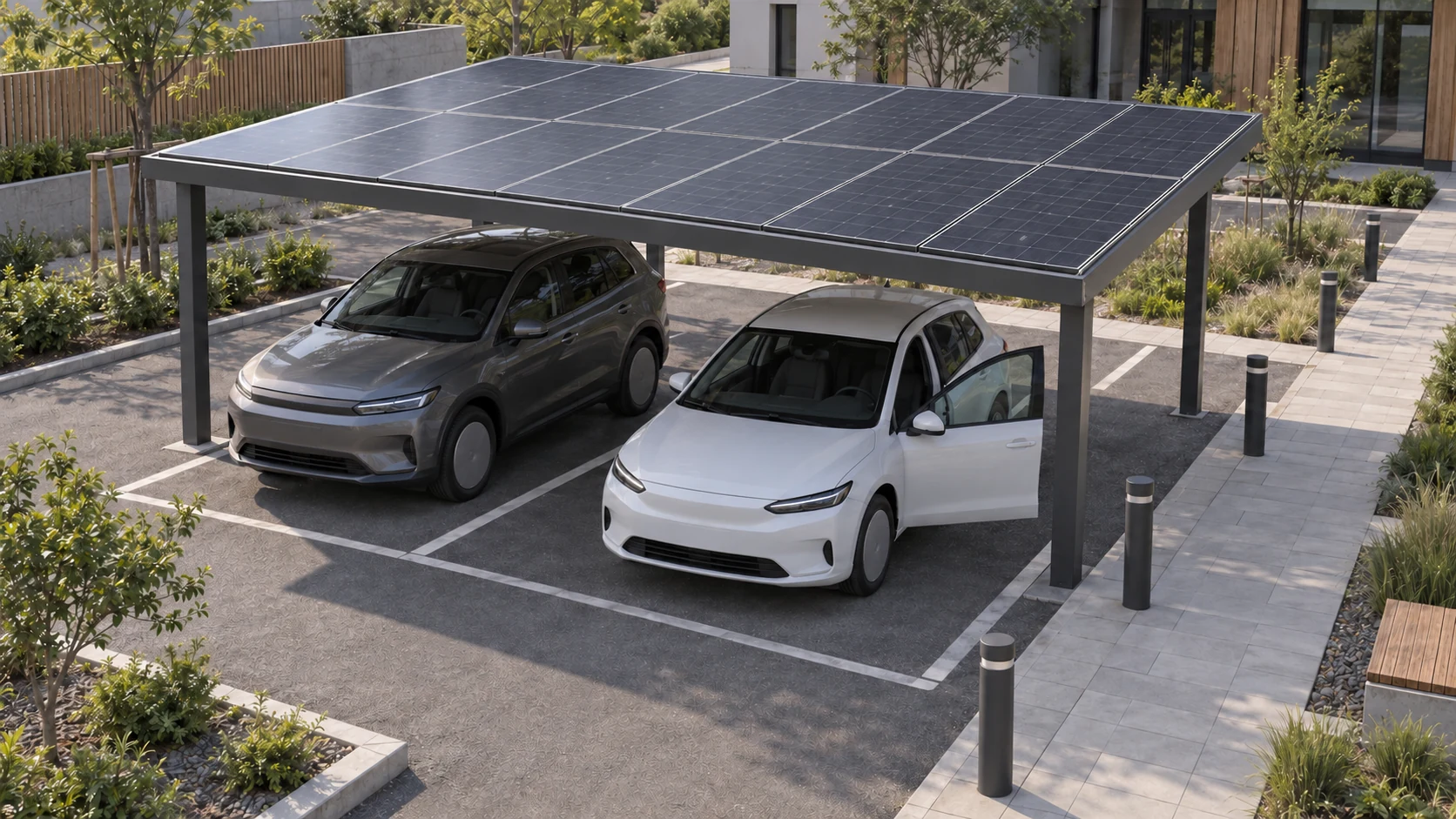
Review where information appears during arrival
A solar canopy can obscure existing directions or reveal restrictions only after a driver has entered. Begin outside the entrance and follow lane selection, parking zones, charging locations and departure. Information should appear before the relevant decision, not after a driver reaches the roof and discovers the wrong lane. Confirm routes and parking rules before placing signs; new signage cannot repair an unresolved traffic plan. Include different vehicle viewpoints and nighttime conditions rather than judging visibility solely from where a member of staff stands.
Separate three different sign functions
Parking directions guide vehicles and pedestrians. Charging signs explain use and support contacts. Electrical safety labels identify equipment and assist professional response. Combining these into advertising can obscure necessary information. The relevant responsible parties should confirm wording, symbols and locations against local requirements and installed equipment. Sign supports and wind effects also need review; a canopy beam is not automatically an approved hanging point. Where a location becomes overloaded, remove repetition and prioritize information needed for the next action.
- Make access and vehicle restrictions visible before entry.
- Match charging directions to equipment and operating rules.
- Protect safety-label visibility and assign updates.
Test a first-time EV visitor
Imagine some covered bays becoming charging spaces while the entrance still directs every visitor to ordinary parking. A first-time EV driver may enter the wrong area and reverse to find the chargers, while another visitor occupies a charging bay unintentionally. Ask someone uninvolved in the design to follow a specified destination and record hesitation or wrong turns. Use those observations to improve signs and markings rather than explaining what the designers meant. A route understood only by regular users needs clearer information. Repeat the exercise when operating rules change.
Visitors needing help should also recognize the current support channel, particularly when on-site staff are unavailable.
Maintain signs as operational information
Handover should include sign locations, content revisions, contacts and ownership of updates. Mark unavailable chargers accurately during repair and update numbers or operator details when they change. Check obstruction by roof edges, reflections from lighting and temporarily parked vehicles. DOE fire guidance highlights PV identification and HSE provides traffic-planning context, while the project must determine its actual signs. The aim is for visitors to complete basic arrival and departure without needing ad hoc directions, while retaining an obvious way to request help.
Can all solar carport signs be combined into one branded display?
Avoid mixing information with different tasks and viewpoints. Traffic directions, charging rules and electrical labels need clear, current content and assigned responsibility. Coordinate branding separately so it does not obscure essential directions, and verify any added supports.
More questions, practical answers →