Solar canopy decisions
Solar Carports With Export Limits: Questions for the Grid Designer
Separate installed capacity, connection approval and export-control functions when planning a solar carport with export limits.
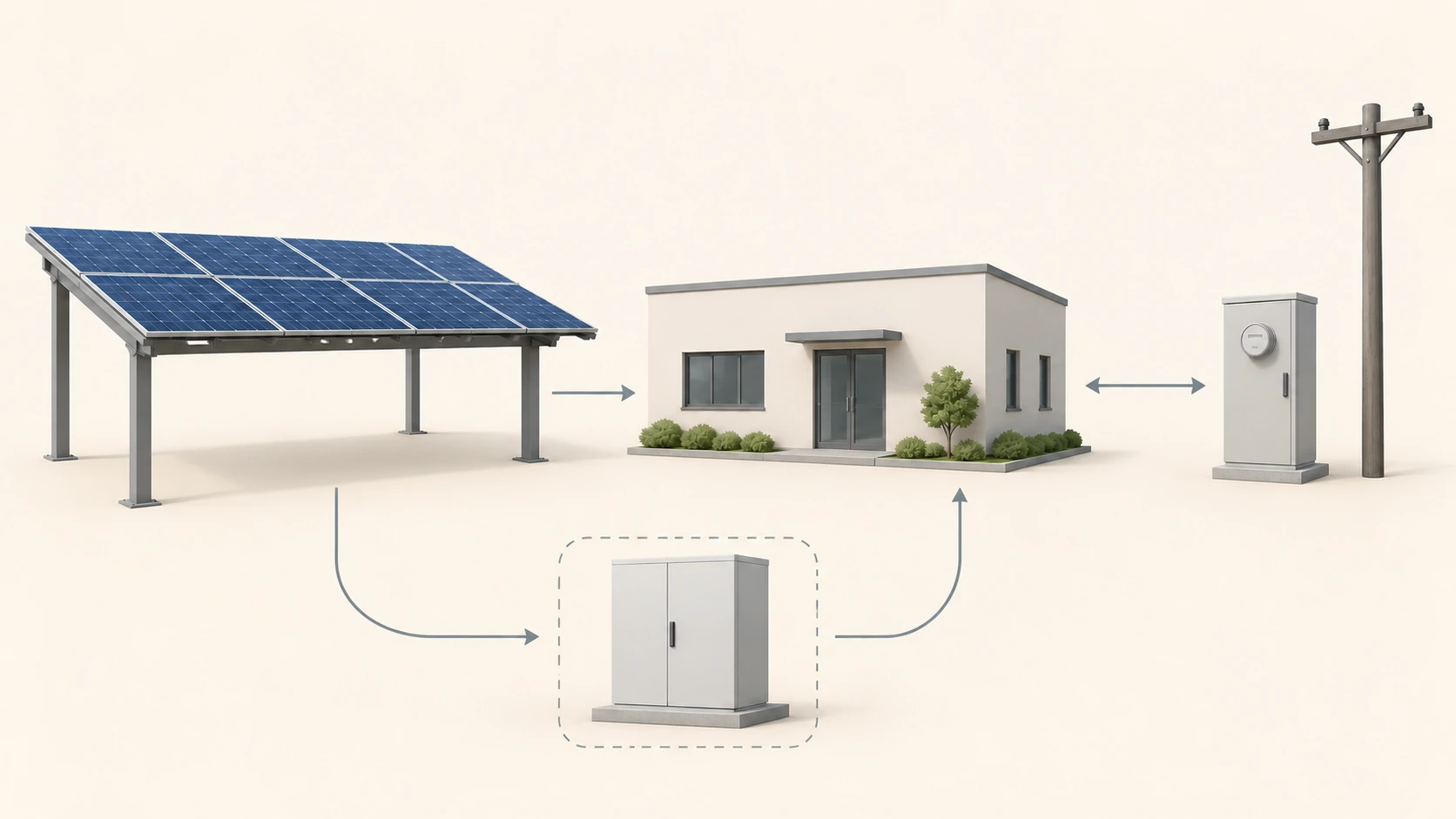
Identify where and when the limit applies
When export is limited, obtain the project's actual conditions: the connection point, included generation or storage equipment and applicable states. Export capability, module capacity and on-site demand are different quantities, so one limit should not automatically become the entire system size. Zero export does not remove connection coordination or electrical approval. The responsible designers and applicants should confirm local network rules before proposing the arrangement. Procurement should ensure the conditions appear in scope and documents, rather than owners adjusting control settings to match a headline number.
Explain normal and abnormal control behavior
The proposal should explain equipment observing the connection point, coordination with inverters or other devices and approved responses to communication or measurement faults. Professionals must specify and validate these functions rather than relying on an included export-control phrase. Identify parameter permissions, treatment of software updates and what records demonstrate. Requirements vary across jurisdictions and products; a generic example does not establish approval for this site. Installing a controller alone does not complete the system's control, protection or permission obligations.
- Retain confirmed connection points and network conditions.
- Request control scope, fault behavior and acceptance evidence.
- Include limits in production and self-use assumptions.
Test the questions during a low-demand weekend
Imagine high weekday demand, low weekend use and an export-limited carport. The analysis should explain low-demand operation rather than showing only potential midday module output, including energy that may not be usable under the original assumptions. Storage or charging changes can be separately studied options, not automatic solutions to every limit. Additional future generation requires the shared connection conditions to be reconsidered. This scenario organizes questions; it prescribes no control thresholds and promises no approval for an equipment combination.
If a quotation and application name functions differently, ask the responsible party to explain the correspondence rather than assuming the sales label matches.
Keep the accepted configuration and installation aligned
At handover, align equipment, control documents, tests and network conditions, identifying outstanding permissions or actions. DOE's interconnection checklist organizes utility questions by stage but supplies no worldwide approval answer. If TTH structure and electrical controls sit in separate contracts, assign overall acceptance coordination. Inverter replacement, batteries or load-control changes require professional change management. Operating reports should distinguish forecast production, actual output and control effects rather than attributing every difference caused by limits to module quality.
Does zero-export control remove the need for network approval?
Do not assume so. Responsible professionals must verify local connection, protection and operating conditions and the actual equipment arrangement. Control functions need appropriate tests and records. Avoid self-adjusting parameters, and review approval conditions when generation or storage is added.
More questions, practical answers →