Trade & procurement
Compare pergola warranties across parts, labour and site costs
Compare pergola warranties by component, remedy, labour, travel, freight and claim process rather than headline duration alone.
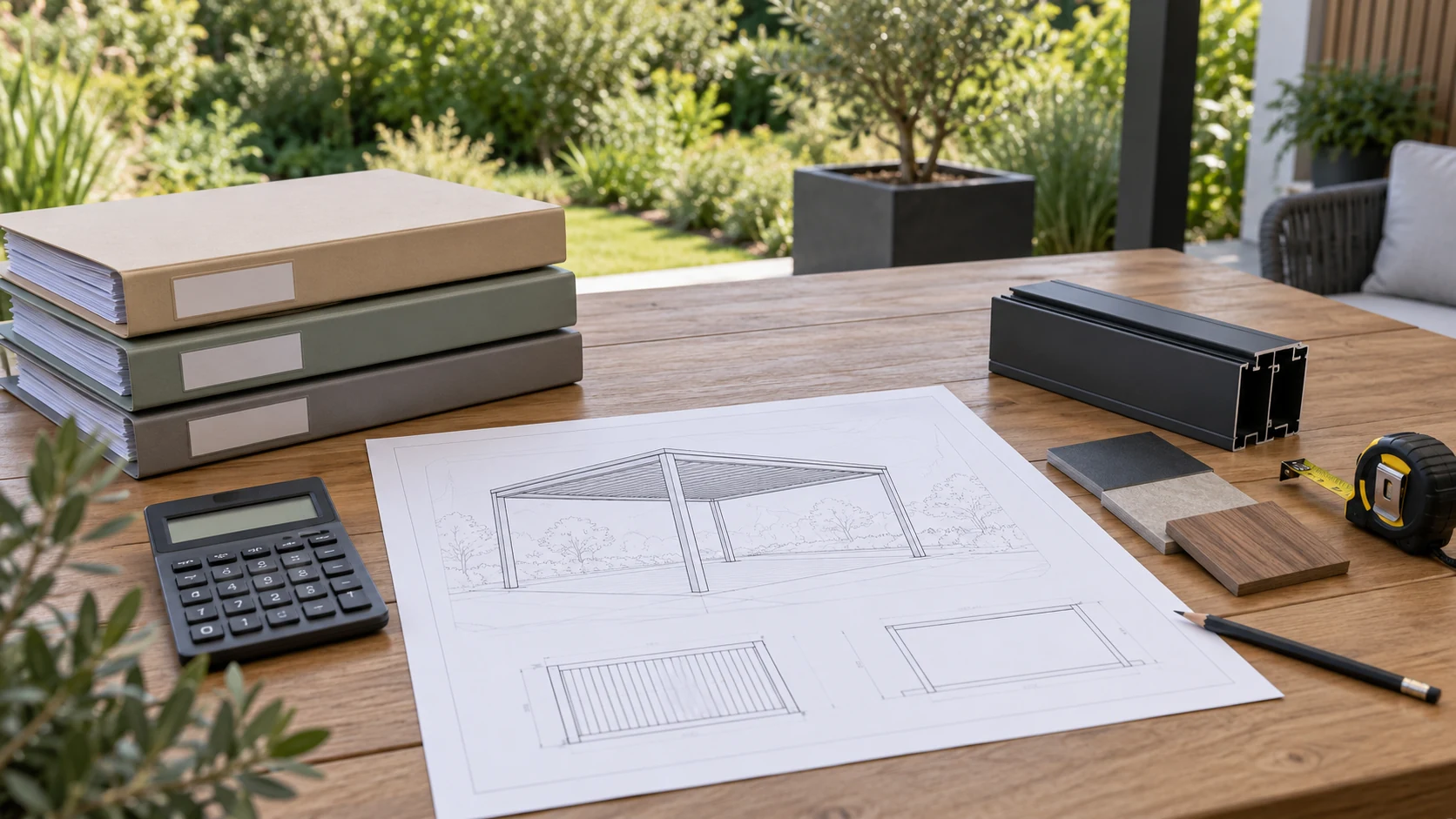
Separate the product into coverage groups
Two long warranty periods can protect very different things. One may concern frame materials while another separates the finish, drive, lighting and side accessories. These groups cannot be merged into a promise that the entire system receives identical coverage. Obtain written terms and check the model, configuration, covered purchaser and starting event.
When promotional information is brief, mark missing details unresolved rather than assuming the most favourable interpretation. Dealer and consumer purchases may involve different contractual relationships. Record the actual terms instead of transferring another supplier's conditions or treating a verbal sales statement as the final coverage.
List the costs involved in the actual remedy
Replacement parts supplied without charge do not automatically include removal, reinstallation, travel, lifting or international freight. A repair can involve several parties, so identify who handles each cost, what authorization is needed and how local service is arranged. The US FTC's consumer guidance also encourages checking the remedy, labour and return-shipping responsibilities.
The purpose is not to reject every exclusion, but to understand the support being purchased. A local installer might provide labour while a manufacturer supplies parts. That division can work if the interface is explicit rather than leaving each party waiting for the other to act.
Walk through a realistic service scenario
Imagine a control accessory stops responding in service. Identify the device and symptoms, retain permitted check records, and obtain the agreed remedy before arranging work. Before buying, ask who diagnoses the issue, what must be returned, how the replacement is sent, who configures it and who records the final check.
A warranty without a usable claim route can leave the service experience unclear. Conversely, a clear process does not mean every situation will qualify. Maintenance requirements, limitations and the cause of damage still need assessment against the terms and evidence. Review the operational process alongside its boundaries.
Keep the terms that applied to the purchase
Save the warranty version, order and proof of purchase, together with service contacts. A live webpage alone may change later. Put additional commitments into the order or an explicit written supplement and explain how they relate to the original terms.
Give the actual operator the component list, care instructions and service route at handover. Recheck coverage if ownership, dealer arrangements or components change. Obtain and record answers to unresolved questions instead of inventing either favourable or unfavourable interpretations. When a dealer submits the request, tell the user how to obtain an update on its progress.
- Compare frame, finish, drive and accessory coverage separately.
- List labour, travel, removal, lifting and freight responsibilities.
- Keep the terms version, purchase evidence and claim steps.
Does a free replacement motor mean the entire repair is free?
Not automatically. Check diagnostics, removal, local labour, freight, reconfiguration, service arrangements and prior authorization. Compare these items against the written terms. Supplying a part and completing a site repair are different scopes; the applicable order conditions determine what is included.
More questions, practical answers →