Home planning
Overlooked gardens: balance pergola privacy and airflow
Use actual neighboring sightlines and seating positions to compare targeted screening, furniture orientation and enclosure states.
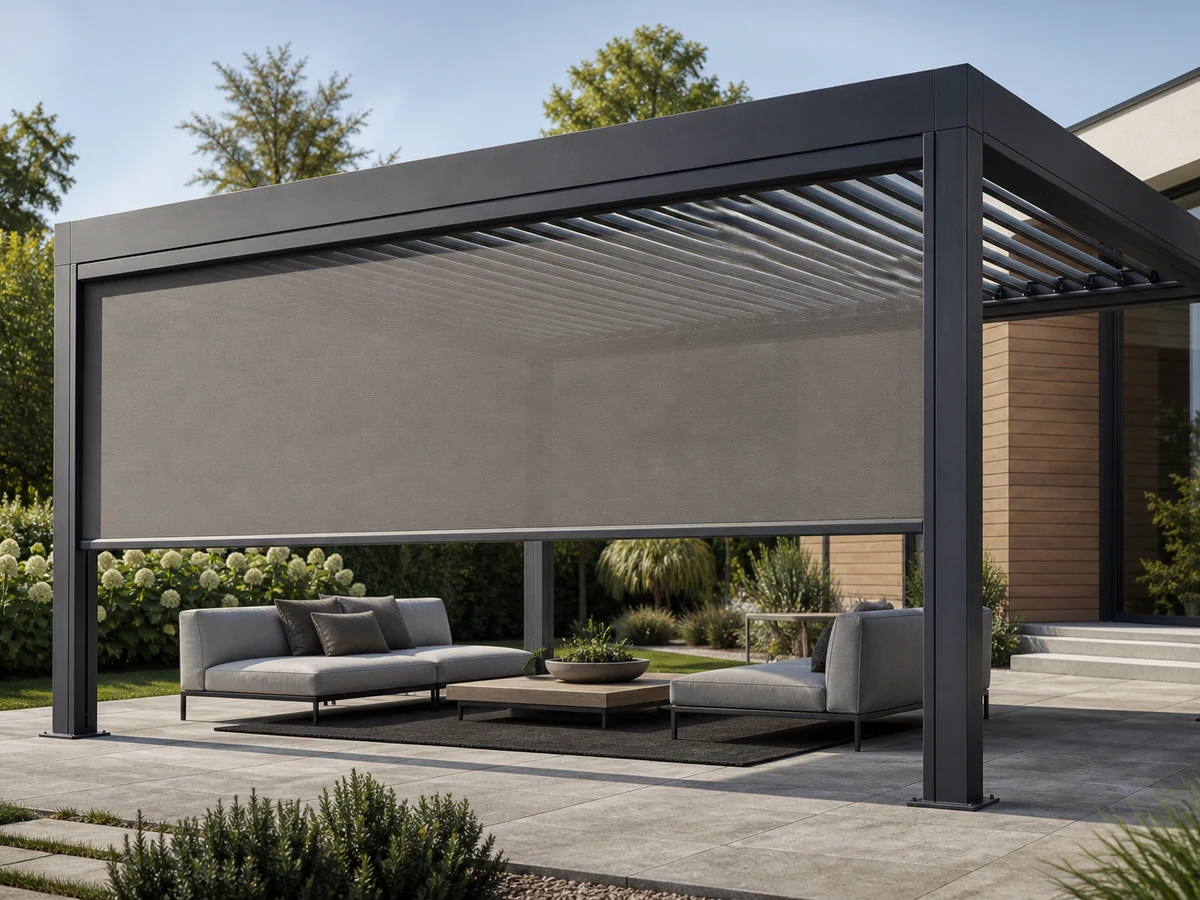
Describe the overlooked view precisely
A lack of privacy may mean a neighboring upper window overlooks the table or simply that people on a driveway see a lounge chair. From your own activity positions, note the directions that matter when seated, standing and passing through. Respect neighboring boundaries; there is no need to photograph private indoor life. Identify which sightline affects which activity instead of labeling the entire garden for enclosure. This makes the brief more specific and may reduce unnecessary accessories while preserving the garden outlook you already enjoy.
Assess visual screening and air movement together
Side screening changes the experience beyond privacy. Record air movement, entrances and views during normal use and compare accessories open, partly deployed and closed. Visibility through a material can also vary with light and viewing angle, so one sample under one light does not establish performance at all times. Ask the supplier to explain intended use and operating limits, using actual samples or verifiable information. Avoid unsupported promises of complete privacy or constant ventilation.
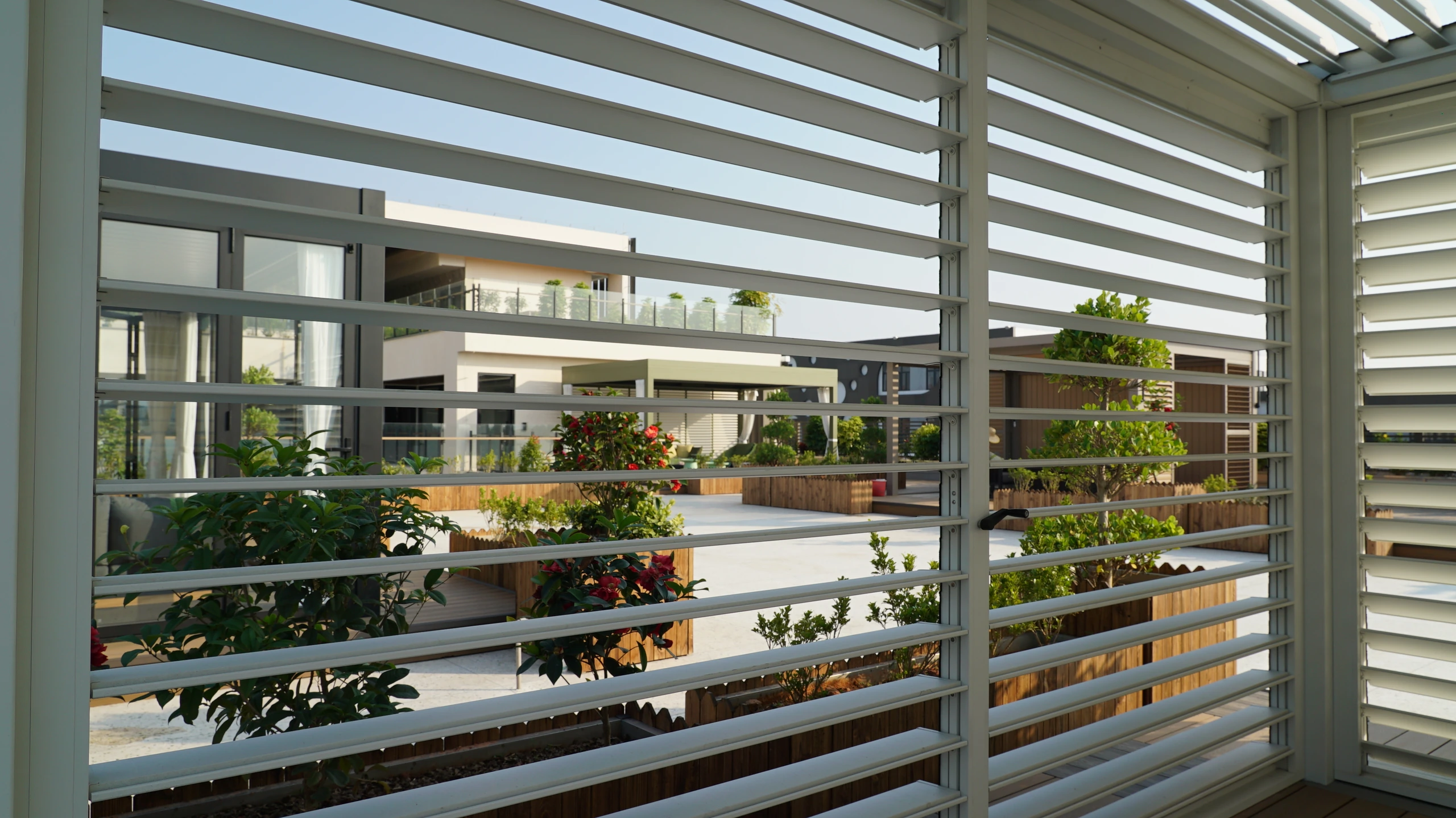
Test a hypothetical evening seating choice
Imagine a lounge chair facing a neighboring upper window and an owner initially proposing screens around the entire pergola. First turn the chair toward the garden, then test whether local screening meets the need in the usual seated position. Observe evening conditions separately because the balance of indoor and outdoor light changes. This hypothetical example does not promise that moving furniture solves every problem; it tests a simpler spatial change before accessory decisions. Ask family members to describe their priority situations rather than debating openness and enclosure in the abstract.
Keep daily use adaptable
Different activities may use different enclosure states, but adjustable accessories still need confirmed opening, storage and service areas. Do not permanently obstruct the main route to interrupt one elevated sightline. Consider conversation and evening lighting too; visual screening does not automatically address those neighboring effects. Record the views to interrupt, directions to keep open and operating routine in one short brief. Reuse that review when planting or furniture changes, rather than accumulating accessories without a clear purpose.
At a frequently used shared edge, temporary markers within your own space can help assess the visual goal before ordering an enclosure. Clarify conditions and relevant agreement for boundaries, shared parts or additional installation. The proposal should resolve a defined inconvenience rather than turn concern about one direction into enclosure on every side.
- Identify the exact sightlines affecting dining or resting.
- Check day, night and each intended accessory state.
- Retain circulation, air movement and valued garden views.
Should improving pergola privacy begin by enclosing every side?
Not by default. Identify the activity and sightline, then test furniture orientation and local screening. Observe visibility under different lighting while checking airflow, circulation and service access. Visual privacy also does not replace consideration of conversation or evening lighting.
More questions, practical answers →