Large pergola projects
Outdoor Meeting Pergolas: Testing Screens, Sound and Privacy
Test screen readability, speech and privacy in a real outdoor meeting before choosing pergola equipment.
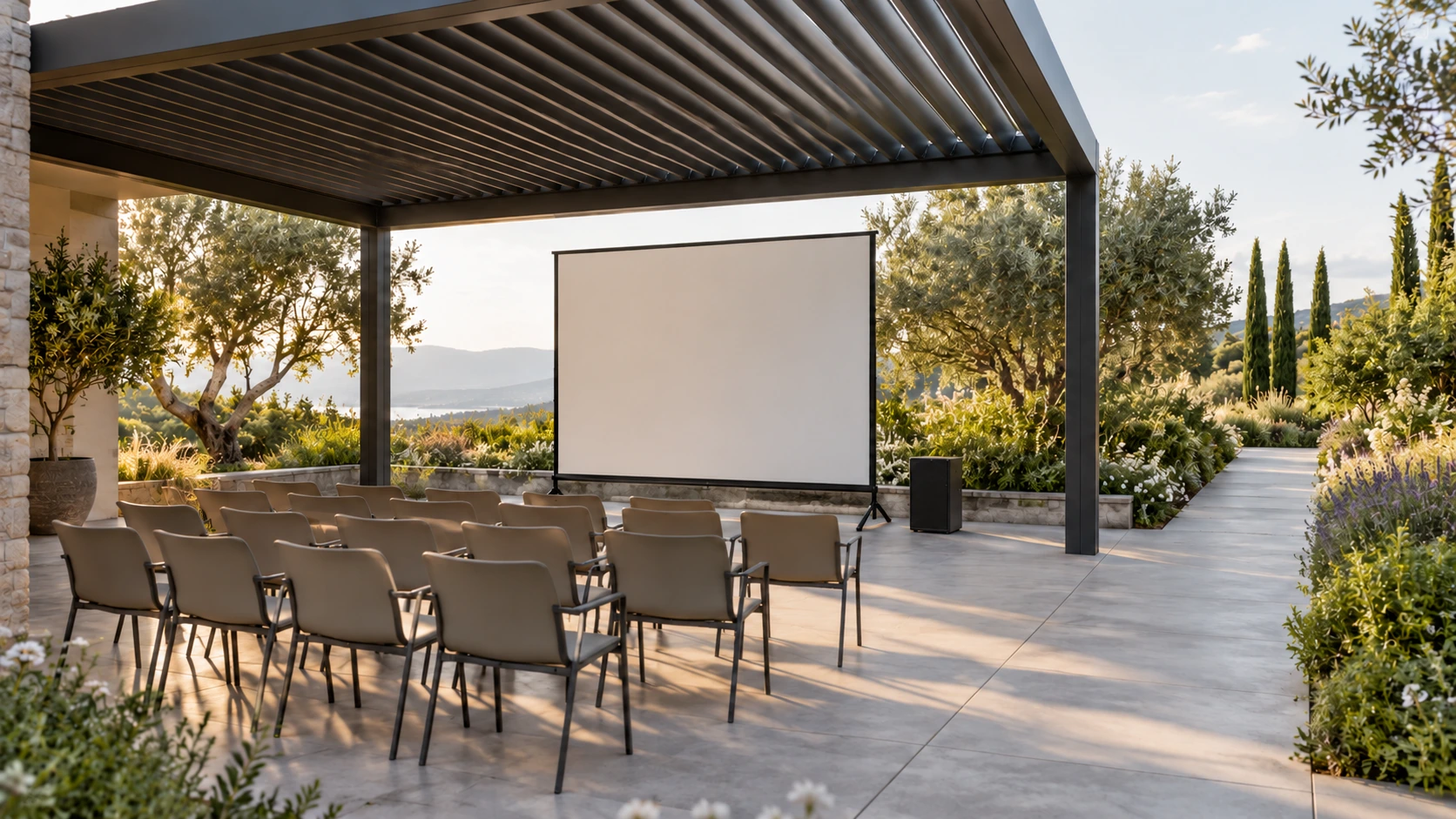
Define the meeting type and privacy needs
Define which meetings the outdoor space should support. Brief team conversations, document review and video calls have different screen, sound and privacy needs. Nearby people may hear open-air discussions, and side screens do not automatically create an acoustically isolated room. List meeting times, participation methods, equipment and procedures for confidential subjects before choosing outdoor use. TTH200/220 can be considered as part of the space, but acoustic, shading or all-weather working claims require evidence for the actual configuration and site rather than assumptions based on the product name.
Test screens and speech at the planned time
Run a trial with the intended or existing display, camera and microphone, including feedback from remote participants. Record reflection, background noise, nearby traffic and equipment sound, and whether people repeatedly raise their voices. Adjust table orientation and seating before assuming more powerful equipment is the answer. Review supports, power and outdoor suitability separately. UK HSE outdoor-equipment guidance helps identify support and layout questions but does not authorize hanging a display from pergola beams. Associate results with the time, weather and seating arrangement so alternative layouts can be compared.
- Check both screens and printed materials.
- Ask remote participants about audio quality.
- Assess audibility from nearby circulation routes.
Use a hybrid meeting to reveal limitations
Imagine an afternoon discussion with six local participants and one joining online. People at the table perceive a quiet setting, but the remote colleague hears wind while passing staff can understand the conversation. Moving the table may improve reflections without solving audio or privacy. The team could reserve the pergola for short, low-sensitivity meetings and use a confirmed indoor space for other sessions. This example establishes neither a universal headcount nor inevitable failure outdoors. It shows how observed performance should define suitable uses instead of a rendering promising every meeting requirement.
Include equipment storage and fallback arrangements
Specify whether displays are brought out temporarily or installed, and who checks power, stores equipment and reports faults. Cable routes must not depend on informal habits that obstruct access; supports and added loads need professional confirmation. Provide a workable option to relocate or reschedule when weather or noise makes the meeting unsuitable, and explain it in booking information. After opening, record meeting types, issues and adjustments without inventing productivity statistics. A maintainable outdoor meeting space begins with defined uses, equipment limits and operating duties, refined through actual trials.
Can side screens make an outdoor meeting pergola confidential?
Screens alone cannot guarantee confidentiality. Visual screening, sound transmission and microphone performance are different issues. Trial the space and assess audibility nearby. Follow the organization's confidentiality procedures and use a confirmed suitable room when the discussion requires it.
More questions, practical answers →