Home planning
Keep pergola records for a future sale instead of relying on ROI promises
Organize product, maintenance and site records that a future buyer can review without converting lifestyle benefits into unsupported house-price claims.
Separate enjoyment from willingness to pay
A household enjoying more outdoor meals does not mean a future buyer will pay the same amount for the pergola. Buyer habits, the condition of the wider property and local market context affect that judgment; an attractive photograph should not become a price-growth claim. Start with value to the current household: which activities improve, what inconvenience is reduced and what that experience is worth to you. This provides a clear lifestyle basis for the decision even without a reliable resale valuation, rather than making an unsupported return promise carry the purchase case.
Help a future buyer understand the installation
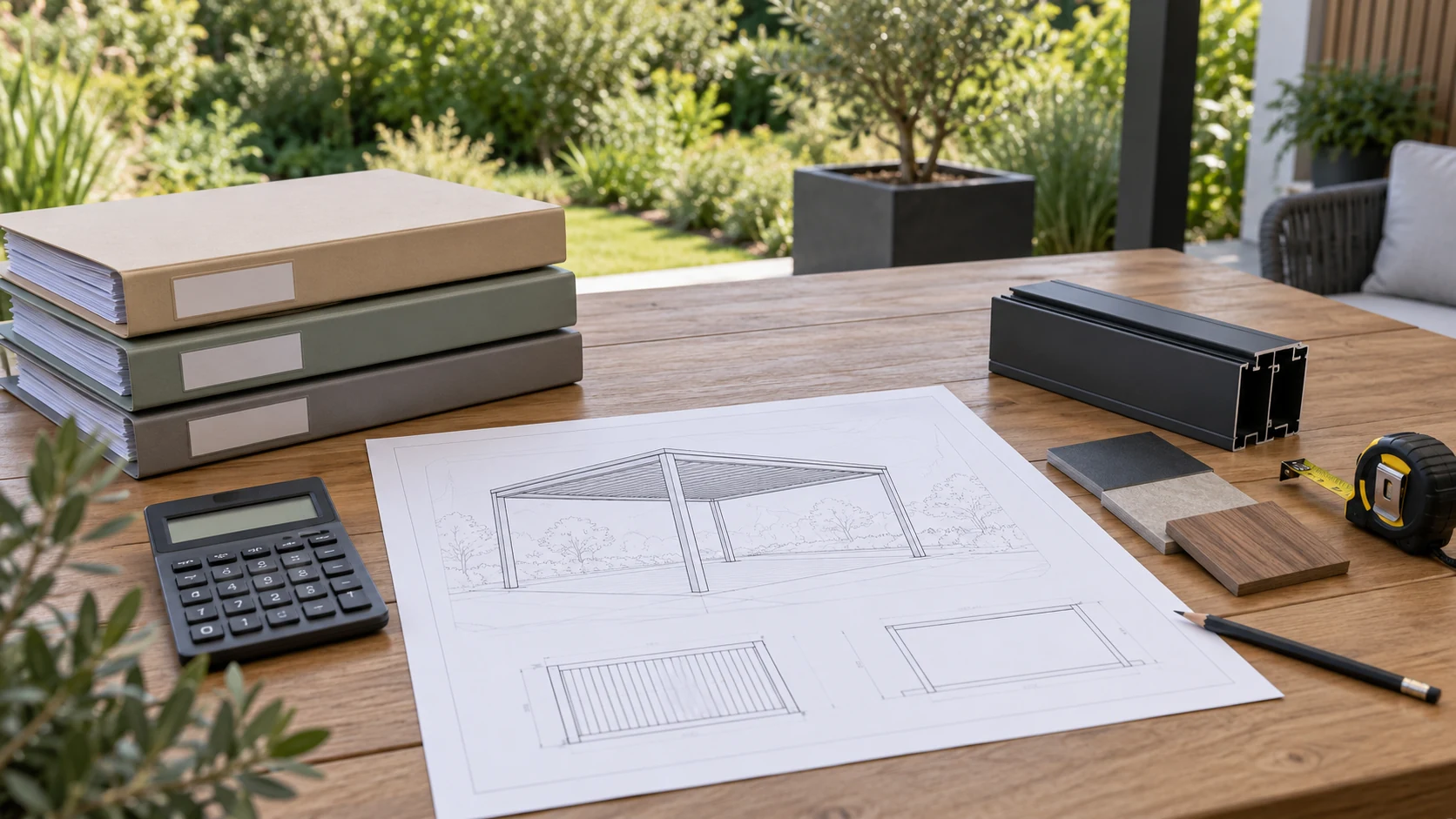
Documentation can be prepared now. Retain the product model, final drawings, installation and service contacts, care instructions and relevant site approvals or inspection records. Record later component replacements so future identification does not depend on appearance alone. Distinguish original configuration from additions and state unresolved matters honestly. Warranty transfer and ongoing service require the actual terms; they should not be presented as automatic rights. Complete records do not guarantee a higher price, but they make the existing installation and its responsibilities easier for buyers and their advisers to understand.
Use a hypothetical viewing to find information gaps
Imagine a viewer asking how the screens operate, how the roof is cleaned and who handles a fault. Saying it has been fine since installation leaves gaps; the actual instructions and service route provide more useful answers. Consider also whether records for site alterations match the installed position and drawing revision. This hypothetical viewing is a way to find documentation gaps, not a prediction of buyer priorities or valuation advice. Be honest about information that cannot be traced instead of reconstructing unsupported records for a sale presentation.
Keep photographs consistent with the actual condition
Use photographs that reflect actual use and distinguish furniture, accessories and landscaping from what a buyer would receive. Concept images express an idea, not proof of installation or approval. When selling, discuss the pergola's role in the whole property with professionals familiar with the local context before choosing presentation priorities. Everyday recordkeeping can stay simple: keep key files easy to find and maintenance or replacement history verifiable. Clear condition and use information provides a firmer basis than an unsubstantiated return figure.
If several relatives or installation teams hold records, create a simple index naming each file, its component and when it was obtained. Request missing documents from the original provider and mark anything unavailable. The index should aid future checking, not turn unrelated online material into project evidence.
- Retain model details, final drawings, care instructions and site records.
- Distinguish original, added, replaced and unverified items accurately.
- Check service and warranty terms before suggesting transferable rights.
Can an aluminum pergola guarantee recovery of its cost at resale?
No guarantee or unsupported universal return rate is appropriate. Base the purchase on household use, with any later valuation considered in its local property context. Keep accurate installation, maintenance and relevant approval records so buyers can understand the condition rather than relying on promotional return figures.
More questions, practical answers →