Large pergola projects
Pergola seating for a person and caregiver: include mobility aids
Plan seating with the person, caregiver and mobility aid together, reflecting their actual routines and preferences.
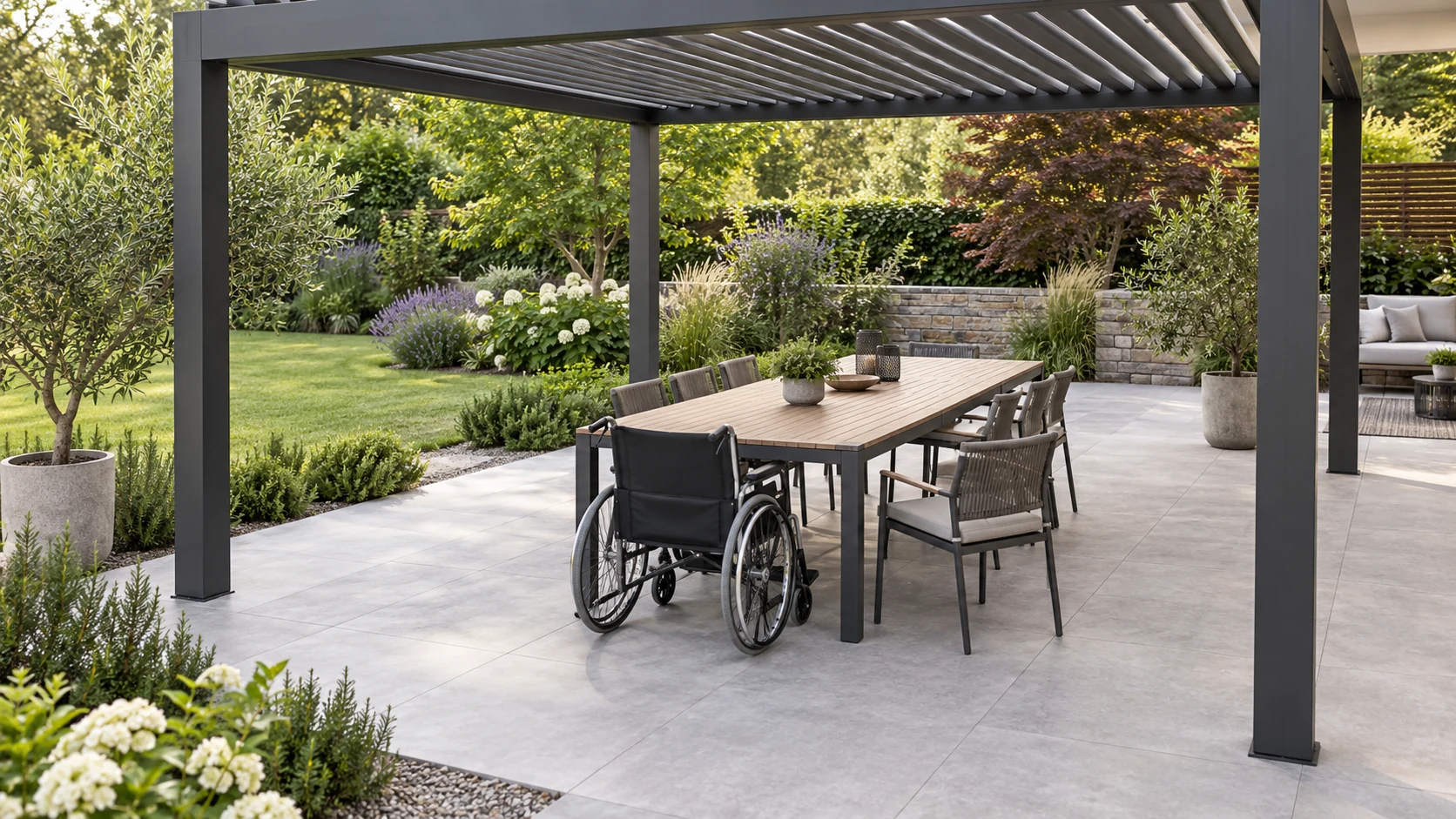
Include the companion from the beginning
A family member receiving support may use more than a single chair. A companion may need to talk, pass items or provide familiar assistance, and a mobility aid needs an agreed place. Ask the person and actual caregiver to describe their routine and preferences for privacy, distance and comfort. Do not assume the caregiver will stand throughout the visit. Furniture photographs generally show sitting rather than assistance. The aim is for both people to participate naturally in family life, not simply to label whichever corner has spare space as a care area.
Place mobility aids around the real routine
Include the real dimensions of a walker, wheelchair or other equipment. Its agreed position should preserve the person’s needed route without obstructing others. Reach, timing and use should follow the person’s established practice and any appropriate professional advice, not a decorative rule. Do not lean equipment against moving screens or unstable furniture, or reverse someone’s familiar arrangement merely for symmetry. Include drinks, personal items and frequently used controls in the trial so small everyday tasks do not repeatedly require the companion to walk around the entire table.
Suppose a walker keeps being moved to the entrance
Imagine relatives repeatedly moving a walker to the entrance because it seems to occupy valuable space. The user then waits for someone to retrieve it before leaving. Discuss why the original position conflicts with others, and consider changing spare chairs, a side table or seat orientation instead. Assistance with standing or transfers should follow the established individual method, not an improvised layout experiment. When furniture quantity conflicts with support needs, reducing furniture is a valid choice. A large pergola is useful because people can share it, not because every patch of floor contains an object.
Use a reference arrangement to keep the space consistent
With the person’s agreement, document furniture and equipment positions using a layout photograph that excludes private personal information. Identify spaces to keep available and whom to consult before changing them. Appropriate professionals should still assess modifications to fixed electrical or structural equipment; a family furniture trial is not formal design approval. Revisit the arrangement when chairs or mobility aids change. Share the practical requirements with the pergola supplier so posts or accessories can be checked against the support arrangement the household has actually found workable. Update these notes when needs change rather than treating the first arrangement as permanent.
- Include the person and actual caregiver.
- Place aids and personal items around established routines.
- Preserve needed space and reassess replacement furniture.
Can a caregiver’s chair simply be added when guests arrive?
Where support is normally needed, include the companion’s chair in the initial trial. A late addition may obstruct equipment or departures. Agree distance, item positions and established assistance routines with both people, seeking suitable professional advice when needed.
More questions, practical answers →