Large pergola projects
An outdoor presentation under a pergola needs an on-site screen rehearsal
Rehearse with the real screen, content and event time to assess viewing under a pergola.
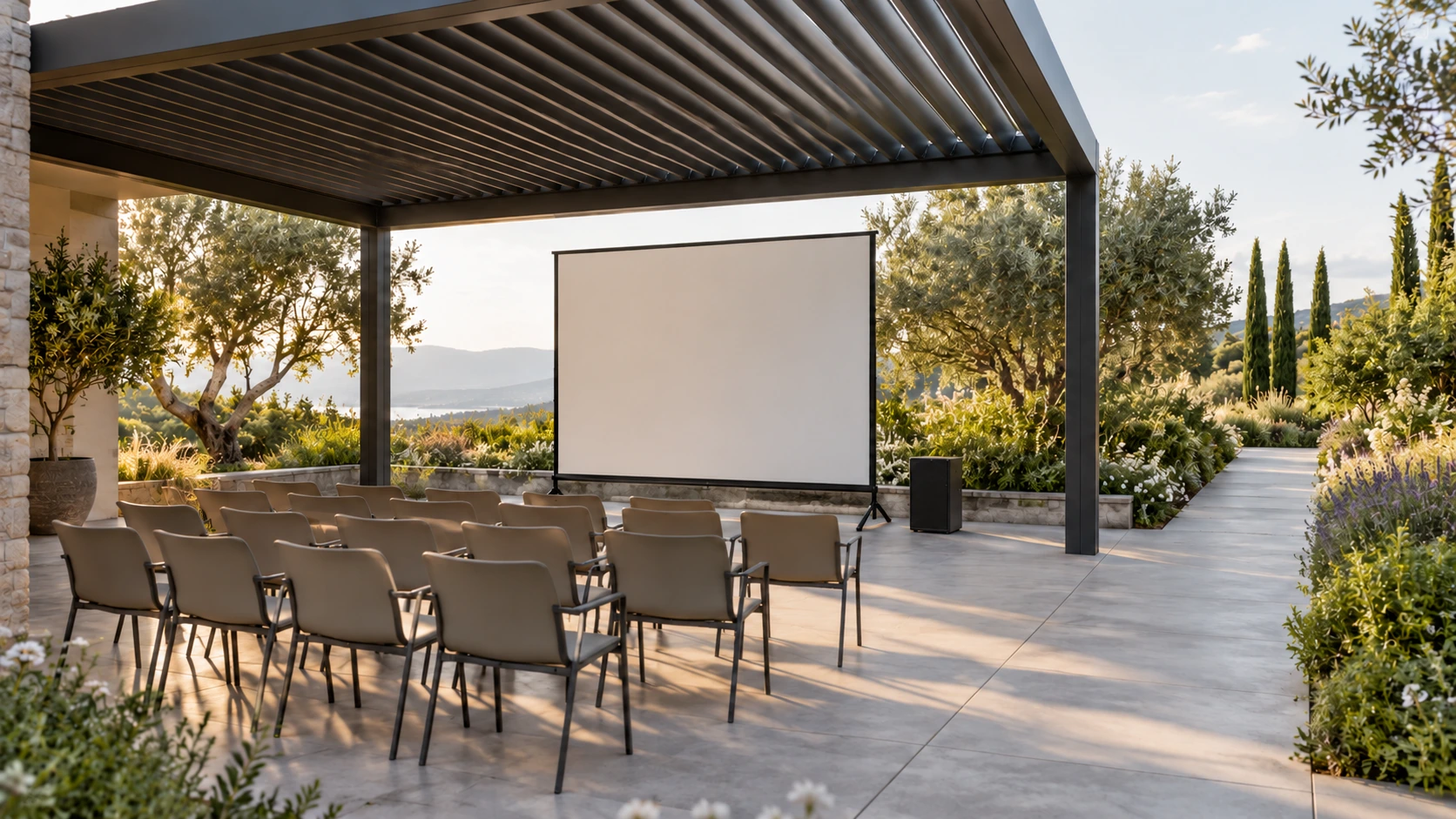
Define readability through the actual content
Define whether the audience must see large images, product detail, captions or data before selecting a display and seating orientation. A high-contrast promotional frame does not establish readability for every presentation slide. Test the actual relationship between cover and light; a roof alone cannot guarantee projection suitability. Bring planned content and equipment to the site at the intended time. This can reveal needed changes to text, presenter position or display configuration. Pergola model and roof dimensions are inputs to the layout, not replacements for that assessment.
Check viewing angles and presenter position
View real content from central and side positions while the presenter occupies the intended spot. Check obscured content and required movement. Display support, power, cables and environment follow equipment requirements; beams and columns are not assumed screen supports. Record relevant curtains, furniture and nearby light sources. Advertised equipment specifications are not the same as a site result outside their conditions. Include content changes, presenter movement and questions, rather than judging a static frame when no one occupies the presentation position.
Test an event spanning changing light
Suppose the launch begins before dusk and continues after the surroundings darken. Rehearse relevant phases rather than photographing only the easiest viewing moment. Adjust content, timing, equipment or layout and identify tested positions. No universal brightness or screen-size answer applies independently of the device and venue. If comparable timing cannot be tested, retain that limitation and arrange further confirmation. An office demonstration may verify content operation, but it does not establish the readability of the outdoor arrangement under different environmental conditions.
Hand rehearsal findings to the event team
Retain display position, equipment version, content, timing and reviewed seating, with an on-day consistency check. Reassess changed screens, slides or lecterns. Any fallback needs concrete preparation rather than an untested move to another corner. Share the record across equipment supplier, venue and presenter.
Contextualize sample photographs because automatic exposure can make a screen appear easier to read than it was on site. Include viewing observations from actual positions instead of treating photographs as the only evidence of readiness.
- Rehearse real content and planned equipment.
- Cover angles, presenter movement and changing light.
- Review event-day changes against tested conditions.
Does overhead shade guarantee suitability for outdoor projection?
No. Side light, timing, equipment, content and viewing angle matter. Rehearse the intended content and conditions, retain untested limits and confirm support and power separately. Shelter is not display-performance evidence.
More questions, practical answers →