Large pergola projects
Community Presentation Pergolas: Speakers, Screens and Supports
Review freestanding and suspended equipment, power and withdrawal plans for community presentation pergolas.
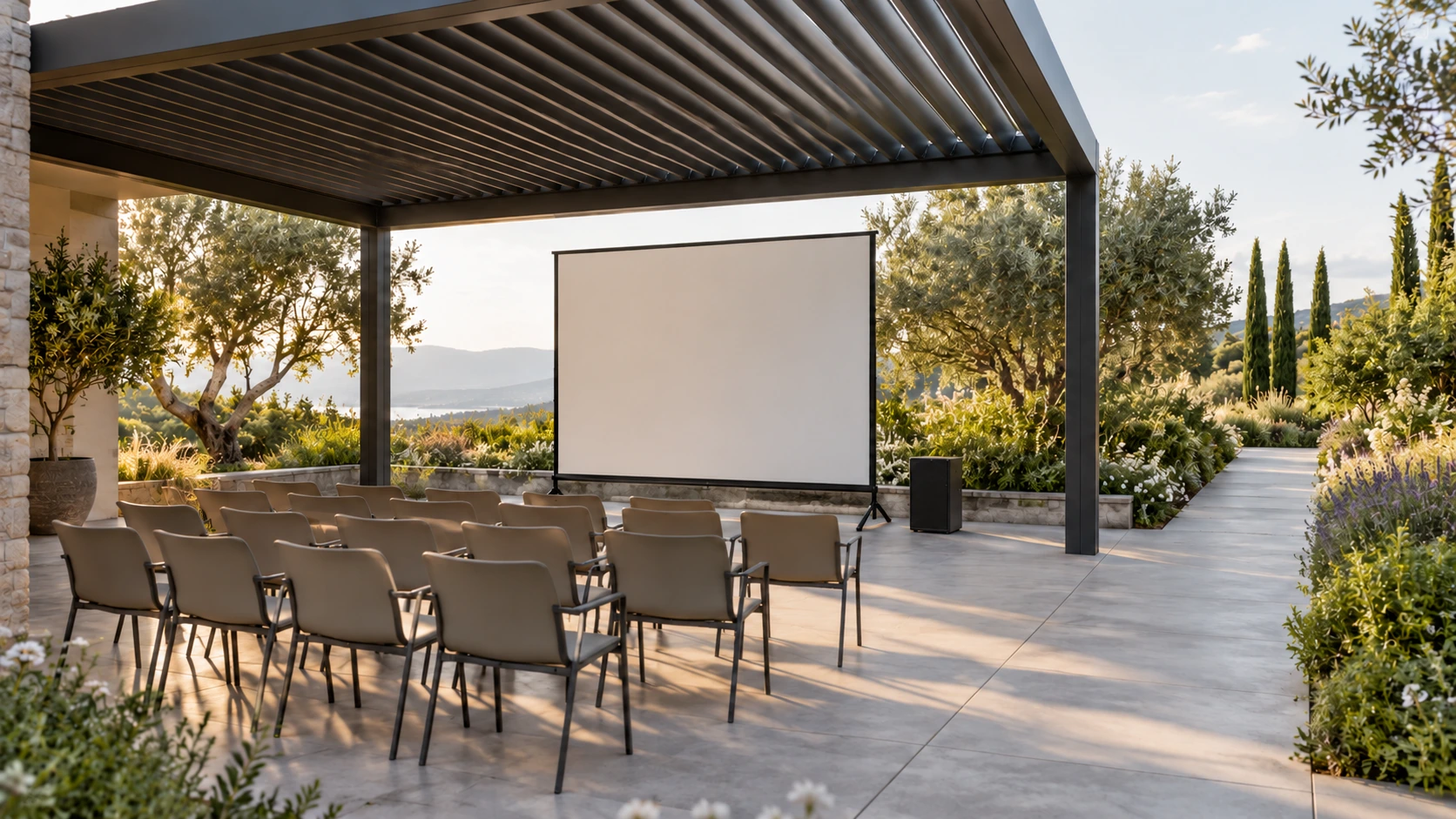
Define equipment and how the event will use it
Start with the speaker position, audience arrangement and actual purpose of screens and sound equipment. A short talk, video presentation and remote connection have different needs; equipment quantities should not come from a rendering. TTH200/220 may be considered as activity space, but carrying speakers or displays requires review of the configuration and added loads. UK HSE outdoor-equipment guidance provides support and operating principles, not installation approval for a model. Define activities and equipment boundaries before relevant specialists confirm supports, power and site arrangements for a workable proposal.
Review freestanding and suspended options separately
Freestanding equipment still needs review: bases consume space, and wind, cable forces and public contact can affect the installation. Suspended options require defined attachments, weights, forces and installation duties, not judgments based on a beam looking substantial. Confirm outdoor suitability, electrical protection and operating permissions. Draw bases, cables and operator positions to check audience arrival and departure. UK HSE venue principles help with that review, but event and permanent-structure requirements remain distinct. Use equipment according to its instructions and the confirmed design, retaining a record when the arrangement changes.
- List equipment weights, supports and attachments.
- Show bases and cables on the circulation plan.
- Assign operation, weather withdrawal and fault duties.
Use a rehearsal to identify equipment conflicts
Imagine a community briefing with a screen stand at the front and speakers beside the entrance. An empty-site test appears satisfactory, but arriving visitors encounter cables and seated rows obstruct views. Rehearse with realistic chairs, movement and staff operation before comparing changes. Do not improve sightlines by transferring the screen to an unreviewed beam or substitute improvised ballast for required support design. This scenario sets no universal audience count or equipment output. It illustrates why electricity, support, viewing and circulation should be tested within the same actual arrangement.
Complete withdrawal planning before opening
Define when equipment stops, who decides withdrawal, where it is stored and how visitors leave. In unsuitable weather, protecting speakers cannot take priority over the agreed arrangements for people, and an ordinary pergola is not an all-weather event guarantee. Provide equipment, anticipated activities, power needs and site information for review of foundations and interfaces. Reconfirm changes to displays, supports or cabling. Keep rehearsal and issue-resolution records rather than unsupported sound-coverage, load or weather claims, giving future organizers clear operating boundaries that can be checked and reused.
Do speakers on floor stands avoid the need for support review?
Support review is still needed. Check stand suitability, wind, footprint, cables and public contact, alongside power and outdoor use. Rehearse arrival and departure routes. Freestanding and suspended arrangements are different options, not reasons to bypass appropriate assessment.
More questions, practical answers →