Compact pergola living
Is a pergola worthwhile for a patio used only a few hours a week?
If patio use is infrequent, determine whether sun, setup work or household habits are the constraint. Use an actual activity diary before choosing a pergola.
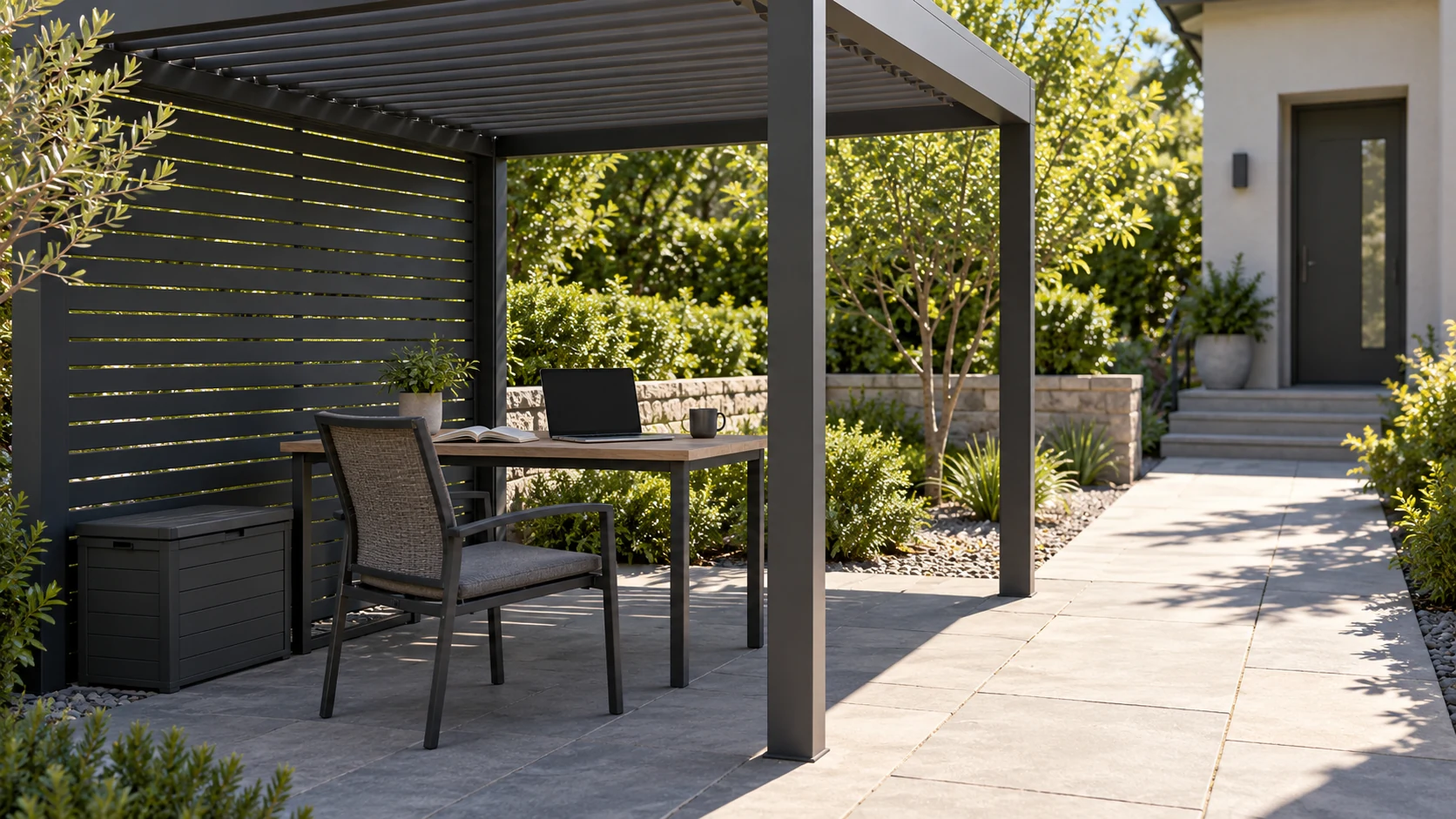
Separate a lack of time from unsuitable conditions
A patio used for two hours a week is not automatically a good or bad pergola candidate. Ask why the household stays inside at other times: harsh afternoon sun, late working hours, or a preference for the living room after dinner? A roof may alter outdoor conditions, but it does not change work schedules or habits by itself. For a week, record occasions when someone wanted to go outside but did not, and the actual reason. Include weekdays and weekends. Neither blaming every inconvenience on weather nor liking a rendering establishes that a pergola would be used daily.
Include setup and clearing away in each visit
A twenty-minute coffee break may first require moving chairs, wiping a table, finding cushions and navigating stored items. If preparation consumes much of the opportunity, reorganizing those tasks can help test whether outdoor time is genuinely wanted. Precise timing is unnecessary; record repeated actions and who performs them. Apply the same test to a pergola proposal: roof operation, furniture use and departure routines should fit daily life. Distinguish optional decoration from essential preparation, and notice tasks that only one family member is willing to perform. That burden can influence whether the space remains useful over time.
Run a modest routine experiment first
Imagine two working adults who describe their terrace as too sunny. Their diary shows that they mainly want to use it after sunset, while the real obstacles are upstairs cushions and pots covering the table. They can first establish a ready-to-use seat and try several evenings before assessing other roof needs. Another household repeatedly cancels outdoor lunches because of direct sun, producing a clearer shading brief. Neither scenario predicts a purchase outcome. Retain routines that people willingly continue after the experiment, rather than overstating use to justify an earlier idea. The purpose is a more concrete decision.
Turn the findings into a next step, not a payback claim
If the diary identifies a barrier that a roof could address, summarize the regular hours, activities and unresolved conditions, then ask a provider how its proposal responds. If storage, furniture or household arrangements dominate, make those changes first and reassess later. Unverified resale premiums or fixed payback periods do not replace a lifestyle decision. Spending still needs to fit the household budget, but establish the experience being purchased and the operations people accept. A recorded reason that can be revisited is more useful for choosing scale than a confident prediction that everyone will use the patio more.
- Record specific missed opportunities and their causes.
- Include retrieval, setup and clearing away.
- First adjust routine barriers that can be tested easily.
Does low current use mean a pergola is a bad purchase?
Hours alone do not decide it. Identify whether outdoor conditions prevent wanted activities or whether the household has little time to use the space. Record weekday and weekend needs, try simpler routine improvements, then compare roof proposals if the main barrier remains relevant.
More questions, practical answers →