Hardtop pavilion planning
Roof edges and trim: close-up photographs to request before ordering a gazebo
Request a coordinated set of roof-edge photographs showing trim, corners and pre-shipment condition.
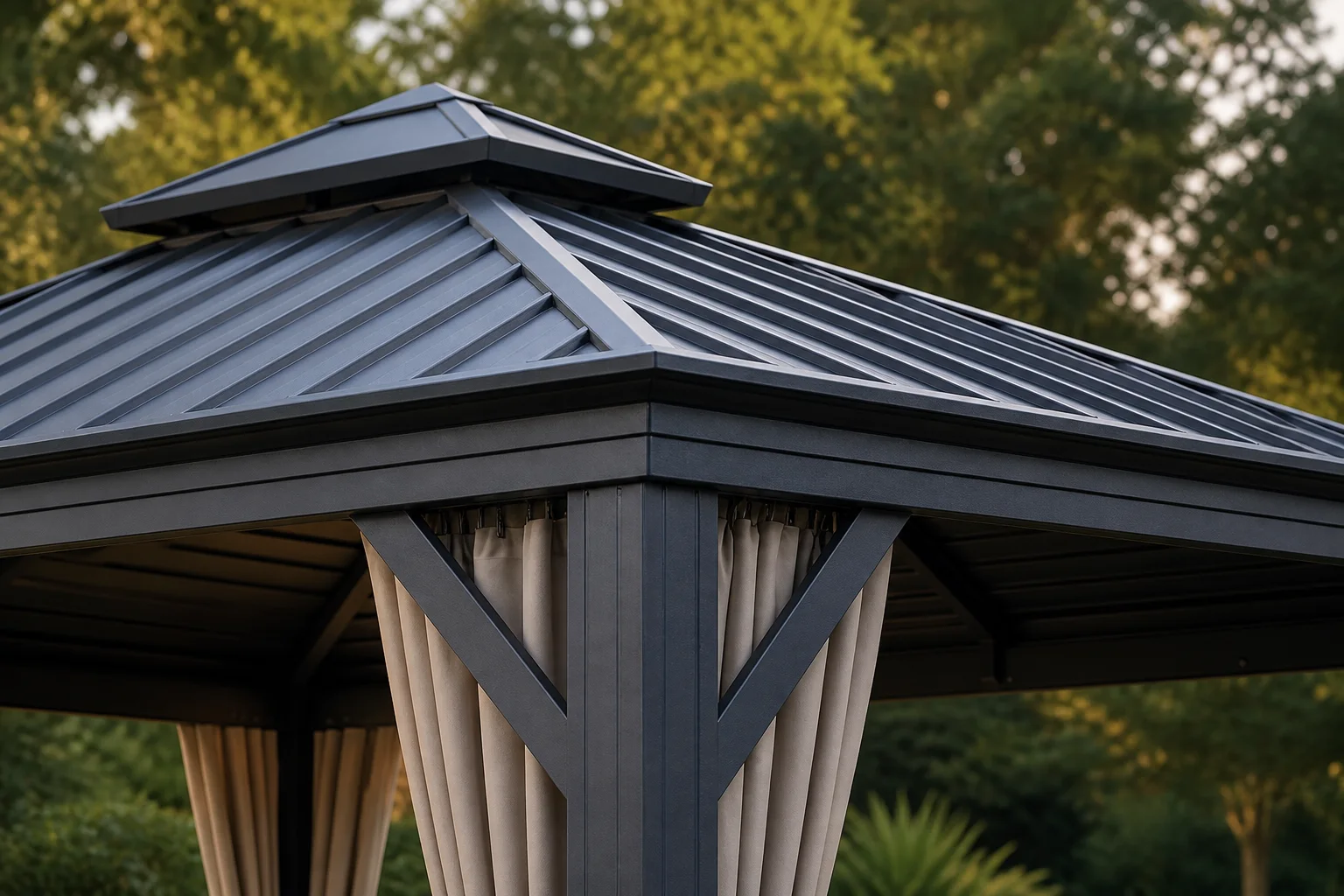
Use edge photographs to understand the finished assembly
Roof-edge close-ups help a remote buyer see where panels end, how corners meet and whether separate trim completes the appearance. Some details only reach their final state during site assembly. Request an overall locating view and then details of the same region rather than unrelated close-ups. Photographs explain construction and visible condition; they do not prove material grade or structural performance. If the supplier only has display photographs, identify whether they match the order. A sample detail should not be treated as evidence of the actual shipment.
Request four distinct types of view
A useful set covers a straight eave, corner junction, end finish and relevant accessory connection. Keep a part identifier or locating reference, and label each as a sample, pre-shipment or completed-site view. Where film or packaging hides surfaces, ask what is concealed without demanding damage to necessary protection. For marks, dents or uneven-looking edges, first establish the intended completion stage, then request additional evidence under the agreed acceptance process. Consistent angles and lighting aid comparison but cannot establish a technical surface standard from reflections alone.
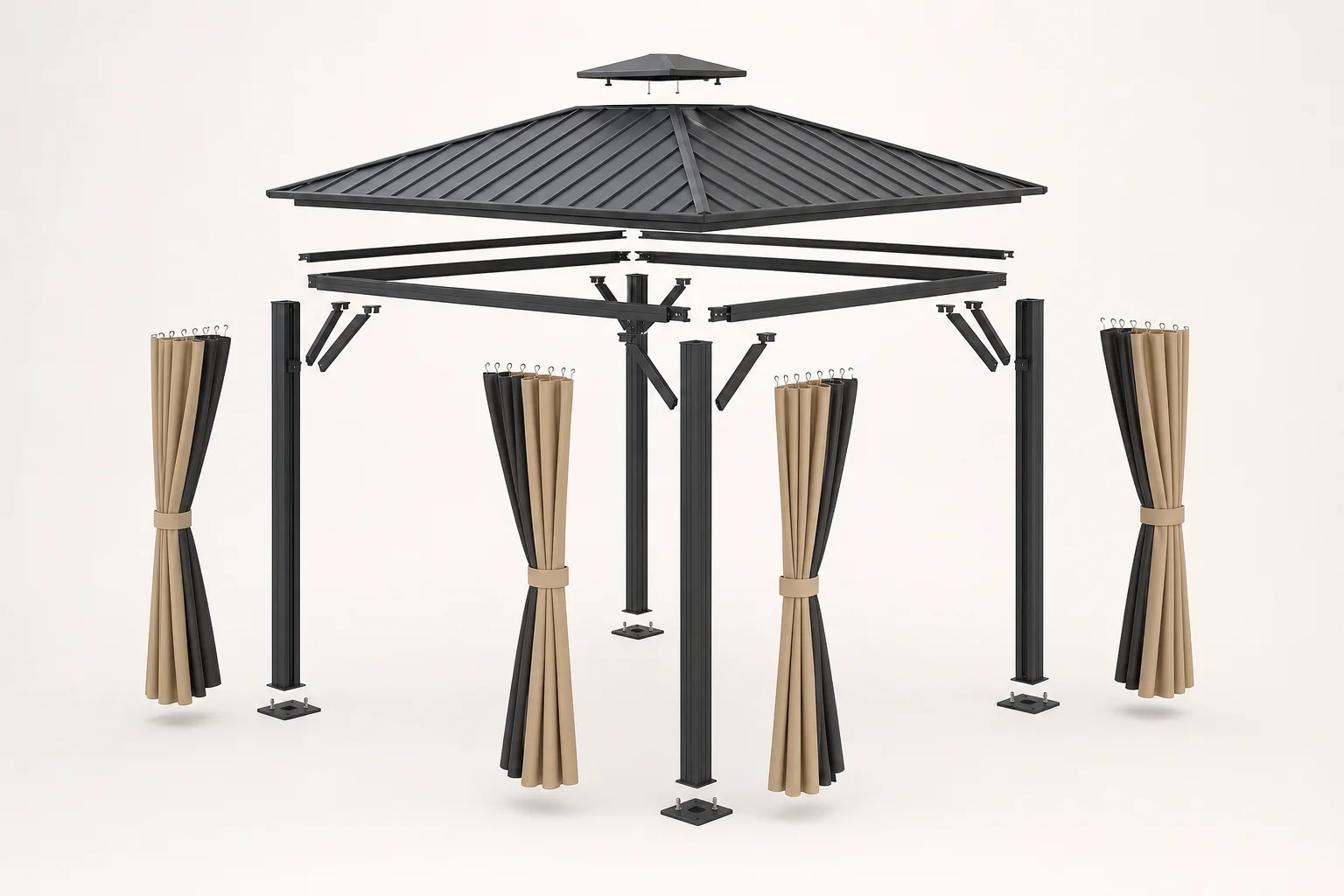
Compare a finished sample with unassembled delivered parts
Suppose the display sample includes completed corner trim, while delivery reveals separate panel edges. A difference in appearance may reflect assembly stage rather than a defect. Check whether the listed trim has arrived and ask the installer to explain the final relationship using the matching drawing. Conversely, a missing ordered end component should not be dismissed because it may be less visible later. Stage information helps distinguish normal separate parts from shortages, damage or unresolved construction questions, so everyone discusses the same condition.
Turn images into questions that can be followed through
Mark each concern on the locating view, state the question and retain the supplier response. A general request to improve quality attached to many photographs makes resolution difficult to track. Keep confirmed views with the order and compare the same locations after assembly. Record replacement scope and relationships with adjacent trim, with the response defined by responsible personnel. This process reduces delivery ambiguity without assigning professional acceptance responsibility to the owner.
Retain size and revision when comparing photographs, because details from another configuration may not describe the ordered assembly.
- Keep locating views and edge close-ups together.
- Identify sample, pre-shipment and completed-site states.
- Tie questions to components and the response scope requiring confirmation.
What makes a roof-edge close-up useful?
Check that it identifies the model, size, location and assembly stage. A locating view, identifier and adjacent parts provide context. Use it for visible-condition questions, with drawings and explanations for unclear details; it does not establish material or performance ratings.
More questions, practical answers →