Large pergola projects
A hired pergola venue: define what the event organizer receives
Define hired pergola furniture, controls, staff support and restoration through a verifiable handover.
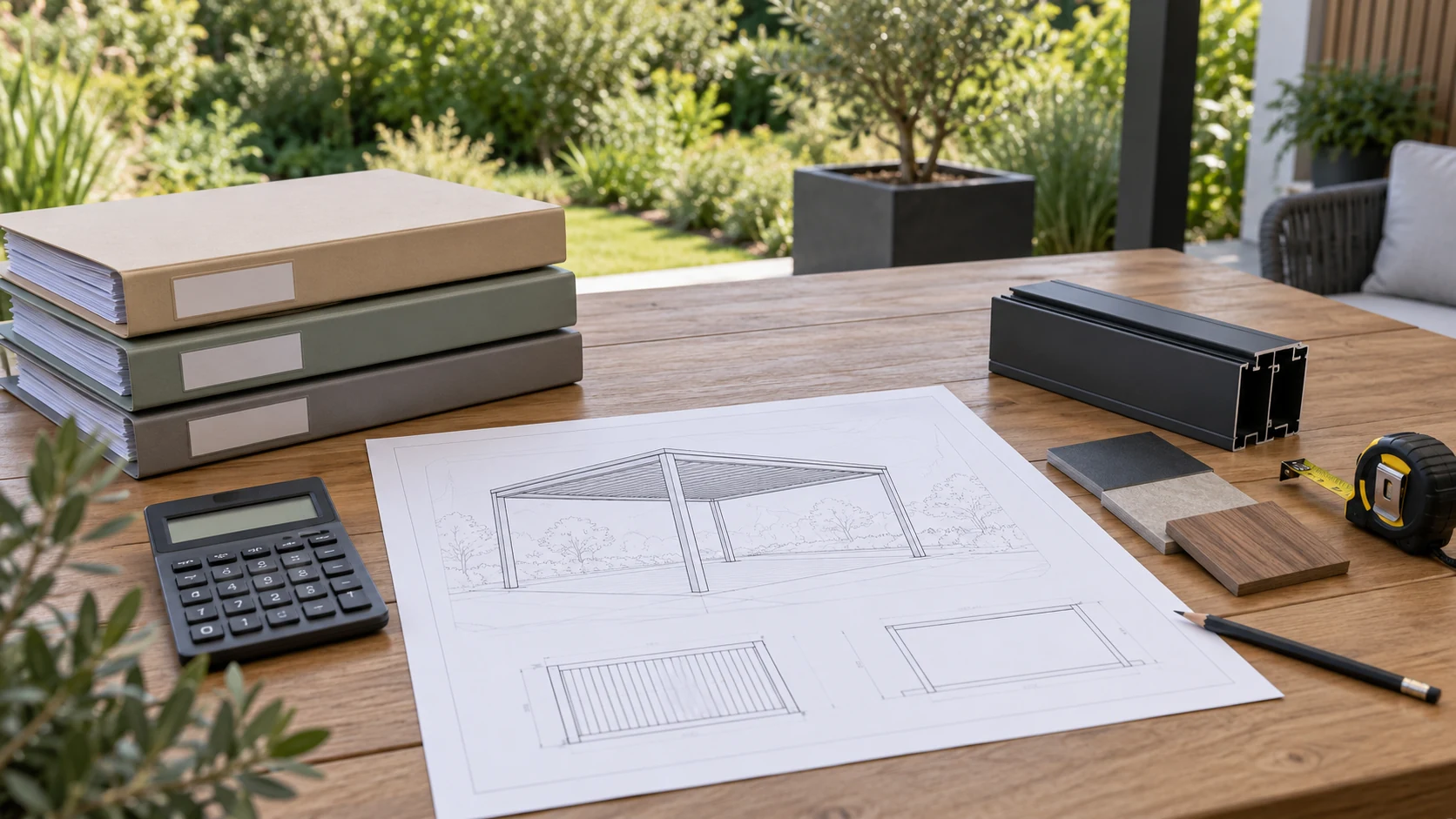
Start with what the organizer receives
Identify the actual zone, hours, furniture and facilities before accepting a pergola venue hire. Promotional photographs may include items supplied by a previous event and do not automatically define the package. Separate space, facilities, control permissions and staff support, with an agreed receiving state. This is an operational handover guide, not a legal template. The product model helps identify the structure but not the hire configuration. A clear list lets organizers plan suppliers and budgets while telling the venue what must be ready before the organizer takes over.
Specify controls and support precisely
Define who may operate movable roof elements or other accessories, fault contacts and whether staff support is continuous or limited to handover. Actual product instructions govern operation; possession of a controller does not authorize every user. Specify furniture moves, decoration and outside equipment, with specific review for attachments and loading. Check power, cleanup, storage and assistance separately rather than using fully equipped to conceal unknowns. Assign or omit excluded services explicitly so neither party discovers on event day that both expected the other to provide them.
Check the handover with an external supplier
Suppose an outside equipment supplier arrives needing case storage and facility connections, but the hire list includes only space and furniture. Share those needs during booking so the venue can confirm support and limits before any unreviewed connection is attempted. Walk through a representative arrival with contacts, receiving points and completion conditions. The venue need not supply everything; each need requires an identified owner. A defined scope helps the organizer compare the quotation with the actual event instead of discovering interface gaps during setup.
Match departure restoration to arrival records
Record the arrival layout, equipment state and existing issues, then compare departure with agreed restoration. Assign inspection, receipt and exception handling beyond distant photographs. Update extensions or changed activities and preserve the actual service boundary.
Keep the final version and give suppliers the parts relevant to their work. Superseded lists can otherwise cause duplicate preparation or omissions. A useful handover supports both the current event and the condition the next organizer will receive after it ends.
- Define space, furniture, equipment and support.
- Assign controls and external-supplier interfaces.
- Compare departure with arrival and restoration conditions.
Does hiring the entire pergola zone include all equipment in its photographs?
No. Confirm furniture, equipment, storage, power, support and control permissions individually. Photos may show another event supplies. Agree arrival and departure conditions and assign excluded work explicitly.
More questions, practical answers →