Hardtop pavilion planning
Exposed roof fasteners or concealed connections: compare service access
Compare exposed and concealed roof connections through inspection, access and replacement arrangements.
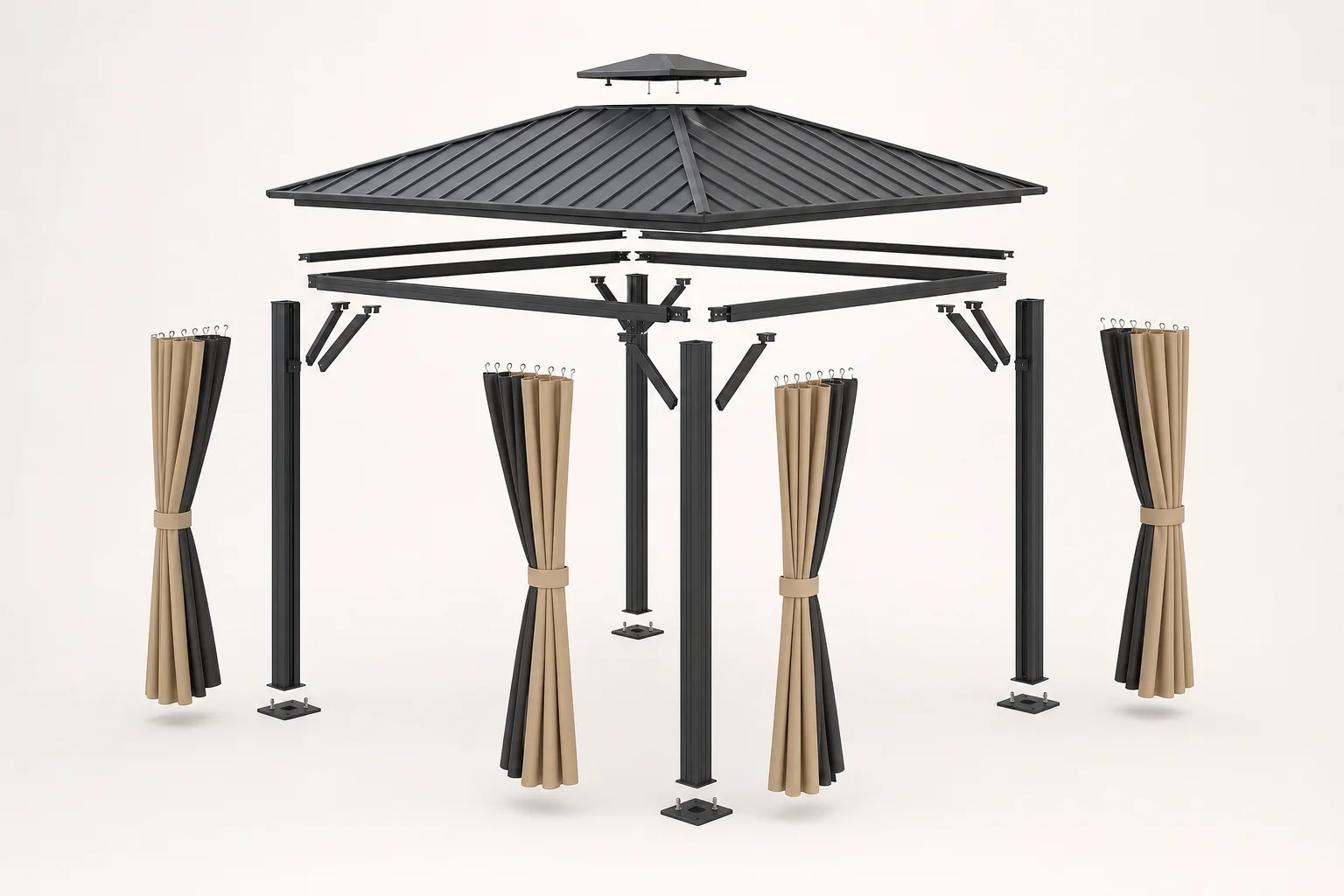
Locate the connection and then establish access
The practical comparison between exposed roof screws and concealed connections begins with inspection and service. Visible fixings can be located easily, but their required treatment still belongs to the applicable instructions. Concealed connections may require trim removal for access and are not automatically maintenance-free. Ask the supplier to identify connection types and service positions on the drawing, distinguishing owner tasks from professional work. Choose through an understanding of the complete roof and its service requirements rather than an impression that fewer visible screws must be better.
Connect inspection questions to actual parts
For exposed connections, ask how the fastener and any sealing components are identified and how inspection is permitted. For concealed connections, ask which side provides access, what must be moved and how the completed condition is confirmed. Do not invent tightening intervals or torque values, or substitute ordinary hardware because it looks similar. A quotation saying stainless screws without identifying their use may still need clarification. The comparison should concern identifiable parts and tasks, not turn one fastener material or arrangement into a guarantee for the entire roof.
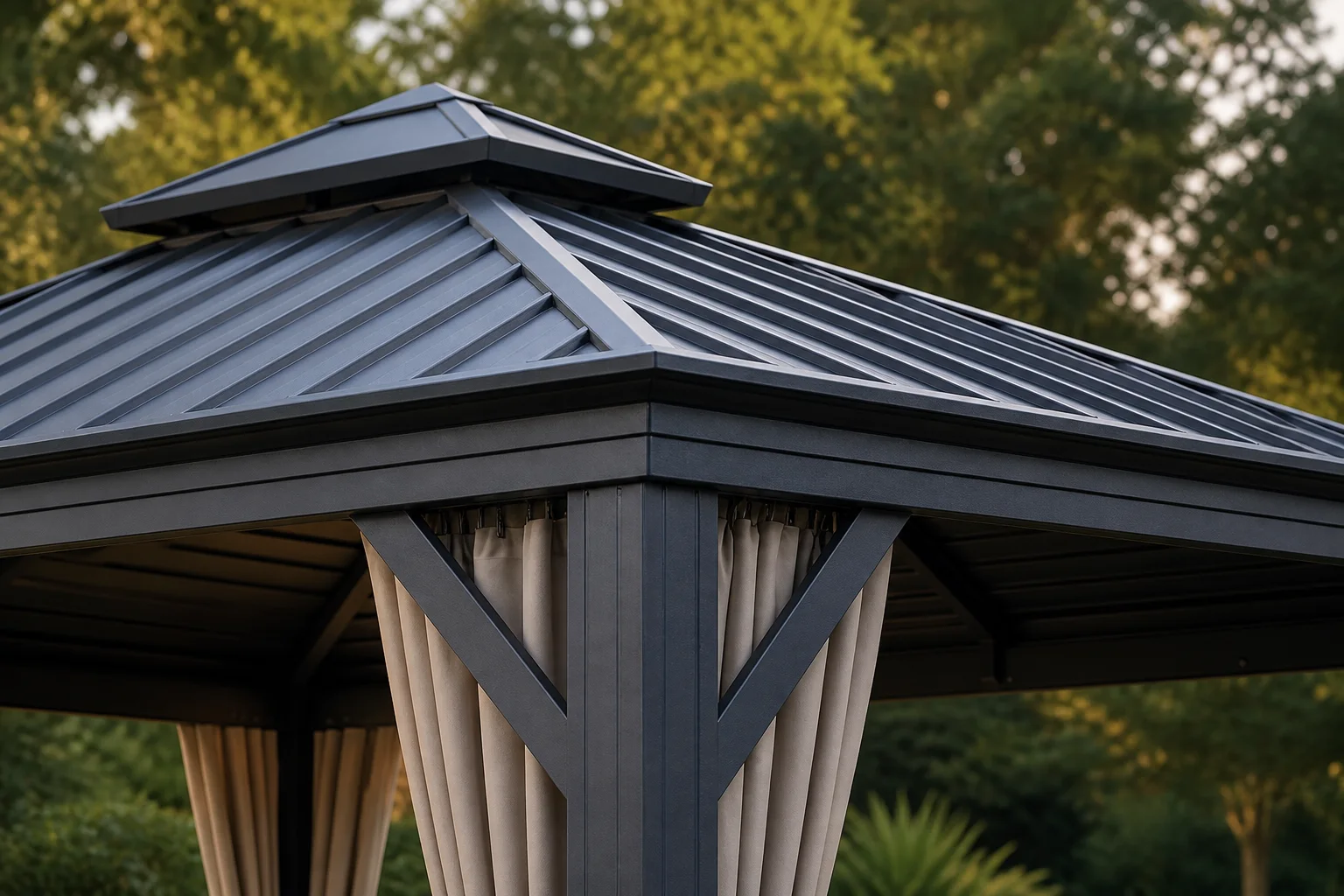
Place a possible repair into the actual garden
Imagine a gazebo with one side close to a tall wall and another side open. Two connection proposals may both be serviceable in a showroom, but one may require access from the wall side. Ask the supplier to relate its service approach to the actual site before deciding whether to change position or configuration. This does not rank the connection technologies universally. It shows why access must be assessed with real obstacles, including who arranges equipment, protects nearby furniture and records completion when service is needed.
Add service information to the quotation comparison
List connection position, inspection scope, identification, access and service responsibility in the comparison. Leave unanswered points open rather than replacing them with permanent or leak-free slogans. Keep the applicable manual and parts list, and document positions later concealed. For an abnormal condition, report observations for technical review rather than repeatedly tightening fixings. The reason to choose an arrangement is its suitability for correct installation and documented service at this site.
When connection or sealing components change, update the service documents so a later replacement is not guided by obsolete information.
- Mark connection positions and access directions.
- Identify fasteners and any sealing components accurately.
- Include site obstacles and professional service responsibilities.
Are concealed roof connections always easier to maintain?
Not necessarily. Compare actual inspection requirements and access. Concealed joints may need trim removal, while exposed fixings still require the correct service method. Assess the specific parts and site obstacles, not appearance alone.
More questions, practical answers →