Compact pergola living
How a new pergola changes light for existing garden plants
Record existing plants and light before a pergola, then observe and adjust planting in stages.
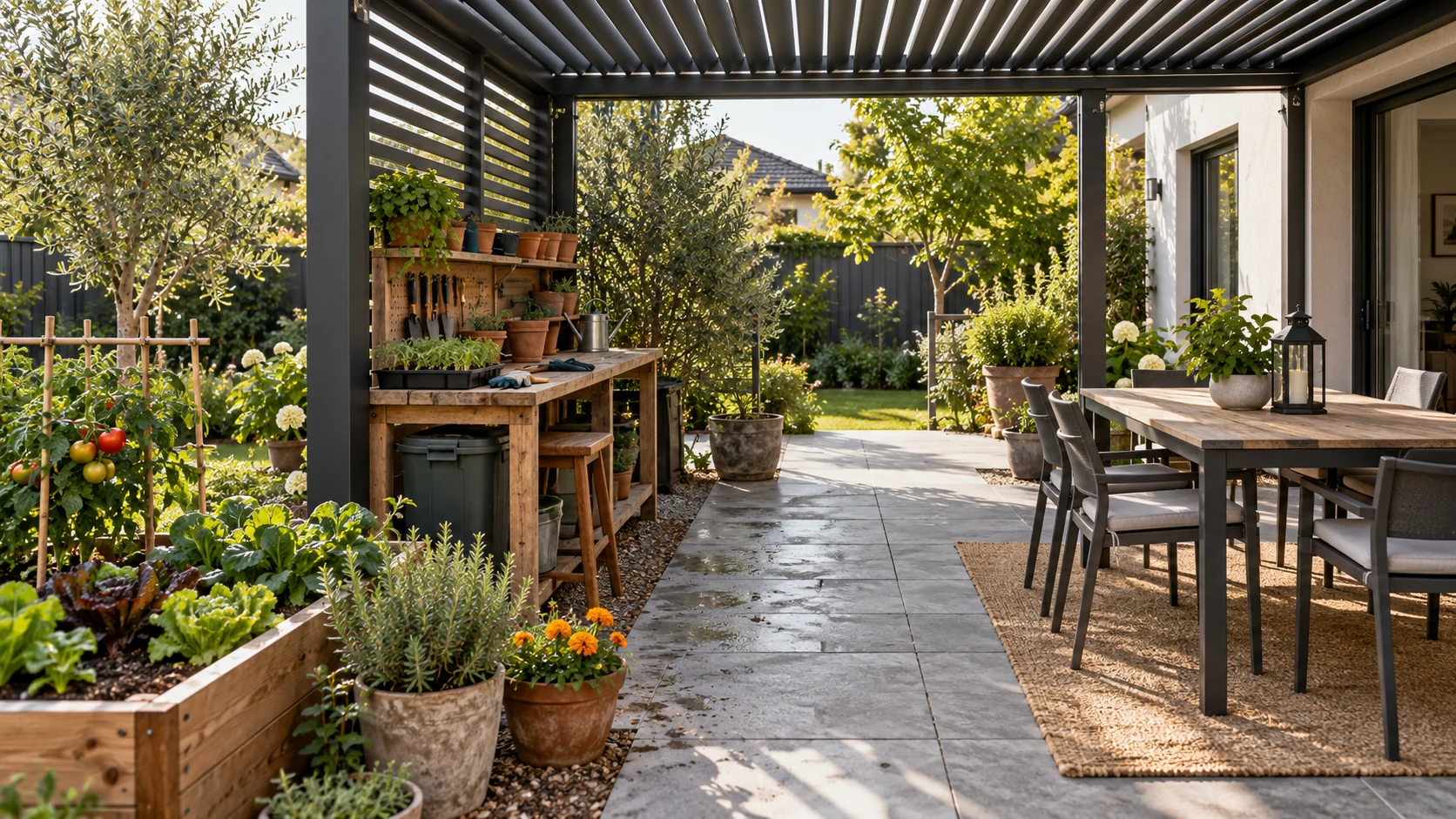
Record the border before construction
Pergola proposals often emphasize future seating while overlooking established plants nearby. Before construction, photograph the border and record plant identities, condition and care, observing direct light at several relevant times. Roof, frame and side features may all affect light; an opening roof alone does not settle the impact. Date observations and note conditions instead of treating one cloudy day as representative of every season. Where identities are uncertain, seek reliable horticultural help and retain unknowns rather than guessing light needs from appearance.
Separate changed shade from plant response
A plant changing after installation does not prove shade is the sole cause. Construction disturbance, watering, roots and seasonal conditions may contribute. Compare light and care records with reliable information for the actual plant before adjusting it. RHS shade-gardening guidance supports matching planting to conditions, but establishes no universal success beneath every pergola. If difficulties persist, bring before-and-after photographs to a horticultural adviser. Identifying likely causes is more targeted than immediately replacing the border with an assortment labeled shade tolerant.
Trial a small change before replacing everything
Imagine a border receiving less afternoon light after installation and an owner considering moving every plant. Mark the most affected positions, keep observing the rest and use species guidance to choose an appropriate adjustment time. Movable pots may allow a small location trial; established plants need a separate transplant assessment. This hypothetical example is a decision method, not universal transplant advice. Map plant needs alongside seats and routes so seeking brighter positions does not simply place containers in the household's busiest passage.
Assign responsibility for follow-up observations
Keep a planting map showing what remains under observation, what needs advice and who records watering and visible changes. Observe actual roof and side-feature states instead of selecting one favorable photograph. Record frequent shade adjustments so light differences can be interpreted. Preserve pergola cleaning and drainage inspection access when changing the border. Small, traceable changes make their effects easier to assess than wholesale replacement, while allowing plant care and use of the new sitting area to develop together over time.
- Record plant identities and light before construction.
- Consider watering, season and disturbance alongside shade.
- Make small changes with observation records.
Must every nearby plant be replaced with shade-tolerant plants?
Not necessarily. Compare light at each position with the existing plants' needs. Watering, season and disturbance may also affect condition. Keep before-and-after records, seek horticultural advice where needed and adjust in stages rather than replacing everything because a roof was added.
More questions, practical answers →