Hardtop pavilion planning
Where should gazebo netting zippers open?
Locate netting entrances around carrying, chair movement and real arrival routes rather than the display front.
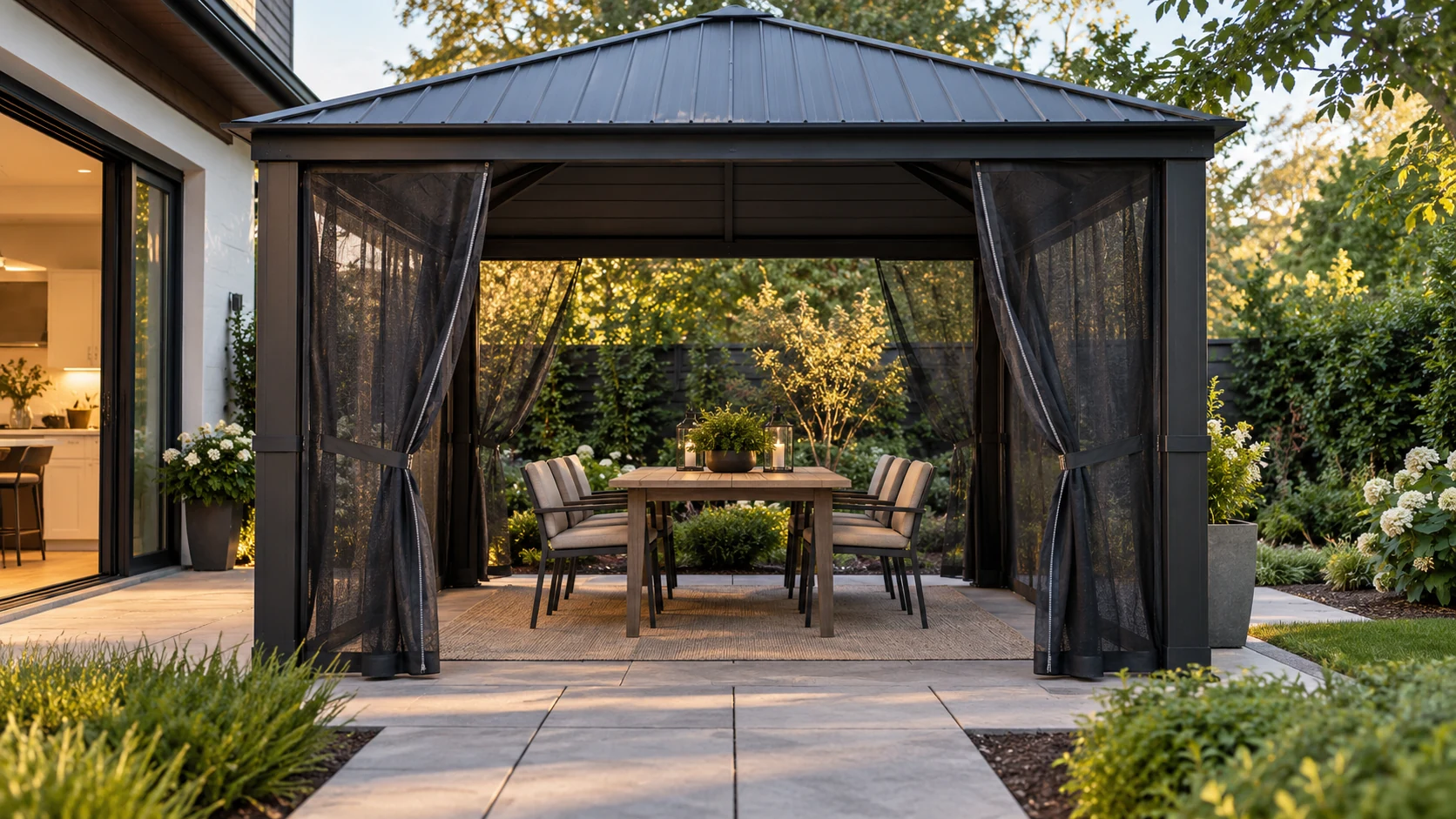
Choose entrances from the everyday route
Locate netting zippers from the routes people actually use from the house, garden or service area, not automatically from the front shown in a display image. Draw arrivals, furniture and parked curtains together. Check whether someone can pause, operate the zipper and continue through conveniently. Opening arrangements depend on the selected panels, which should not be reversed casually. This layout exercise does not establish accessibility or evacuation compliance; business use still needs the appropriate project review. Start with actual movements to identify the useful entrance.
Include carrying and accompanied entry in the trial
Do not test only an empty-handed person walking through quickly. Rehearse carrying a tray or cushions and accompanying someone who needs assistance. Observe how operating the opening relates to nearby furniture. Confirm actual dimensions against the product information and intended users rather than applying one generic number. If two frequent routes approach from opposite directions, ask about supported panel layouts instead of cutting the netting to add a zipper. Also establish how the opening is closed and tidied, so inconvenience does not lead to its routine abandonment.
Compare arrivals from a kitchen door and garden gate
Imagine family meals arriving from the kitchen and visitors entering from a garden gate on another side. A zipper chosen only for visitors may send food carriers around the furniture, while a kitchen-focused opening may confuse guests. Identify primary and secondary routes, test supported layouts and use the furniture arrangement or simple wayfinding to make entry clear. The objective is not the maximum number of openings. Each route needs to fit the curtain configuration, closing routine and supplied instructions.
Recheck after furniture is in place
After installation, rehearse entry with the actual furniture and commonly carried items. Confirm that the zipper matches the order and is unobstructed by lights, cabinets or fabric stacks. Explain entrance identification, handling and fault reporting to users. Recheck routes when furniture changes, and keep panel identifiers and an opening diagram for replacement purchases.
At public venues, observe whether first-time visitors locate the entrance. Repeated detours may indicate a layout or recognition issue that deserves adjustment, rather than a problem with the guests.
- Map arrivals from the house, garden and service area.
- Rehearse carrying, accompaniment and chair movements.
- Keep the net-panel arrangement and zipper positions for replacements.
Can I rotate the whole netting arrangement if the entrance is inconvenient?
Confirm that the panel, fittings and track support the proposed arrangement. Apparent symmetry is insufficient. Give the supplier the intended entrance and furniture routes, then test and record the confirmed configuration for later removal or replacement.
More questions, practical answers →