Compact pergola living
Climbing plants near a pergola: evaluate a separate trellis
Compare separate trellises when planning climbers near aluminum pergolas, keeping plant support and operating parts distinct.
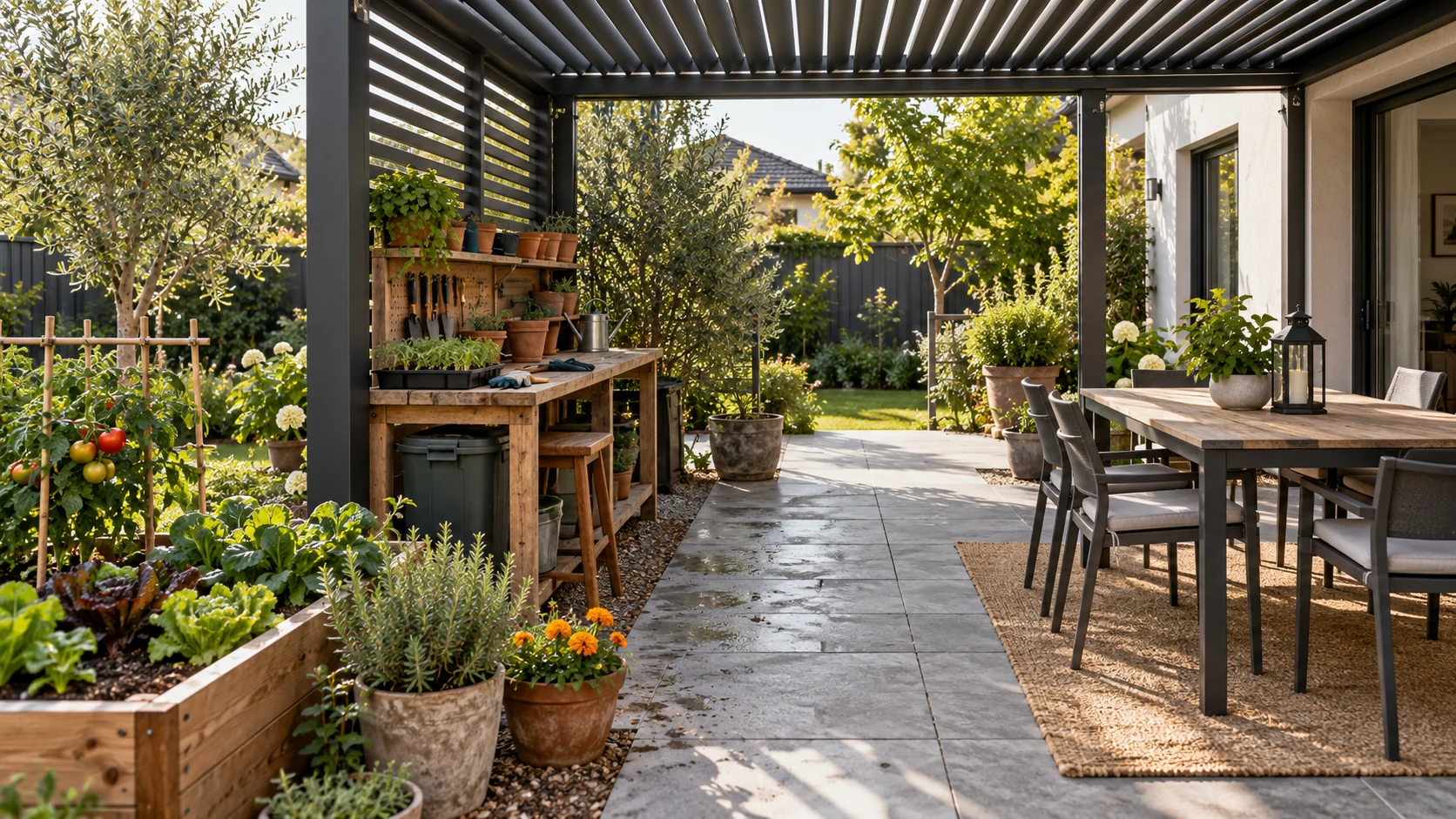
Traditional arbor images do not authorize attachment
Climbers commonly cover traditional garden structures, but a plant support and an aluminum pergola with moving parts have different conditions of use. Before training a vine around a post, describe the plant, location and support method to the actual system supplier and verify permitted proximity or attachment. Apparent strength does not authorize wires, ties or branches on beams, posts or moving parts. Consider mature growth as well as a small new plant. Establishing those boundaries should precede decisions about the desired leafy appearance.
A separate support needs its own design
A separate trellis can distinguish plant management from pergola operation, but still needs suitable support, siting and stability. Match it to the plant and local conditions while preserving pruning access. There is no universal separation distance: consider growth, roof movement, drainage and service requirements together. RHS pergola guidance helps explain planting uses but does not verify plant loading on a particular aluminum system. Confirm horticultural and structural responsibilities separately so the space between the two systems does not become an unresolved gap in the design.
Check the mature outline
Imagine an owner wanting a green view from the living room while retaining everyday roof and side-feature operation. Sketch an informed mature outline and compare separate supports at the garden edge or behind seating. If a position relies on constant cutting to keep moving parts clear, reconsider whether that workload is acceptable. This hypothetical case predicts no growth rate and recommends no fixed species. Use plant guidance and local horticultural advice, and involve the eventual pruner before choosing a location instead of assigning the burden after installation.
Include growth in routine management
Share the plant proposal, support drawing and pergola model with the relevant suppliers for specific attachment and care advice. Record permitted and prohibited positions rather than relying on vague verbal understanding. As growth develops, inspect its relationship to operating and drainage areas as needed and address encroachment appropriately; do not reach into moving equipment to pull branches away. Provide places for tools and cut material. The resulting plan should support plant care, equipment operation and servicing together, accounting for both greenery and its continuing management.
- Describe mature growth and proposed attachment methods.
- Verify the separate trellis's support and service conditions.
- Preserve inspection access near moving and drainage areas.
Can aluminum pergola posts automatically serve as vine supports?
Not automatically. Verify attachment, plant effects and maintenance for the actual system rather than transferring timber-arbor practice. A separate trellis is an option, but its support and location need their own checks. Consider mature growth and obtain specific supplier guidance.
More questions, practical answers →