Retractable awning choices
A bakery queue awning: restore the entrance after the morning rush
Plan the morning queue, replenishment and reset as different states, assigning the sequence for equipment operation and movable frontage items.
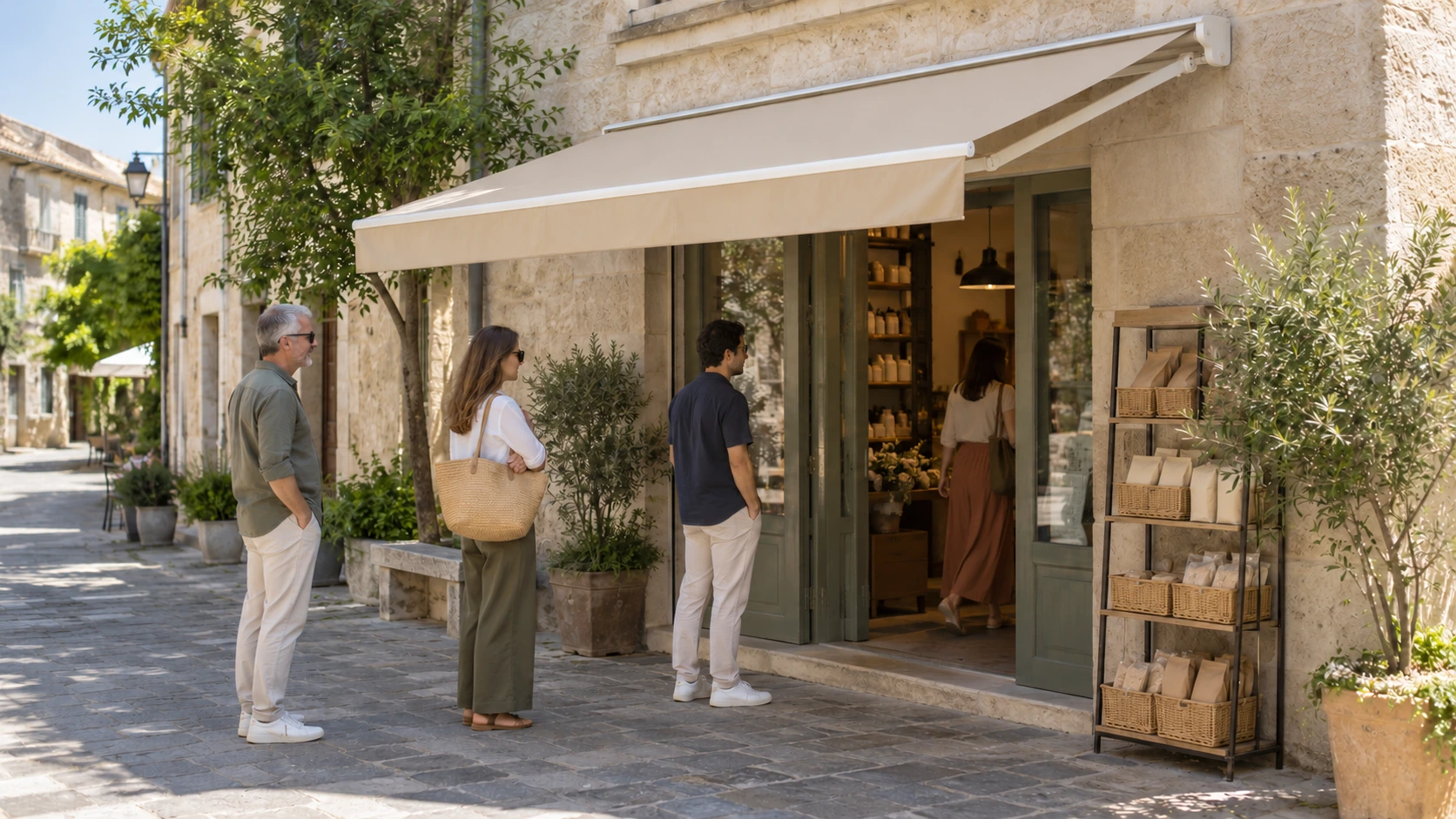
The queue changes with the trading period
A bakery may have a takeaway queue in the morning and need the frontage for replenishment or brief visits later. Start from those changing states instead of drawing the longest queue neatly beneath fabric. Record where the line starts, turns and leaves for the door, avoiding conflicts with departing customers. Shade is one site condition, while frontage use and circulation requirements need location-specific confirmation. The objective is coordinating temporary queuing with ordinary entrance use, not promising that shade removes every waiting discomfort or increases sales.
Give queue equipment a place after the rush
Queue rails, menu stands and temporary signs need a storage destination after the rush. Without one, staff may push them into movement space, behind doors or around delivery turns. If replenishment arrives after breakfast, assign a sequence for queue reset, route checks and the instructed equipment state. Retracting the awning does not automatically clear the entrance because objects and circulation remain. Whether equipment is deployed, retracted or unavailable must still follow the selected product instructions and actual site arrangement rather than simply the changing queue length.
Plan the transition while customers remain present
The frontage does not become empty the moment the rush subsides. Before changing the layout, staff should confirm customers, movable items and permitted operating conditions, directing waiting people through an agreed process if needed. Do not ask customers to move barriers around equipment movement or let delivery personnel operate unfamiliar controls. Follow weather and operating limits rather than delaying non-use to preserve queue shade. Rehearse the real transition without customers so notification, operation and route restoration have clear owners before a busy day creates pressure to improvise.
Review three states instead of one rendering
Discuss peak queuing, replenishment and ordinary clear-frontage states at procurement and handover, retaining a simple layout and responsibility record. Reassess after adding pickup shelves or promotions. Observations can improve transitions and signs, but do not justify unmeasured waiting-time reductions. If the actual requirement is a continuously sheltered public route, define it separately and compare suitable systems rather than treating retractable shade as an always-available fixed roof. The proposal should remain manageable after the photographed peak period has ended.
- Draw queue, replenishment and reset arrangements separately.
- Provide real storage for rails and signs.
- Assign customer communication, equipment operation and route restoration.
Does retracting the awning reset a bakery entrance after the rush?
Also remove and store queue items, menus and temporary signs and check customer, delivery and door routes. Equipment state follows its instructions; ground reset needs assigned people and storage. Do not assume the area is empty or let unfamiliar users operate controls. Rehearse the transition sequence beforehand.
More questions, practical answers →