Retractable awning choices
Awning width and projection: why a large canopy can still leave the table in sun
Measure equipment dimensions, moving shade and the seated dining area separately, then choose around the hours you actually use the patio.
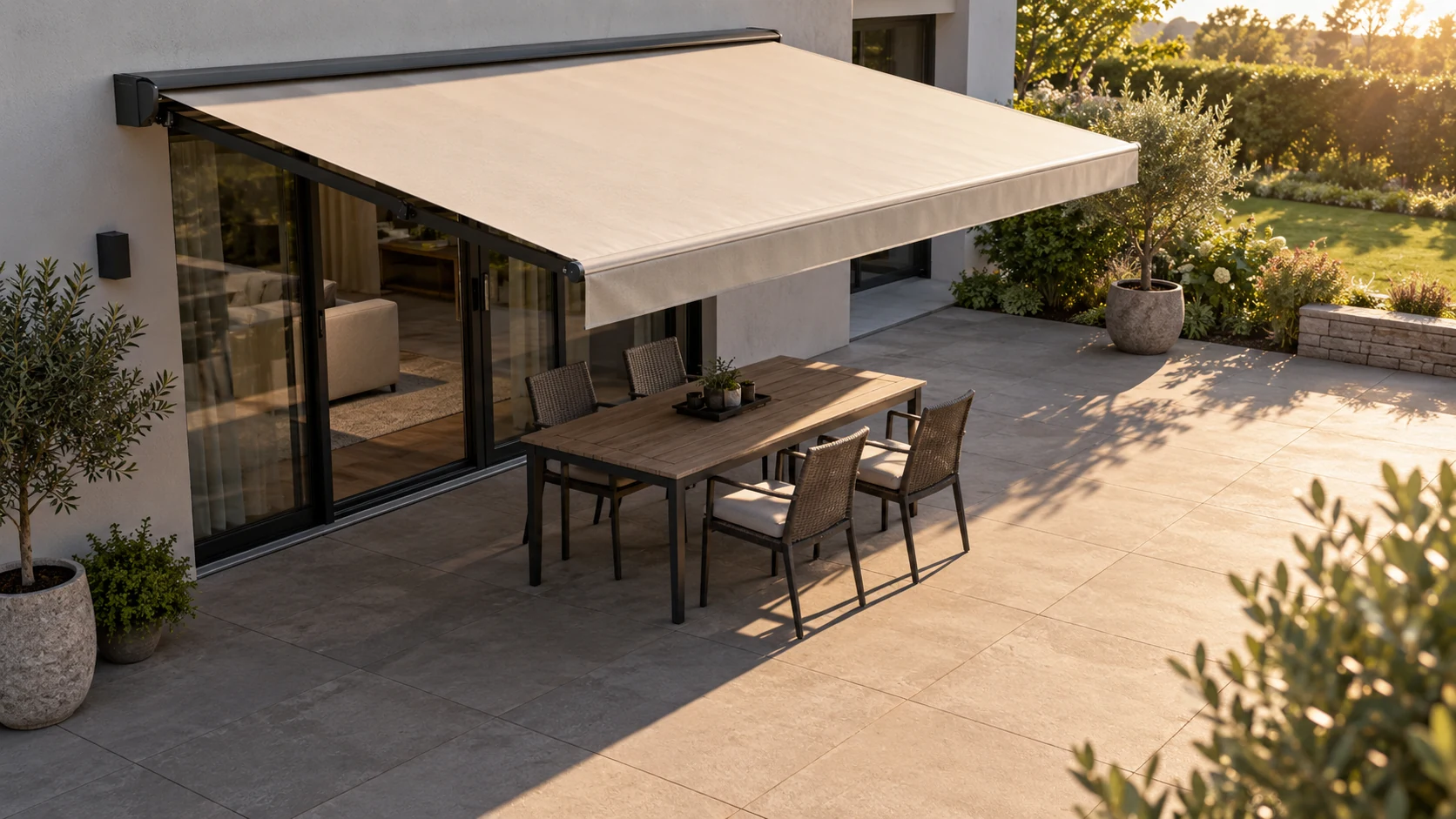
Measure the people and table that need shade
Awning width and projection describe the equipment, not a ground area that remains shaded at every hour. First draw the dining table, pulled-out chairs and the positions of seated people. Add the hours when shade matters. A shaded table center may still leave an outer guest facing the sun. Do not size the equipment from total patio area or assume the fabric edge defines an all-day shadow. Identify the seats used most often. Treat an occasional large gathering separately, with furniture that can move, instead of making every rare event determine the permanent installation.
Use a time record instead of one attractive photograph
Photograph the intended area from a consistent position on a clear day in a relevant season. Keep the time, direction and furniture positions with each image. A comfortable morning seat may be exposed in the afternoon; walls and neighboring buildings also affect the result. Ask the supplier to relate the proposed mounting position and deployed shape to the desired shaded area. A showroom photograph cannot establish performance at your home. If the proposal relies on an additional valance, compare the lowered view and access as well as the apparent increase in coverage.
Test the proposal with a hypothetical dinner
Imagine a family eating outdoors in the early evening on weekdays and hosting lunch occasionally at weekends. Make the regular evening seats the primary target, then discuss moving the table or using fewer outer seats for lunch. Increasing projection to accommodate rare occasions may introduce mounting, clearance or budget constraints while still failing to block low side sunlight. The exercise is about priorities, not maximizing every dimension. Ask family members to occupy the marked positions. Their seated view provides a more useful test than standing back and judging the fabric from above.
Request a dimensioned proposal with its conditions
Request understandable plan and side views that distinguish nominal width, usable fabric area, deployed position and the passage that must remain clear. Keep unverified shade outcomes open for discussion rather than treating a sketch as an all-weather guarantee. Check pulled-out chairs, opening doors and cleaning access after the dimensions are proposed. Number the priority seats in the brief so later color or drive choices do not obscure the original purpose. After installation, evaluate the same seats at the same relevant hours before deciding whether a modest furniture adjustment would improve the arrangement.
- Mark regular seats and the hours when shade matters.
- Record fabric, cassette and deployed front-edge positions separately.
- Ask the installer to state the assumptions and unresolved conditions in the shade study.
Does awning projection equal the depth of shade on the ground?
No. Projection is an equipment dimension; the ground shadow also depends on sun direction, time and mounting position. Mark the table and seated positions, then ask the supplier to explain coverage for the actual site. Low afternoon sunlight may require a different furniture arrangement or an appropriate additional shading approach rather than simply greater projection.
More questions, practical answers →