Commercial projects
Writing a comparable pergola performance brief for a tender
Separate site inputs, performance evidence, configuration scope and deliverables so tender responses can be checked consistently.
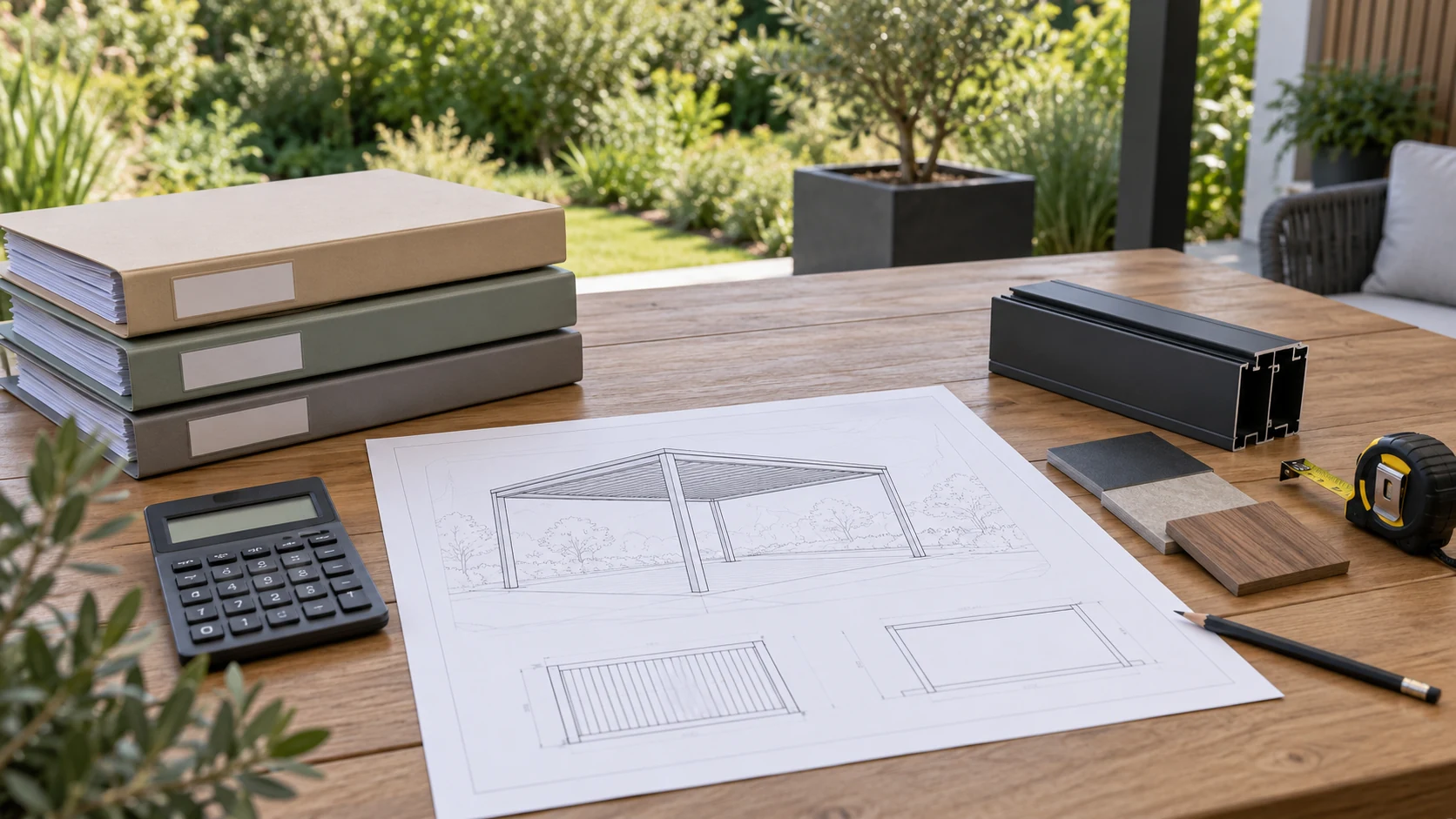
Start with the site inputs
A tender should make suppliers respond to the same project rather than guess different installation conditions. Provide location, use, layout, relationship to the building and proposed enclosures and equipment, marking verified and outstanding information. Project professionals establish structural conditions and design actions; marketing literature does not replace them. Distribute missing information consistently during clarification so one offer is not advantaged by more optimistic assumptions.
Separate geometry from performance evidence
Appearance, post positions and clear space are spatial requirements, while wind, snow, connections and drainage call for relevant design or test evidence. The categories interact but are not interchangeable. A specified wall thickness or large model name does not establish suitability of the whole installation; a relevant report title still needs matching sample dimensions and mounting conditions. Separate geometry, supporting evidence and departures in the response schedule to distinguish actual answers from product descriptions.
Allow alternatives with explicit consequences
A supplier may propose extra posts, different module divisions or revised accessories in response to constraints. Use a common departures schedule identifying the change, reason and affected user requirements. Do not reject every alternative automatically or overlook lost view, circulation or maintenance conditions because the price is lower. An extra post can affect service movement; a removed enclosure can change wet-weather use. Show such consequences in the main comparison rather than hiding them in an attachment.
Specify documents as acceptance deliverables
For drawings, material records, installation instructions, operating documents and parts lists, define revision, language, format and submission stage. Technical support alone is too vague to verify. Identify who provides local professional review or required endorsements; a factory drawing is not automatically local acceptance. Link submissions to production freeze and installation planning so omissions are found while corrections remain practical rather than after goods arrive.
Close comparisons through written clarification
List unanswered questions, unmatched evidence and exclusions separately during evaluation and seek written clarification. Explain which confirmed needs an option meets and what remains conditional instead of producing an absolute brand ranking. Retain original responses and final revisions so contracting, manufacturing and site teams use the same boundaries.
- Give all bidders the same location, use and configuration inputs.
- Record evidence, departures, exclusions and responsible parties by item.
- Carry final clarifications into drawings and the contracted scope.
Does specifying the thickest profile guarantee a more suitable pergola tender?
No. Profiles are one part of a system; site conditions, connections, anchoring, layout and accessories also matter. Supply consistent inputs, request matching design or test evidence and record departures and exclusions so project professionals can evaluate the complete configuration.
More questions, practical answers →