Solar canopy decisions
Reopening a Solar Carport After a Storm
Reopen solar carports after storms through separate decisions on public access, parking and electrical restoration, supported by records and inspection.
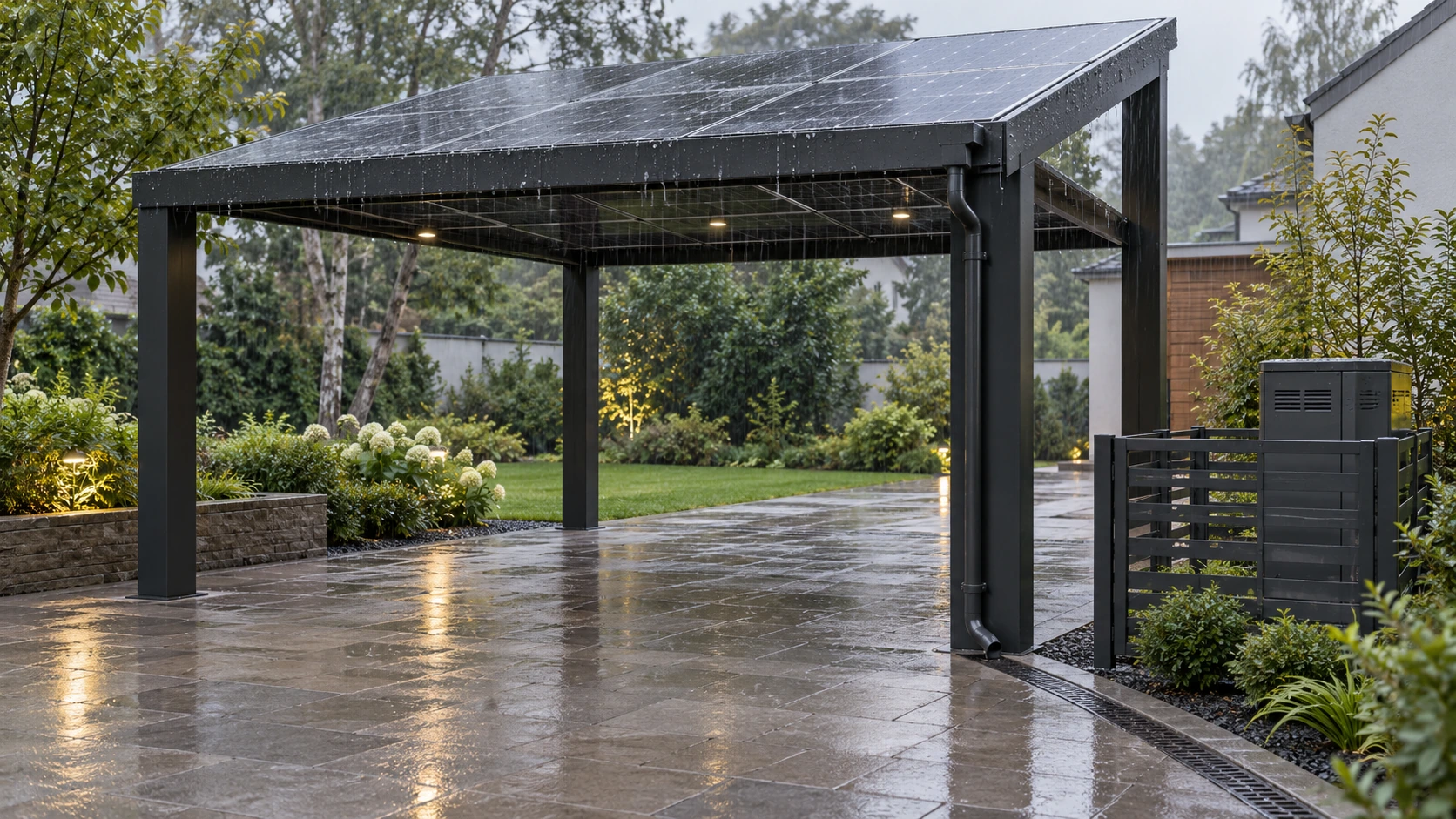
Separate the end of weather from site readiness
Reopening after a storm cannot depend only on clear skies or people using a nearby road. Structure, modules, attachments, equipment and ground conditions may be affected differently, with trees, debris and drainage also relevant. Confirm access under local emergency and site procedures before arranging professional checks. DOE severe-weather and maintenance resources support recovery planning but cannot provide a remote safety verdict for an installation. Management needs a traceable reopening decision, rather than assuming survival of a previous similar event removes the need for assessment now.
Define separate permissions for three forms of recovery
Public access, vehicle parking and electrical restoration are related but distinct decisions. A walkable area does not establish that every bay is usable, and open parking does not prove solar or charging equipment is ready to operate. Assign checks, unresolved-item coordination, phased reopening approval and user communication. Ordinary duty staff should not touch damaged parts, reset protection or energize equipment as a test. If specialists cannot yet attend, manage the site under its restrictions rather than treating the absence of findings as evidence that nothing is wrong.
- Confirm access, parking and operation separately.
- Record affected areas, inspection scope and open issues.
- Obtain assigned approval and update restrictions.
Avoid overgeneralization during phased reopening
Imagine the east side of a lot passing ground and canopy checks while damaged modules on the west await specialist work. Notices should specify the east-side scope and west-side restrictions rather than announcing that the entire carport is normal. Reports must identify uninspected areas and equipment so operators preserve boundaries. If monitoring was offline, distinguish communication recovery from actual operating status; a platform reconnecting is not electrical restoration approval. This example addresses recovery communication, without repair instructions or a guarantee that isolating one area makes every other area safe.
Continue records and follow-up after reopening
After reopening, retain event timing, inspectors, findings, photographs, approved scope and remaining tickets for repair and insurance coordination. Assign any continued observations, owners and escalation conditions so they are not forgotten once users return. Review warning, closure, driver notices and professional support to improve future response. Update asset records after repairs, replacements or configuration changes. Reopening authorizes use within its documented basis and scope; it should not become a claim that the product withstands every future storm or no longer needs maintenance.
Can parking reopen as soon as monitoring shows generation after a storm?
Not from monitoring alone. Generation does not establish structural, mounting, ground or surrounding conditions. Obtain separate access, parking and electrical decisions with documented limits. Reconnected monitoring may indicate communications recovery rather than authorization to restore electrical service.
More questions, practical answers →