Installation & care
Pergola penetrations through a waterproofed terrace: agree the interface
Assign the design, installation and inspection of membrane penetrations before a pergola connection is concealed by paving or a base cover.
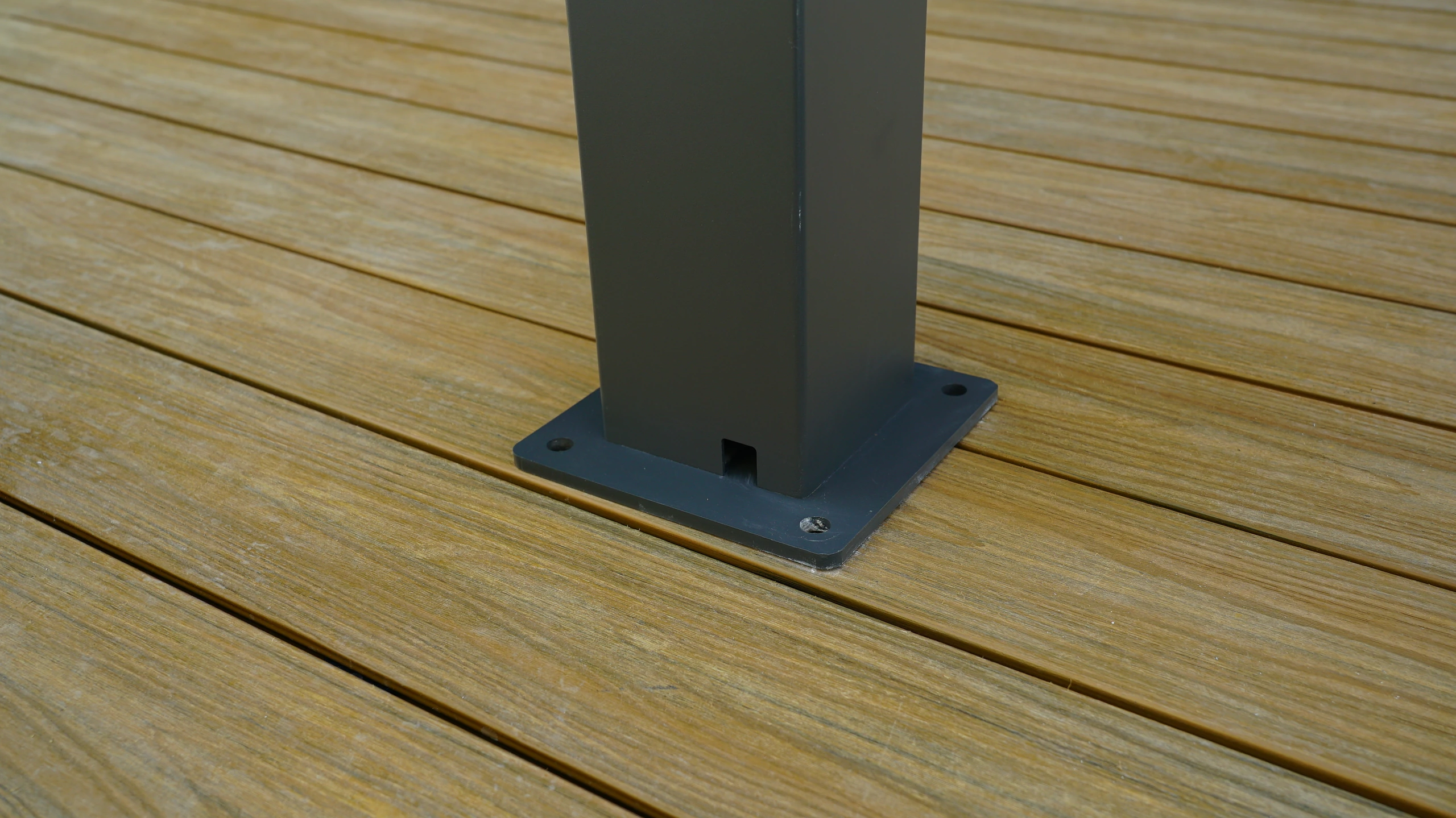
Draw every layer that the connection crosses
When a pergola support passes through a waterproofed terrace, the interface may involve paving, bedding, protection layers, membrane and structure. A plan view alone cannot show how those layers meet the connection. Ask for a section detail identifying the membrane system, proposed penetration and intended water route. Confirm whether the existing roof or terrace contractor must participate. The detail should distinguish the structural fixing from the weathering work around it. A base cover can hide the finished appearance, but it does not establish continuity of the waterproofing or show whether the underlying work can be inspected.
Compatibility and movement need decisions
The chosen membrane and associated materials have their own approved details and preparation requirements. Do not assume that a general exterior sealant can replace the roof-system detail. The responsible specialist should consider the interface geometry, expected movement, drainage and the sequence in which the connection is assembled. Compare a proposal that can be inspected before concealment with one that becomes inaccessible immediately. The practical tradeoff is not simply which option uses less visible material: it is whether the weathering detail remains compatible, maintainable and documented throughout the life of the surrounding terrace.
Avoid a gap between two contractors
Imagine a project where the pergola installer expects the roof contractor to finish the penetration, while the roof contractor assumes the supplied base is already sealed. The paving is reinstated before either party inspects the interface. A later wet patch then requires reopening finished work just to establish what was installed. A better sequence identifies the hold point before concealment and names the person who accepts the completed detail. This is a coordination example rather than a repair recipe. The correct inspection or testing method must come from the roof-system requirements and the project's responsible parties.
Retain the interface record
Keep the approved detail, material identification, installer responsibility and photographs before concealment together. Ask how the interface will be inspected during future terrace maintenance and what changes would require a renewed review. For a TTH enquiry, flag waterproofing early instead of describing the surface merely as a tiled patio. This allows the supplier's connection information to reach the roofing specialist before dimensions and construction sequence are fixed. If moisture is reported later, this record can help define the investigation area and reduce repeated guessing or unnecessary opening of finished work. It gives the involved trades one identifiable interface to discuss, rather than several different recollections of what may have been installed.
- Identify the existing membrane and obtain a coordinated penetration detail.
- Assign fixing, weathering, inspection and reinstatement responsibilities.
- Photograph the accepted interface before covers and paving conceal it.
Can sealant around a pergola post replace a membrane penetration detail?
Not automatically. The membrane system, connection geometry, movement and drainage determine the required interface. Ask the roofing specialist to agree the detail and compatible materials, then record inspection before concealment. A neat external bead alone does not demonstrate that the underlying waterproofing is continuous.
More questions, practical answers →