Compact pergola living
Pergola at a historic home: appearance and permission are separate
Check heritage status and applicable permissions before refining the appearance of a pergola at an older home.
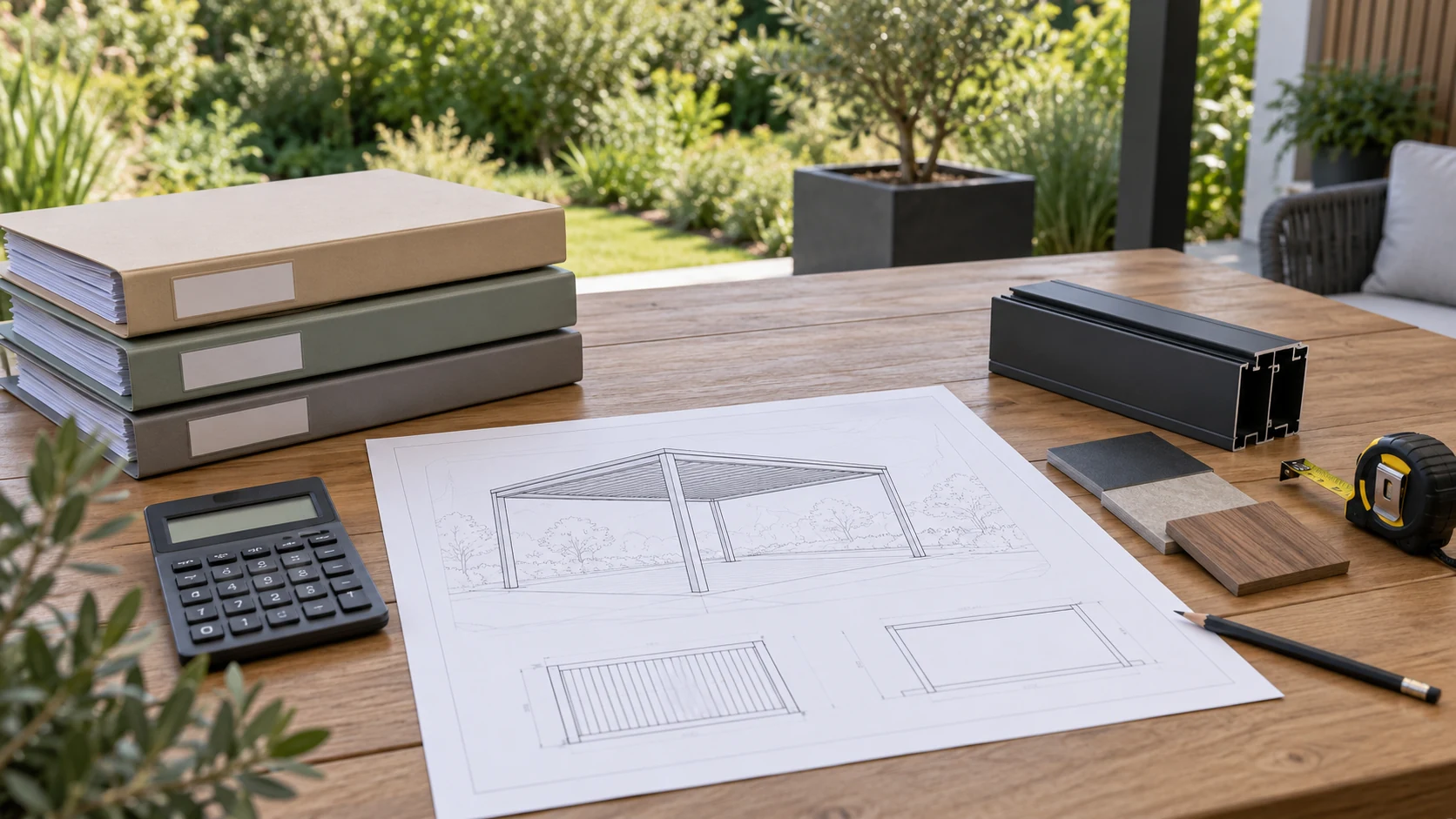
Age does not establish the protection status
An old-looking house or historic street does not establish its legal protection status. Assemble the address, existing records and proposed work and ask the relevant local authority or qualified adviser. Historic England describes distinct issues involving listed buildings, conservation areas and protected trees in England, not a universal regime for other countries. Confirm the property's own status rather than borrowing a neighbor's designation. Accurate classification improves subsequent questions and helps avoid discovering an omitted condition only after substantial design effort has already been invested.
Visual compatibility is only part of the review
Matching a window-frame color may help a design discussion but proves neither exemption nor approval. Connections to old walls, ground work, drainage and trees may need explanation according to the project and local requirements. Freestanding does not automatically mean no heritage effect, and removability is not a reason to skip review. Submit real photographs and a clear account of retained and changed elements. A general article can prepare questions but cannot decide whether a particular aluminum system belongs at a specific protected site.
Compare proposals with different site effects
Imagine shade behind a historic house with attached and freestanding concepts. Compare connections, footprint, visibility and construction effects and ask appropriate reviewers what further evidence is required. This hypothetical example promises no easier approval for freestanding work and offers no way around protection requirements. Compare actual effects rather than searching for a label that removes procedure. Arrange surveys, historical records or specialist statements before purchase where needed, so an early order does not constrain a later choice better suited to the site.
Carry conditions into the purchasing drawings
Retain status confirmation, requirements and professional advice and align the final proposal with them. For any approval, preserve scope, conditions and drawing version rather than the phrase that work is allowed. Ask whether later supplier or construction changes affect that confirmation. Ensure site personnel understand any particular treatment of existing fabric, ground or plants. Keep completion records under applicable procedures for future maintenance. Resolving appearance, technical details and permission separately supports an addition that fits the actual home, not merely its rendering.
- Confirm the property's actual heritage status.
- Describe connection, ground and visibility changes.
- Carry approval conditions into purchase and construction versions.
Can a matching color justify immediate installation at a historic home?
No. Matching appearance does not replace status, impact and permission checks. Confirm the property locally and describe the work. English guidance has its jurisdictional scope. Ensure purchase and construction drawings follow confirmed conditions rather than relying on a rendering.
More questions, practical answers →