Compact pergola living
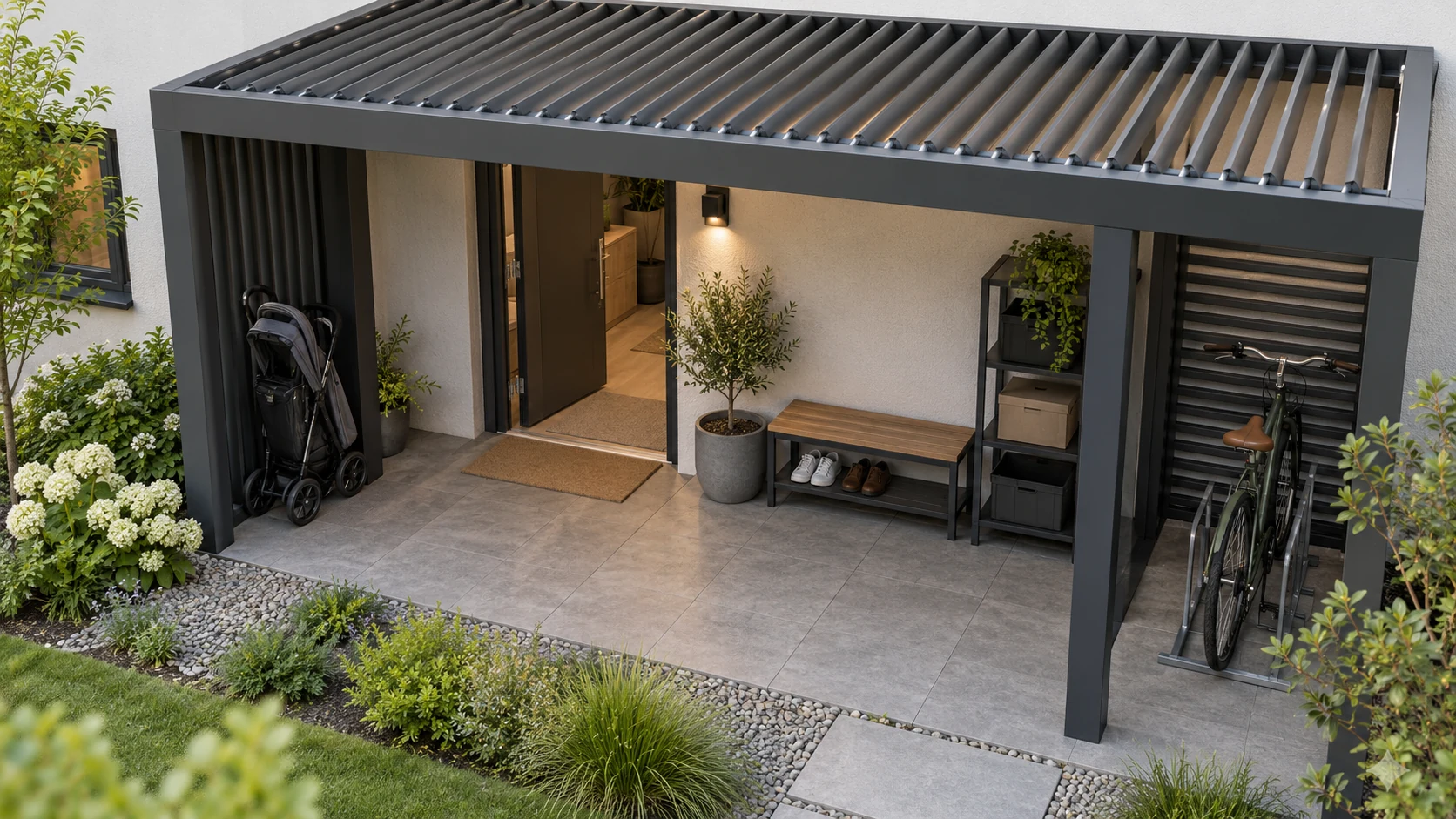
Parking a stroller under a pergola without blocking the door
Plan temporary stroller storage around deployed and folded states, door swings and adult handling.
Define the storage task precisely
Clarify whether the space is for an empty stroller, preparing to leave or another task. Different states have different requirements under the stroller instructions and applicable child-care guidance. This article discusses storage layout, not infant sleeping conditions or supervision under a pergola. Measure deployed and properly folded outlines, including handles, accessories and baskets beyond the main frame. One set of advertised dimensions does not establish that a spare entrance corner accommodates every step of handling or that overhead cover changes any child-care requirement.
The door must still complete its movement
After positioning the stroller, have an adult open the door from inside, collect belongings and operate it as instructed. Door swings, steps, shoe racks and planters may constrain hands and standing positions. Folding can need extra space; do not force the process into a gap. Follow parking and braking instructions rather than using contact with a wall or post as a substitute. Check whether visitors notice the stored object. A position that works only with the door closed is not necessarily a workable entrance storage solution.
Rehearse preparation for an outing
Imagine an empty stroller kept by the door but requiring two dining chairs to move each morning. Rehearse retrieving, unfolding as instructed, organizing necessary items and reaching the exit, identifying the crowded step. This hypothetical trial involves adult handling of an empty stroller, not infant participation, riding or sleep advice. Folding may reduce storage space while making daily preparation awkward; record that trade-off. Compare alternative locations instead of assuming the nearest doorway corner is best simply because it appears unused in the usual furniture arrangement.
Give temporary parking an endpoint
Retain diagrams for deployed and stored states of the actual model and verify ground, environment and operating space against instructions. Follow cleaning and storage requirements rather than assuming cover permits permanent exposure. Assign who returns the empty stroller before meals or visitors so temporary parking does not become a permanent blockage. Do not add bags or belongings merely to save cabinet space; stroller limits still apply. Check full door opening, adult retrieval and another person's passage together, maintaining both entrance convenience and product requirements.
Include the accessories actually used, while staying within the product's permitted configuration and loads.
- Define the exact empty-stroller storage state.
- Follow instructions for unfolding, folding and parking.
- Check passage with the door fully open.
Does parking a stroller under a pergola establish a nap arrangement?
No. Storage and adult handling are separate from infant sleep and supervision. Follow reliable age-appropriate care guidance and product instructions. Empty-stroller planning still needs braking, folding, door-swing and passage checks.
More questions, practical answers →