Hardtop pavilion planning
When should protective film come off gazebo roof panels?
Plan protective-film handling around actual panel instructions, identification and later access.
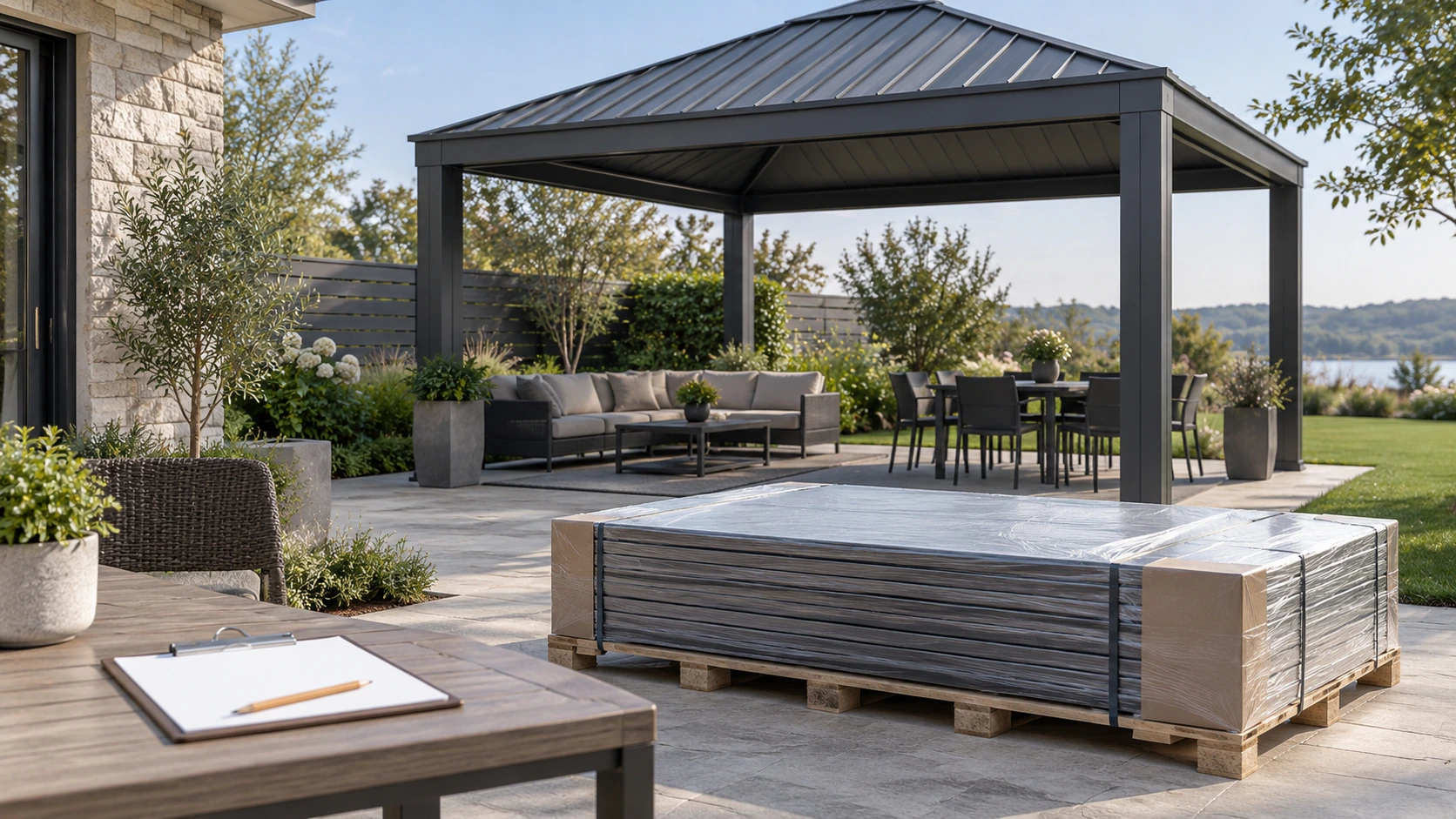
Find the handling instruction for the actual panel
Removal timing should follow the instructions for the actual gazebo panel, rather than a universal rule to peel everything before or after assembly. Different surfaces and materials may require different handling, and the film may carry direction or identification information. At unpacking, establish the component and instructions, noting which markings must be recorded and which surfaces remain protected. Other manufacturers demonstrate why this question matters but do not specify handling for an unconfirmed TTH panel. Include film handling in the assembly plan instead of leaving it as an improvised finishing task.
Preserve identification before removing markings
Record packaging labels, panel identifiers, orientation marks and intended positions without compromising the finish. The crew should know which information is carried on removable film. If it is torn, missing or inconsistent with the instructions, ask how identification and inspection should proceed rather than scraping for markings with sharp tools. Review the underlying surface at the permitted stage and record concerns promptly. Distinguish transit protection, installation protection and the finished surface so observed marks are described at the correct level.
Consider an area that becomes difficult to reach
Imagine a panel edge that will be covered by trim while the crew plans to remove all film at the end. Review the actual sequence before the area becomes inaccessible instead of pulling forcefully afterward. Another surface may need protection during handling, according to its instructions. The example shows why a single later-is-safer rule is inadequate. If the manual is unclear, send the panel identity and the area about to be concealed to the supplier for a specific answer before proceeding.
Review the finished condition and any remaining material
At completion, check that protection has been handled as instructed and identify any residue or inaccessible uncertainty. Use surface-appropriate methods rather than unapproved solvents, blades or cleaners. Keep the supplier response with the observation, and tell the owner which identification labels must remain.
For work spread across days, record which panels have been processed and which remain protected. A clear status record is more reliable for crew handover than the memory of one installer.
- Identify the actual instructions and markings carried on the film.
- Coordinate handling with trim, transport and access.
- Retain product labels and use surface-appropriate cleaning methods.
Is leaving protective film on indefinitely better for the roof?
Do not assume that. Follow the actual panel instructions and preserve identification first. For difficult removal or residue, obtain a surface-compatible method instead of experimenting with blades or solvents, and retain permanent product labels.
More questions, practical answers →