Solar canopy decisions
Bifacial Panels on Solar Carports: Ground Reflection and Parked Cars
Assess bifacial carport modules with explicit rear-irradiance, ground-reflection and vehicle-occupancy assumptions.
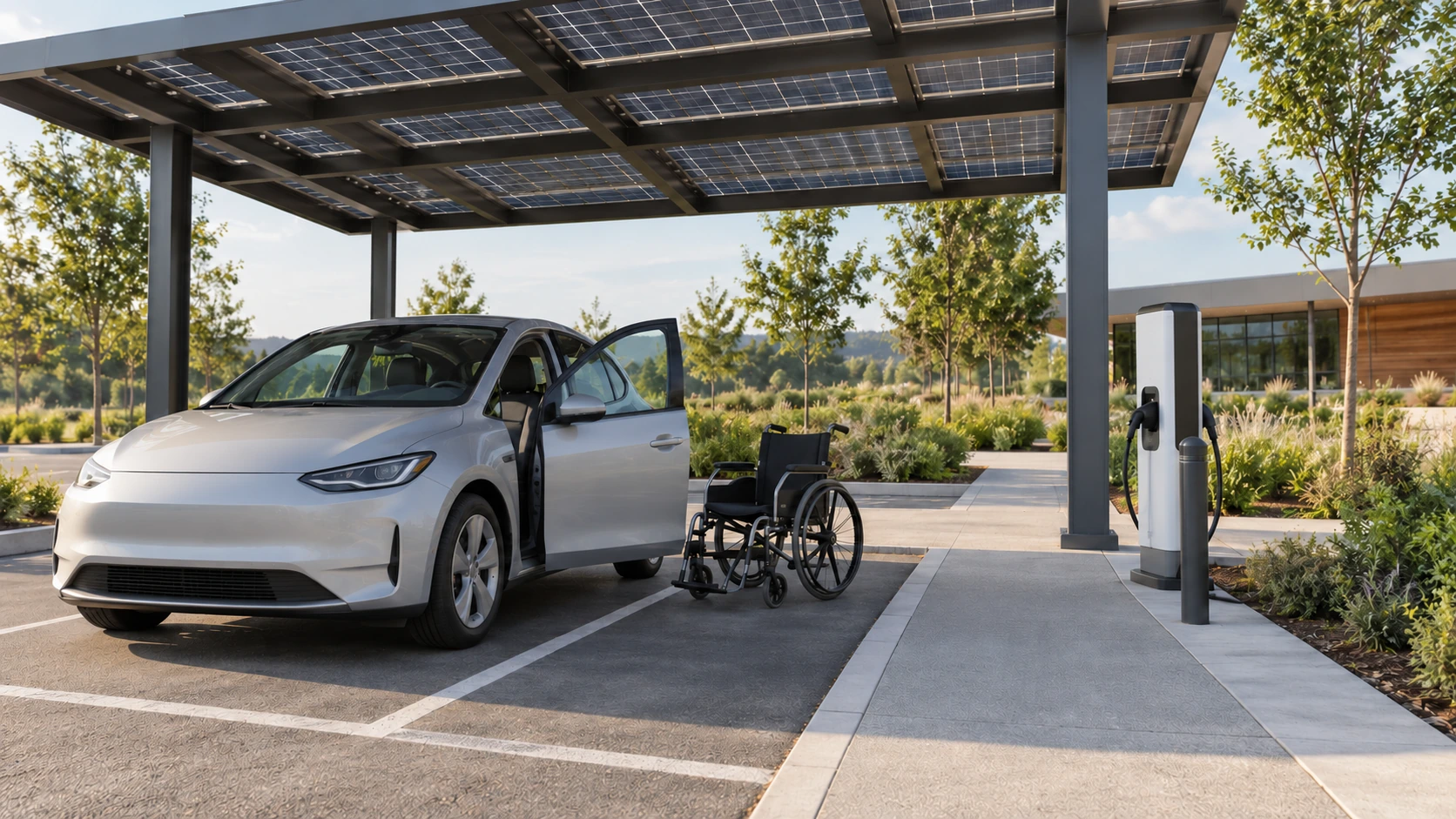
Ask what the module rear actually receives
For bifacial panels on a carport, begin with the light reaching the rear. Ground reflection, supports, roof construction, module position and parked vehicles affect the setting. The bifacial label does not add a fixed percentage of energy automatically. Ground appearance and occupancy can change, so the model should explain how it represents them. An underlying roof or water-bearing layer also needs review for its effect on rear exposure. Confirm actual modules and construction before comparing with a monofacial option, and do not compare different capacities while attributing the difference solely to bifacial gain.
Request modeling assumptions, not just a gain figure
NREL's SAM documentation discusses rear irradiance, albedo and layout in bifacial modeling. These concepts support questions, but defaults are not measurements of this car park. Ask how the report represents surfaces, vehicles and components beneath the modules, and which model and version it uses. If some effects cannot be represented in detail, state the limitation rather than implying accuracy through extra decimal places. Use comparable inputs and align the model with structural, roofing and maintenance plans so the forecast describes the configuration actually being procured.
- Document surface and parking-occupancy assumptions.
- Review rear shading from roofs and supports.
- Compare predicted differences alongside equipment, work and upkeep.
Test a car park occupied on working days
Imagine office parking almost full during weekday daylight and relatively empty at weekends. A model based only on unobstructed pale ground needs to explain how it represents that pattern. Request clearly defined sensitivity comparisons to understand dependence on surface and occupancy assumptions, rather than treating one result as guaranteed. Changing paving color or material solely for reflection also needs coordination with glare, drainage, traffic and maintenance requirements. A favorable energy assumption should not silently become a site-alteration decision.
If a proposal depends on a particular surface condition, assign its maintenance. Initial pale paving and the later surface may differ, so the model assumption needs an operational owner.
Base procurement on differences that can be checked
The final comparison should include module data, matching layouts, forecast assumptions, scope and maintenance. Bifacial is not predetermined to be the better-value choice, and another site's results do not establish TTH project performance. If evidence is incomplete, retain two configurations with clear information requests. Record the completed ground surface, underlying construction and equipment changes to support later interpretation of output. Revisit model applicability when modules or obstructing components change instead of continuing to quote the procurement-stage gain.
Do bifacial carport modules always produce a fixed percentage more energy?
No fixed increase should be promised. Rear irradiance, reflection, vehicles, supports and roof construction affect the result. Compare actual configurations using explicit assumptions and disclose modeling limitations. Another site or a software default cannot guarantee this project's gain.
More questions, practical answers →