Retractable awning choices
An awning and exterior shutters on the same wall: coordinate access and movement
Place shutter service access, guides and the awning mechanism on one elevation, identifying the space needed to operate and maintain each system.
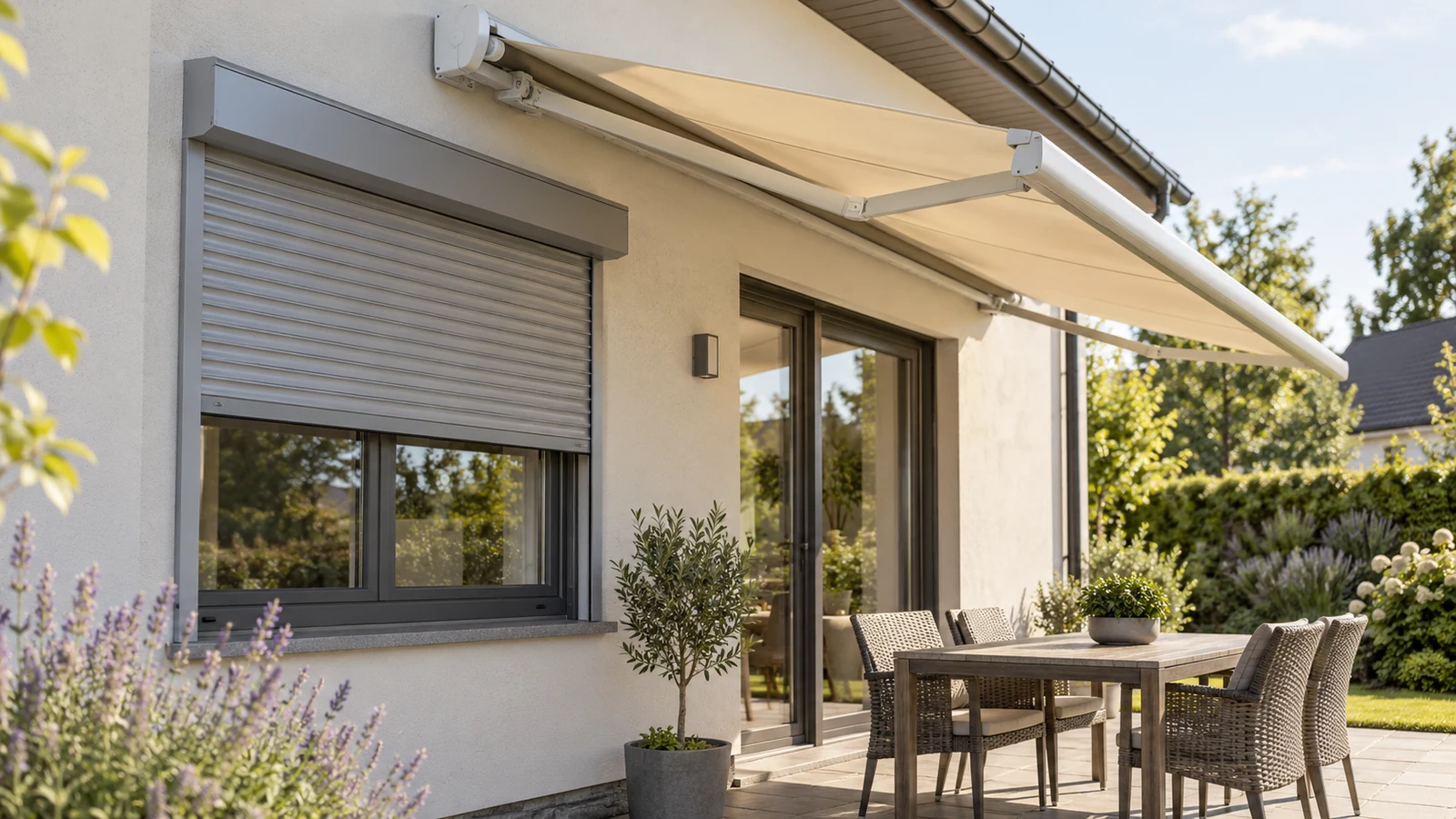
Two systems on one wall both need maintenance
Exterior shutters and an awning serve different needs: shading at the window and shade over the patio. Sharing a facade requires configuration checks, not merely a tidy appearance when closed. Mark the shutter box, service cover, guides, frame and proposed awning cassette, including the direction in which the service cover opens. Some conflicts do not affect daily shade but force one system to be removed for later repairs. Treat access as a permanent functional area rather than simply finding somewhere to attach both products.
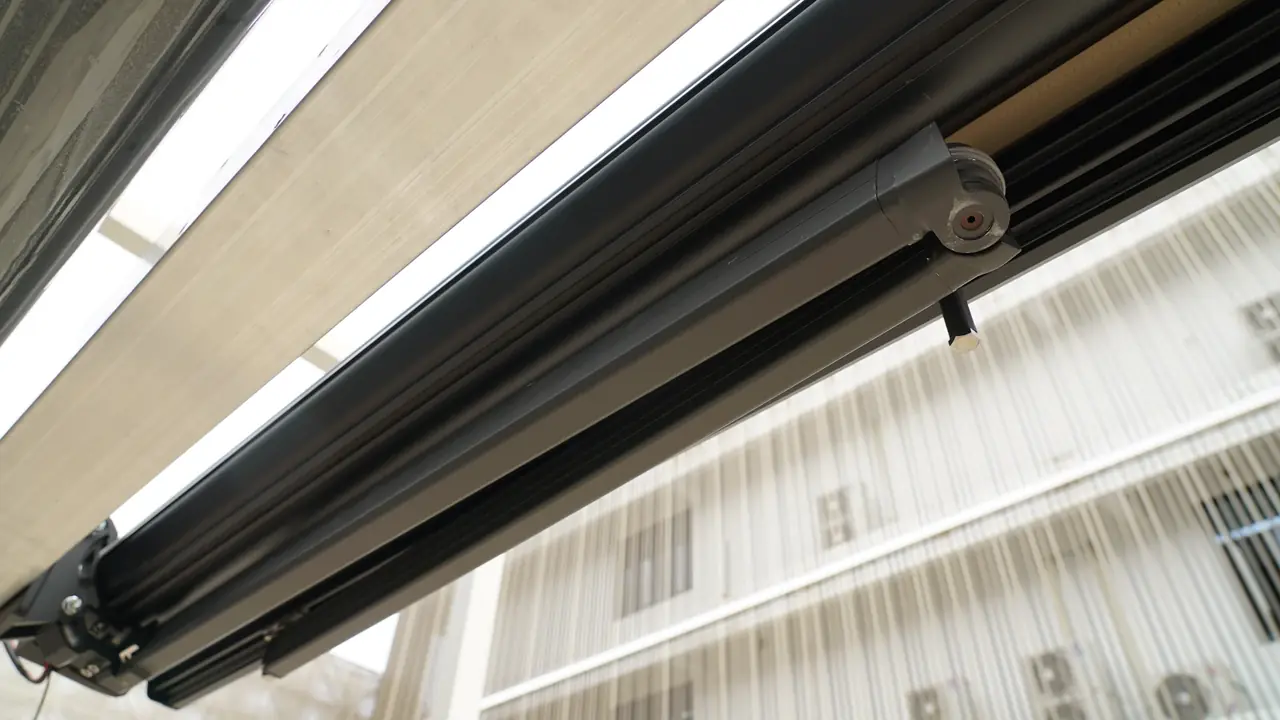
Give both service providers the same information
Where another company services the shutters, share the existing documentation and site photographs with the awning installer and ask the shutter provider which areas must stay accessible. Missing drawings call for professional inspection, not exploratory dismantling by the homeowner. Both providers should use the same facade orientation, measurement datum and equipment names; “leave space on the left” is ambiguous otherwise. Itemize coordination and unresolved interfaces in quotations. This lets the owner compare service scope without becoming an improvised messenger between two teams on installation day.
Test combinations of operating states
Imagine shutters lowered at night while the awning remains deployed until dinner finishes. Assess that combination, not only each system running alone. Include opening windows, cleaning accessible guides and identifying controls in everyday scenarios. If automation groups both products under one button, explain the sequence and behavior when an action fails. A smart-control label does not replace a demonstration. During handover, perform only movements the installer has confirmed, rather than repeatedly testing uncertain combinations to discover where parts might collide.
Preserve the conditions for future replacement
Keep a position drawing and contact list identifying shutter service zones and awning end access. Recheck the relationships if windows, shutters or wall insulation change; compatibility is not permanent after other components move. Decorative features and storage must also respect the agreed access. This clarifies the purchasing decision: equal shade with independently maintainable equipment may avoid future dismantling coordination. Confirm the actual service scope, however, rather than assuming either supplier will automatically pay for work on the neighboring system.
- Show service openings for both systems on one drawing.
- Use consistent directions and measurement datums with both providers.
- Check normal operating combinations and retain separate service contacts.
Is it acceptable to block shutter service access if daily operation works?
Daily operation is not enough. Blocked service access may require removing the other system for repairs. Ask both providers to confirm maintenance access and any dismantling responsibilities, comparing independently serviceable layouts before ordering. If removal remains necessary, document its scope and cost conditions.
More questions, practical answers →