Retractable awning choices
Match the awning cassette to the facade you see every day
Start with the retracted view, comparing cassette, frames, wall and brackets under the same light before confirming available colors and finishes.
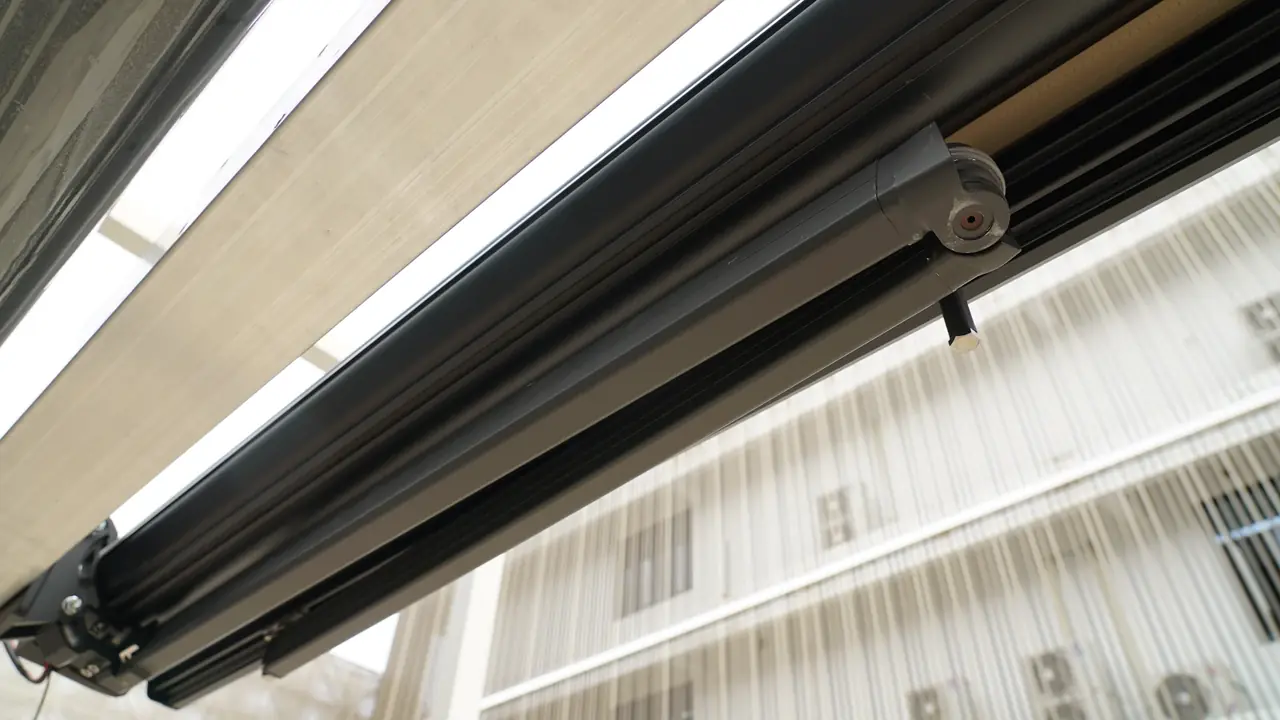
Begin with the facade when the awning is unused
Buyers often focus on deployed fabric while the retracted cassette may be the more frequent view. Photograph the elevation from the living room, entrance and everyday routes, identifying its relationship with window frames. Decide whether the preference is blending with the wall or creating a defined outline. No color disappears on every building; light, shadow and component shape matter. Confirm available finishes for cassette, brackets and end pieces instead of assuming every visible component can be customized identically from one product photograph.
Review the actual surface as well as the color code
Nearby color references do not guarantee identical appearance across different surface textures, gloss levels and angles. Compare supplier samples in place under daylight and normal evening lighting rather than only on a screen. If management or the design brief specifies an appearance, use its accepted sample and confirmation process; two names containing gray are not enough. Record acceptable differences and open questions so everyone shares the basis for selection. Where a component sample is unavailable, state that the judgment relies on the available documentation rather than claiming a physical match has been verified.
Consider foreseeable changes to the facade
If the wall will be repainted after installation, include the future palette instead of matching only the finish about to disappear. Frames, downpipes and exterior lights provide useful references, while actual availability and maintenance conditions still matter. Ask the supplier to define any custom-finish process and cost rather than assuming every color is equally priced or readily available for later replacement. Standard and distinctive finishes involve different preferences and service considerations. Neither should be presented as a universally better investment or a guaranteed improvement in property value.
Turn the palette decision into a checkable order
Separate fabric and metal references, finish options and applicable components in the order, retaining accepted-sample records. If availability requires substitution, identify the particular changed item before accepting a broadly described near-match. Review the retracted elevation at delivery, including visible brackets and ends, and resolve discrepancies against agreed information. Fabric replacement does not necessarily require a cassette change, nor the reverse; confirm actual service scope. Good palette records keep appearance review focused on delivered components and accepted conditions instead of conflicting memories of what a screen image seemed to show.
- Review the cassette-frame relationship in the usual retracted view.
- Compare sample color, texture and lighting conditions.
- Record fabric and metal-component options separately.
Will the same color reference make an awning cassette match the window frame exactly?
Not automatically. Texture, gloss, shape and lighting affect appearance. Compare actual samples in place and confirm options for brackets and end pieces. Record references, finishes and component scope, reviewing substitutions rather than accepting an exact-match claim based only on screen images or similar names.
More questions, practical answers →