Retractable awning choices
An awning at a rented home: agree the removal and reinstatement scope
Separate installation consent, maintenance during occupancy and end-of-tenancy reinstatement; removable equipment does not mean there is nothing to restore.
Explain what you mean by removable
A tenant may want to take the awning when moving or merely allow the owner to restore the facade later. Those goals need different arrangements. Removing equipment does not erase fixing points, weather details or electrical changes, nor guarantee suitability at another property. Review the tenancy documents, property requirements and decision-making contact, then present a defined location and work scope. This is a purchasing-coordination framework, not a substitute for local tenancy or building advice, and it does not assume that every rented property follows the same approval process.
Consent should refer to defined equipment and work
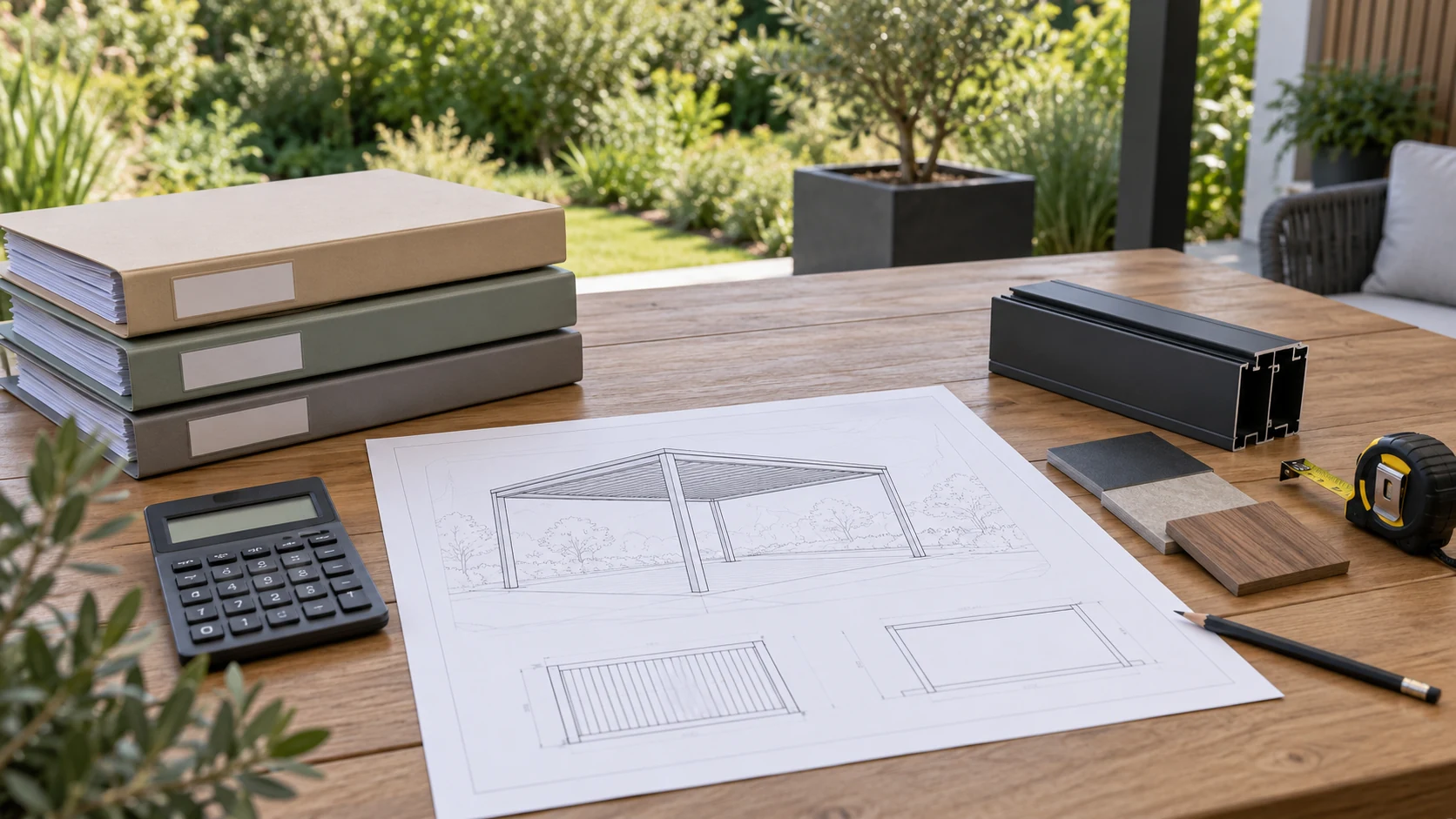
Prepare a concise proposal showing retracted and deployed positions, color preferences, affected facade areas and responsibility for installation and eventual removal. Mark unresolved mounting conditions as awaiting professional review instead of presenting a rendering as a completed design. Share any appearance, work-hour or contractor requirements with the installer before pricing. Retain written records of the arrangement and check that the ordered configuration remains within its scope. General willingness to allow shade may not answer every question about a particular device, its fixings, electrical work or future removal.
List potential reinstatement tasks in advance
Imagine the tenant leaving in two years. Discuss who removes the system, who owns it afterward, how finishes are matched and how electrical alterations are addressed. Appropriate personnel must determine methods; do not promise an unverified invisible restoration. Separate removal, facade work, electrical work, waste handling and completion checks, assigning costs and circumstances requiring revised quotations. This is not a prediction of damage. It clarifies the practical meaning of reinstatement so landlord and tenant do not discover incompatible expectations only when the property is being handed back.
Keep a record spanning installation and departure
Retain pre-installation photographs, the agreed proposal, instructions and service records, following the assigned contact process when issues arise. Recheck the arrangement after management changes or additions such as lighting and automation. Assess value across the expected occupancy period, including installation, maintenance, removal and reinstatement instead of equipment price alone. Other shading approaches involving fewer alterations may also deserve comparison, subject to their own operating and storage conditions. A clear end-of-occupancy arrangement makes the present purchase easier for both parties to understand and carry out.
- Clarify whether equipment moves with you or is simply removable later.
- Align written consent with location, configuration and work scope.
- Assign removal, facade, electrical and waste-handling responsibilities.
Is promising to remove an awning enough at a rented property?
Discuss more than equipment removal. Review tenancy and property requirements, obtain confirmation for the specific scope, and assign restoration of fixing points, facade details and electrical changes. Have relevant providers verify methods and costs, retaining photographs and written records without promising unverified trace-free removal.
More questions, practical answers →